Showing posts with label African American. Show all posts

Florence Price: Arkansas-born Pioneer in American Classical Music

Florence Price biography succeeds in giving the composer her due | Chicago Symphony Orchestra

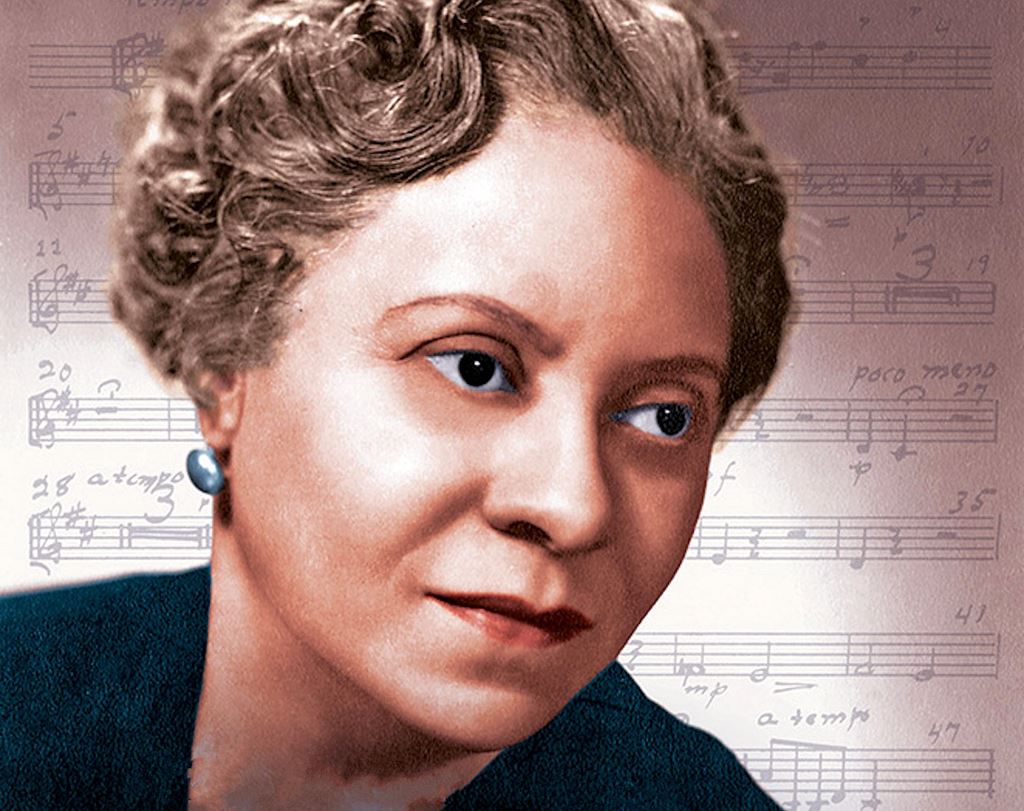
Florence Beatrice Price stands as one of the most inspiring figures in American music history—a Black woman whose talent and perseverance helped redefine what was possible in a world that too often excluded voices like hers. Born in Little Rock, Arkansas, on April 9, 1887, Price’s life was shaped by early musical promise, academic excellence, and a determination to be heard on the nation’s grandest stages. 

Early Life and Musical Roots

Florence Price (née Smith) grew up in a mixed-race, middle-class family in Little Rock. Her mother, a skilled music teacher, introduced her daughter to the piano at a very young age, and Price gave her first public performance at just four years old. By age eleven, she had already published her first musical composition, a remarkable achievement that hinted at the lifelong creativity to come. She graduated as valedictorian from Capitol Hill School at fourteen and soon after enrolled at the prestigious New England Conservatory of Music in Boston, where she completed degrees in both piano and organ performance. 

While at the conservatory, Price studied with accomplished composers and teachers, mastering European classical traditions while nurturing her own distinctive voice. Records show that, due to the rampant racial discrimination of the era, she initially registered as being from “Pueblo, Mexico” to avoid prejudice against Black students—a stark reminder of the societal barriers she faced even as her gifts shone brightly. 

Early Career: Teaching and Family

After graduating in 1906, Price returned to Arkansas to teach music. She held positions at the Cotton Plant-Arkadelphia Academy and Shorter College before becoming head of the music department at Atlanta’s Clark University, a historically Black institution. In 1912 she married Thomas J. Price, an attorney, and the couple had three children. During this period, she continued composing and performing, showing versatility as a pianist, organist, teacher, and composer. 

However, life in the segregated South was difficult. Widespread racism and violent oppression made it hard for Black artists to thrive. In 1927, Price and her family moved north to Chicago, seeking broader opportunities and a more vibrant artistic community. There she became part of a network of musicians—including contralto Marian Anderson and pianist Margaret Bonds—who championed Black composers and performers. 

Breaking Barriers in Symphonic Music

Price’s most historic achievement came in 1933, when her Symphony No. 1 in E Minor was performed by the Chicago Symphony Orchestra under conductor Frederick Stock. This marked the first time a major American orchestra played a symphony by an African-American woman, a watershed moment in classical music. Critics praised the work’s emotional depth and structural integrity, and the performance helped establish Price’s reputation beyond regional circles. 

Style-wise, Price’s music blended African-American spirituals, blues, and folk melodies with the formal techniques of European classical tradition. Her orchestral, chamber, and piano works—numbering over 300 compositions—often incorporated rich rhythmic variety and lyrical expression, creating music both deeply rooted in tradition and vividly personal. She wrote four symphonies, multiple concertos, art songs, choral works, and solo piano pieces throughout her career. 

Challenges and Later Life

Despite her undeniable talent, Price faced persistent obstacles. Classical music institutions of her day were dominated by white male composers and performers, and women—especially Black women—were often sidelined or ignored. Price experienced this firsthand: although she continued composing throughout the 1930s and 1940s, many of her later works went unperformed during her lifetime. She wrote candidly in a letter that the combination of gender bias and racial prejudice created barriers that were “unfortunately” difficult to overcome. 

Price continued to teach and compose in Chicago until her death from a stroke on June 3, 1953, at age 66. After her passing, much of her music faded from the public eye—a fate shared by many underrepresented artists of her era. 

Rediscovery and Legacy

Interest in Florence Price’s work surged decades later. In 2009, a cache of her unpublished manuscripts was discovered in an old house in Illinois, drawing musicologists and performers back to her remarkable oeuvre. These rediscovered scores included previously unknown works that have since been performed and recorded worldwide. 

In recent years, Price’s music has experienced a renaissance: orchestras regularly include her symphonies in their programming, and recordings of her works have won major accolades—including a Grammy Award. Her trailblazing achievements have been celebrated in festivals, scholarly research, and community commemorations, solidifying her place in the canon of American composers. 

Why Her Story Matters

Florence Price’s life exemplifies resilience, artistic brilliance, and the power of creative expression to transcend barriers. She not only broke significant racial and gender barriers in classical music, but she also expanded the expressive possibilities of the art form by honoring her cultural heritage within symphonic tradition.

Today, Price’s legacy continues to inspire musicians and listeners alike, reminding us that diversity enriches culture and that genius can flourish even in the face of adversity.

Essential Listening: Florence Price

These works are widely available on YouTube, Spotify, Apple Music, and classical streaming platforms:

Symphony No. 1 in E Minor (1932)

  • Why it matters: The first symphony by a Black woman performed by a major U.S. orchestra (Chicago Symphony, 1933).

Piano Concerto in One Movement

Songs to Marian Anderson

  • Standout pieces:
    “My Soul’s Been Anchored in the Lord”
    “Songs to a Dark Virgin”

Symphony No. 3 in C Minor

Professor Merze Tate — Scholar, Educator, and Global Trailblazer


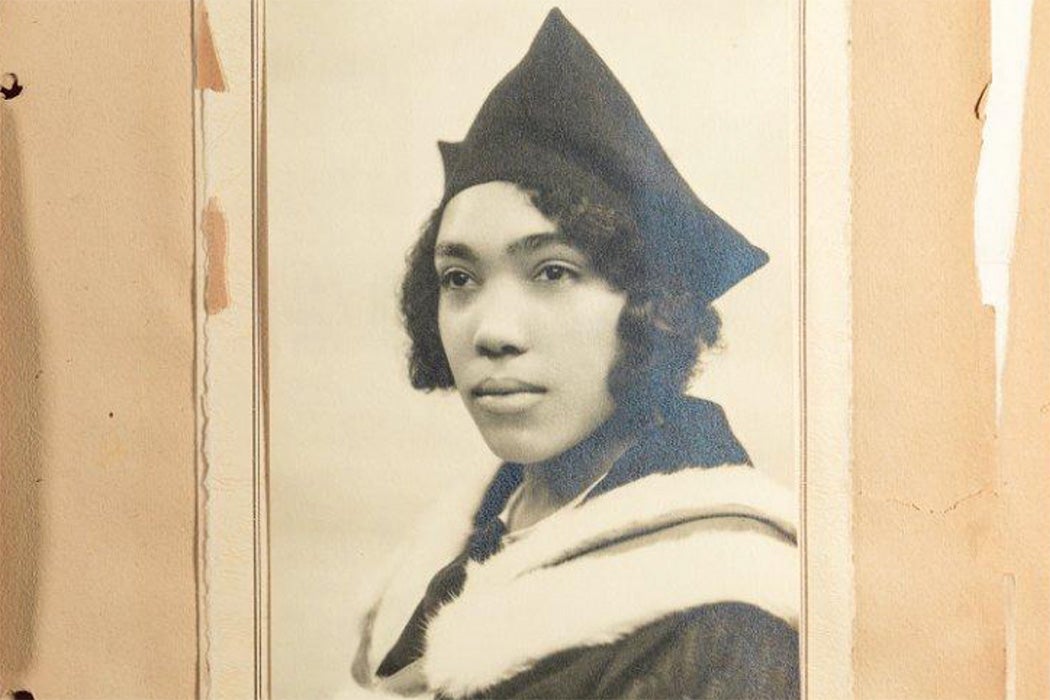
A portrait of Merze Tate from a scrapbook of photographs, letters and newspaper clippings


When it comes to celebrating Black history, certain figures shine brightly because of their ability to carve new paths where none existed before. Professor Merze Tate (b. 2/6/1905, Blanchard, Michigan – d. 6/27/1996) was one such pioneer. Scholar, teacher, and international thinker, she broke racial and gender barriers at every turn. Her life story is one of “firsts,” but it is also a testament to persistence, vision, and a lifelong dedication to education and global understanding.

Roots of Determination

Merze Tate was born on October 24, 1905, in Blanchard, Michigan, a small rural town where educational and professional opportunities for African Americans were extremely limited. She grew up in a modest household and learned early the value of hard work and perseverance. From a young age, she walked miles to attend school, often helping her family with chores before and after classes. Despite these challenges, Tate excelled academically, demonstrating a natural curiosity and determination that would define her life. Her early experiences instilled in her a belief that education could be a powerful tool for personal advancement and social change, laying the foundation for the groundbreaking career that would follow. Trailblazing Scholar at Western Michigan University.

Tate’s pursuit of education led her to Western Michigan Teachers College (today’s Western Michigan University), where she graduated in 1927. She became the first African American student to earn a degree from the college and achieved the highest GPA in her class. Her exceptional academic record reflected not only intelligence but also extraordinary discipline and resilience.

A Historic Journey to Oxford


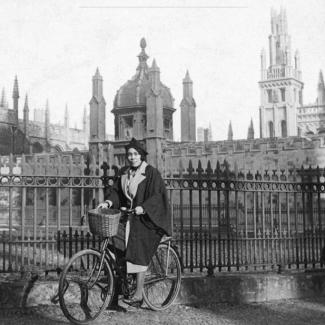
In 1932, Tate was admitted to The Society of Oxford Home-Students -- now known as St. Anne's College -- becoming the first African American woman to study at Oxford University. It was an extraordinary achievement during a time when both racial segregation and gender discrimination restricted access to higher education. 

Her dedication and scholarship culminated in 1935, when she became the first African American to be awarded a B.Litt. degree by Oxford. Her studies in international and diplomatic history showcased her academic brilliance and laid the groundwork for her future contributions to global diplomacy.

Advanced Scholarship and a Career at Howard University

After Oxford, Tate continued her education in the United States, earning a Ph.D. in government and international relations from Radcliffe College (Harvard University’s coordinate institution for women at the time). She joined the faculty at Howard University in 1942, where she would teach for 35 years.

At Howard, Tate focused on international relations, disarmament, and diplomacy, mentoring generations of students who would go on to shape law, policy, and academia. She was recognized for her rigorous scholarship and insistence that students understand global dynamics, emphasizing how international events shaped domestic realities.

Advising Eisenhower

In the late 1940s, Tate’s expertise reached the highest levels of government when she advised General Dwight D. Eisenhower on issues related to disarmament. This appointment was extraordinary at a time when women of color were largely excluded from policy-making circles, underscoring her recognition as a leading intellectual in international affairs.

Merze Tate, wearing her graduation cap and gown, shakes hands with WMU President Dr. Paula Sangren.

Beyond the classroom, Tate was a world traveler and educator. She founded a travel club at Crispus Attucks High School, taking students on cultural excursions to broaden their horizons. Her travels—from Europe to India and across the Pacific—provided both inspiration and research material for her scholarly works. Tate’s dedication to education extended beyond her own achievements, as she encouraged students to engage with the world and pursue knowledge as a means of empowerment.

Legacy and Honors

Cover for "Merze Tate: The Global Odyssey of a Black Woman Scholar"

Professor Merze Tate passed away on July 8, 1996, leaving a legacy that continues to inspire. Her life’s work opened doors for future generations of African American scholars and women in academia. Her honors include:

The Merze Tate College at Western Michigan University,

  • Recognition from the International Studies Association and the American Political Science Association,
  • The Merze Tate Explorers program inspired by her travel club,
  • Induction into the Michigan Women’s Hall of Fame, and
  • A reading room at Oxford University named in her honor.
  • Her archival collections, including photo albums, scrapbooks, and letters, document her travels, teaching, and global engagement. These materials are housed at Western Michigan University and offer an inspiring window into her life and scholarship.

Why Professor Tate Matters Today

 Merze Tate’s story reminds us that barriers—no matter how entrenched—can be broken. She was more than a “first”; she was a visionary who believed in the transformative power of education, global awareness, and mentorship. Celebrating her life honors a Black history hero whose courage, intellect, and pioneering spirit continue to inspire generations of scholars, educators, and leaders worldwide.

The Remarkable Journey of Matthew Henson: From Humble Beginnings to the North Pole

Matthew Henson’s life is a testament to perseverance, courage, and determination. Born on August 8, 1866, in the small town of Nanjemoy, Maryland, Henson was one of the most significant explorers in American history. His remarkable contributions, especially to the race to the North Pole, have often been overshadowed by his white counterparts, but his story deserves recognition for its trailblazing spirit. 

Early Life and African Heritage 

 Matthew Henson was born to parents who were both of African descent. His father, a free Black man, left the family when Henson was still a toddler, and his mother died when he was about 11 years old. Left orphaned, Henson moved to Washington, D.C., where he was taken in by an aunt and uncle. In his early teens, he was able to find work as a cabin boy on merchant ships. His work as a seaman would soon expose him to a world of exploration, an opportunity that would change the course of his life. 

 Henson’s African heritage was an important part of his identity, though in the segregated America of his time, it often presented challenges. Despite these barriers, Henson’s skills and determination earned him respect in the world of Arctic exploration, where his talents as a navigator and his ability to adapt to harsh conditions would be his ticket to fame. 

  A Life at Sea and Introduction to Arctic Exploration
At the age of 18, Henson set off on a new adventure when he joined a ship heading to the Caribbean, learning navigation and the skills of a seaman along the way. He would continue his seafaring work for several years, traveling to ports around the world. It was on one of these trips that he encountered Robert E. Peary, a U.S. Navy engineer and explorer. Peary, who had begun his career in Arctic exploration, saw promise in Henson and hired him as a personal assistant for a trip to Greenland in 1887. 

 This was the beginning of Henson’s long association with Peary and his eventual rise to prominence in the exploration community. Over the next two decades, Henson traveled repeatedly to the Arctic, learning the skills of survival in the frozen wilderness. Peary, impressed by his resilience, made Henson an essential member of his exploration team. Henson was not only a trusted assistant, but also took on the role of a skilled navigator, and his work was crucial to the success of Peary’s expeditions. 

  Navigating the North Pole
The quest to reach the North Pole was one of the most ambitious and dangerous challenges of the early 20th century. For years, Peary and Henson, along with a team of Inuit guides, had been pushing northward, battling harsh conditions and treacherous terrain. The race to the pole was marked by failure and frustration, but Henson’s dedication never wavered. 

 In 1909, after many years of preparation and several expeditions, Peary, Henson, and their team of Inuit guides finally reached what they believed to be the North Pole. However, the controversy over who actually made it first has clouded the achievement. Both Peary and Henson claimed to have been the first men to reach the pole, but there were disputes over the exact coordinates and the legitimacy of their claim. Despite this, historians agree that Henson played a crucial role in the expedition and was indispensable to its success. He was the one who navigated and led the way, ensuring that they moved in the right direction despite the blizzards, icy conditions, and lack of landmarks. 

Legacy and Recognition
Although Henson was not widely recognized in his lifetime for his achievements, his contributions to the polar expeditions were finally acknowledged decades later. In 1937, he became one of the first Black members of the Explorers Club in New York. In 1954, after decades of living in relative obscurity, he was awarded a gold medal by the National Geographic Society in recognition of his role in reaching the North Pole. However, it wasn’t until long after his death in 1955 that Henson received the full recognition he deserved. 

In the years following his death, Henson's story began to capture the imagination of a new generation. His pioneering spirit and perseverance were finally celebrated as a key part of America's history of exploration. In 1988, his remains were reburied next to Robert Peary at Arlington National Cemetery, where he was finally honored as a hero of Arctic exploration. 

Today, Henson is remembered as one of the most accomplished explorers of the 20th century. Despite the racial prejudices he faced, his achievements have become an enduring symbol of resilience and excellence. Henson’s journey from an orphaned child of African descent to one of the most important figures in polar exploration serves as an inspiration to all who dare to dream beyond the boundaries imposed by society.


Ralph Bunche | Political Scientist and Diplomat

Ralph Johnson Bunche (b. 8/7/1904 - d. 12/9/1971) 

Ralph Johnson Bunche was born in Detroit, Michigan on August 7, 1904 to Olive Agnes and Fred Bunche. His family moved to Toledo, Ohio for a while before returning to Detroit in 1909. In 1914, at the age of 10 years old, Bunche’s family moved to Albuquerque, New Mexico where they hoped the dry weather would improve his parents’ health. Unfortunately, both of his parents died two years after the move to New Mexico. The young Bunche then moved to Los Angeles with his two sisters to live with his grandmother, affectionally called “Nana”, who had been born into slavery. In Los Angeles, Bunche embraced his responsibility within his household, taking on all types of odd jobs while he pursued his education. 

THE SCHOLAR 
Bunche represented Black Excellence before it became a term of art. In Los Angeles, he graduated as valedictorian of Jefferson High School. By 1927, we find Bunche again earning the distinction of valedictorian — but now as a UCLA college graduate, majoring in international relations. In 1928, he completed his master’s degree at Harvard University in political science. In 1932-33, he was awarded a Rosenwald Fellowship that afforded him the opportunity to conduct research into his dissertation topic comparing the colonial rule of France in the colonies of Dahomey and Togoland. 

Upon completing his PhD in political science from Harvard University, Bunche’s dissertation was awarded the Topaz Prize for outstanding research on comparative politics from Harvard University’s Department of Government. Bunche would go on to complete postdoctoral research in anthropology at Northwestern University, the London School of Economics, and Capetown University in South Africa. From 1928 to 1950, he chaired the Department of Political Science at Howard University. From 1950-1952, he taught at Harvard University. 

THE CIVIL AND HUMAN RIGHTS ACTIVIST
Ralph Bunche with
Dr. Martin Luther King, Jr.


In addition to his scholastic work, Bunche was active in both civil rights and human rights movements. In 1936, he published his first book “A World View of Race”, which argued that “race is a social concept which can be and is employed effectively to rouse and rationalize emotions [and] an admirable device for the cultivation of group prejudices.” 

Bunche was a member of the so-called Black Cabinet, whom then U.S. president Theododre Roosevelt consulted with on race issues. In 1963, he was present at the March on Washington for Jobs and Freedom, organized by A. Philip Randolph and Bayard Rustin. In 1965, he supported the civil rights march in Montgomery, Alabama, organized by Martin Luther King, Jr. Bunche was known to lend his influence as a speaker and writer to civil rights organizations like the National Association for the Advancement of Colored People.

Bunche was a leading actor in ending colonialism. He helped facilitate the global struggle of colonized nations seeking decolonization from European nations using international institutions like the United Nations. In 1945, Bunche served on the delegations charged with drafting the United Nation’s charter. Much of this work was completed through the United Nation’s Trusteeship Department, which was charged with troubleshooting the decolonization process for many countries in the mid-20th century. He often urged African-Americans to take on positions within the United Nations. 

THE NOBEL PEACE PRIZE WINNER 
Ralph Bunche at the United Nations


From June 1947 to August 1949, the Arab-Israeli conflict had escalated into fighting in Palestine. Bunche is known for his significant service in brokering an armistice agreement between Egypt and what would become the State of Israel. He was initially appointed assistant to the United Nations Special Committee on Palestine, and later as principal secretary of the United Nations Palestine Commission. The commission was charged with carrying out a proposed partition approved by the United Nations General Assembly. The commission worked from the island of Rhodes as their headquarters. The proposed partition fell through, however, and fighting intensified between the Arabs and Jews. 

Count Folke Bernadotte was appointed by the United Nations as a mediator in the escalated conflict. Ralph Bunche was appointed to assist Folke. On September 17, 1948, four months after his appointment, Folke was assassinated in Jerusalem by members of the underground Jewish Lehi group. This was a Zionist paramilitary militant organization that was led by Yitzhak Shamir, whom would become Prime Minister of Israel in 1983. Bunche was named acting United Nations mediator on Palestine, but conducted all of the commission’s affairs from the island of Rhodes. 

In 1949, an armistice agreement between Palestine and Israel was brokered after eleven months, which effectively halted the violent Middle East crisis. Bunche returned back to the United States as a hero. On December 10, 1950, he became the first person of African descent to receive a Nobel Peace Prize for his role in brokering the armistice agreement. 

THE MEDIATOR
Ralph Bunche with Patrice Lumumba,
former Prime Minister of the
Democratic Republic of the Congo


Bunche served as a mediator in many global conflicts areas. This includes the Sinai (1956), the Congo (1960), Yemen (1963), Cyprus (1964), India-Pakistan war (1965) and Bahrain (1970). In 1971, he retired from the United Nations. Bunche died six months after his retirement. In 2003, UCLA’s Center for African American Studies was renamed after Bunche to commemorate a hundred years since his birth. 

“Peace is no mere matter of men fighting or not fighting,” said Bunche. “Peace, to have meaning for many who have known only suffering in both peace and war, must be translated into bread or rice, shelter, health, and education, as well as freedom and human dignity — a steadily better life. If peace is to be secure, long-suffering and long-starved, forgotten peoples of the world, the underprivileged and the undernourished, must begin to realize without delay the promise of a new day and a new life.”

A. G. Gaston: The Black Business Titan Advancing African-American Entrepreneurship in Alabama

A. G. Gaston (b. 7/4/1892 - d. 1/19/1996)
When considering the incredible obstacles surmounted by A. G. Gaston and his outstanding business successes, one wonders why his legacy is not recounted and revered more in the books, journals and chronicles of Black history. A towering business figure in Alabama, Gaston overcame poverty and racial discrimination to build a multi-million dollar business empire in the heart of the South. You will respect his conglomerate when you learn that his enterprises included an insurance company, two cemeteries, a savings and loan bank, a business college, a couple radio stations, a motel, a construction company and multiple real estate holdings.

Arthur George Gaston was born in Demopolis, Alabama to Tom and Rosa McDonald Gaston. His father was a railroad worker who died soon after Gaston’s birth. His mother worked in Greensboro, Alabama as a family cook to the wealthy Jewish businessman A. B. Loveman, the founder of the largest department store in Alabama —Loveman’s of Alabama.  Gaston spent his early years in Demopolis with Joe and Idella Gaston, his paternal grandparents. It is reported that, while poor, his grandparent’s house was the only one with a swing — and opportunity the young, entrepreneurial Gaston used to charge the local children to ride the swing. By 1905, at the age of 13, Gaston would move back with his mother, this time to Birmingham, Alabama where she accompanied the relocated Loveman family.

Early Life in Birmingham

Gaston’s mother enrolled him in the Tuggle Institute when they arrived in Birmingham. The Tuggle Institute was a privately run charitable school for African American, the namesake of the social reformer Carrie Tuggle. The school was modeled after the Booker T. Washington industrial educational schools, which emphasized developing trade skills and small businesses. In fact, Booker T. Washington visited the Tuggle Institute on numerous occasions to give inspirational speeches to the students. Gaston was naturally influenced by the philosophy of “pulling ones self up by his or her boot straps”, which was the hallmark of Washington’s message. After completing the tenth grade, Gaston left the school and started working selling the black-owned newspaper founded by Oscar W. Adams in 1907, the Birmingham Reporter. The young Gaston also started working as a bellman at the Battle House Hotel in Mobile, Alabama. 

In 1913, Gaston enlisted in the U.S. Army and was assigned to the all-Black Ninety-second Infantry Division that was deployed in World War I combat in 1917. Of his $20 monthly military pay, it is reported that Gaston sent $15 home towards his first real estate mortgage investment in Birmingham. When he returned to Birmingham after the war, Gaston drove a delivery truck for a dry-cleaning company. He also worked in Fairfield, Alabama as a Tennessee Coal and Iron Company miner. While there, Gaston sold lunch sandwiches to his co-workers and eventually became a lending source to them.
The Booker T. Washington Burial Society & The Booker T. Washington Business College
By 1923 Gaston founded his first business, the Booker T. Washington Burial Society, the same year he married Creole Smith. While working in the coal mines, Gaston undoubtedly saw many early deaths from what we now recognize as harsh and unsafe working conditions in the mines. The need for poor Blacks to have affordable funeral burial services was not lost of Gaston, and as a result the fraternal order burial society was developed, along with the funeral services. Gaston attracted members from local church congregations, as well as his sponsorship of local radio programs aimed at African Americans. By 1932, Gaston has established the Booker T. Washington Insurance Company, which not only offered burial services, but also life insurance, health insurance and accident insurance. He would branch this business off into casket manufacturing and the operation of two cemeteries. In 1923, he entered a partnership with his father-in-law A. L. Smith and started the Smith & Gaston Funeral Home on real estate he bought and renovated near Kelly Ingram Park in downtown Birmingham. 
Booker T. Washington Business College in Alabama
By 1938, Gaston’s first wife Creole Smith Gaston died. In 1939, he married Minnie L. Gardner Gaston. Always one to recognize a market demand, he and his second wife founded the Booker T. Washington business school after noticing a shortage of skilled administrative staff in the community to operate his businesses. 
Growing His Alabama Black Businesses & Giving Back
Gaston continued expanding his empire. In the early 1950s, he responded to the difficulties African-Americans faced securing home loans from White-owned banks and opened the Citizens Federal Savings and Loan Association. This became the first Black-owned financial institution in Birmingham since the Alabama Penny Savings Bank closed 40 years earlier. Gaston also developed the Vulcan Realty and Investment Company. He started manufacturing, bottling and distributing a soda called Joe Louis Punch. He started the A. G. Gaston Home for Senior Citizens and the A. G. Gaston Motel. The motel, which became a refuge, met the great demand of African Americans traveling through the South during the 1950s where few White-owned hotels and restaurants welcomed Black people. Delving into media, Gaston also owned and operated two radio stations — WAGG-AM and WENN-FM — as well as provided public relation services for other businesses through S & G Public Relations Company. It was very clear that Gaston did not come to play with us. 

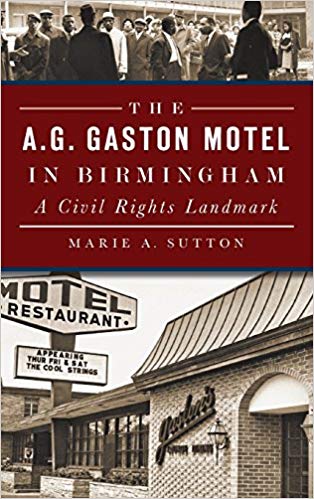
Book Available on Amazon
Gaston gave back to the community. He donated $50,000 to establish the A. G. Gaston Boys Club in Birmingham. During the Birmingham civil rights movement In the 1960s, Gaston was sometimes criticized as being an accommodationist. It is not lost on history, however, that it was his wealth that was crucial to the achievement of the efforts of the civil rights movement. For example, Gaston provided civil rights activists such as Martin Luther King, Jr. with reduced costs accommodations at his motel. When King was arrested in 1963, it was Gaston who bailed him out of jail. His support of the civil rights movement lead to his motel being bombed on May 12, 1963. His home was bombed in September 1963. In 1976, Gaston was kidnapped and tortured with a hammer before he was rescued by the police. 

Gaston has been bestowed with many honors. In 1975, he received an honorary law degree from Pepperdine University. Black Enterprise magazine named him “Entrepreneur of the Century in 1992. Gaston published his autobiography, Green Power: The Successful Way of A. G. Gaston in 1968. Read more about A. G. Gaston in the biography Black Titan, A. G. Gaston and the Making of a Black American Millionaire. New York: One World, 2004. His goal was to inspire Black entrepreneurship. His powerful life and words should not be lost on the generations. 

Mary Elizabeth Bowser: A Union Military Spy in the Southern Confederate White House


Mary Elizabeth Bowser
The story of Mary Elizabeth Bowser is one of intrigue and espionage during the U.S. Civil War. She is among a number of Black women who served as spies for the Union. The most well-known Union spy is Harriet Tubman, who worked in South Carolina and Florida.

Like much about Mary, her exact birth and date of death are shrouded in mystery. Many commentaries report that she was likely born in 1839 as Mary Elizabeth Richards into slavery on the plantation of John and Elizabeth Van Lew near Richmond, Virginia. John Van Lew was a wealthy hardware merchant. In 1851, when John Van Lew died, his widow Elizabeth freed Mary and all of the other enslaved Africans on the Van Lew plantation. A staunch abolitionist and Quaker, Elizabeth also purchased many of her former slave's family members owned by others. She would also free them in an effort to bring the families back together.

Recognizing Mary's keen intelligence, Elizabeth sent her north to attend the Quaker School for Negroes in Philadelphia. After Mary graduated she returned to Richmond and married Wilson Bowser, a free Black man on April 16, 1861. This was only a few days before the U.S. Civil War began. The couple settled near Richmond and Mary maintained a close relationship with Elizabeth.

A southern lady, Elizabeth had earned quite a reputation for her sympathies. Dubbed "Crazy Bet", she encouraged this personae to cover the very serious espionage work for the Union when the Civil War began. She organized an intricate spy operation in support of the Union by using her resources and connections in the Confederate capital. It is said that her mansion was outfitted with many secret doors that led to secret rooms that became a safe haven for African fugitives who also supplied Elizabeth with information that she transcribed into cipher codes sent to Union officers, which included General Ulysses S. Grant.

Elizabeth's operation became so sophisticated that she planned to send a spy to the white house of Jefferson Davis, the president of the Confederacy. Mary Elizabeth Bowser, an able actress like Elizabeth herself, would become "Ellen Bond", a dull-witted, but able servant for the White House of the Confederacy. 

Once settled in Davis's home, Mary played her role well. She pretended to be slow-thinking. No one suspected that she could read, for this would have been illegal within the Confederate states. Mary read warfare dispatches as she cleaned the house. She listened keenly to the conversations of the Confederate men as she served them meals. These military communications would be relayed back to the Van Lew mansion. Elizabeth coded information, which was placed inside of false eggs or printed on dress patterns -- to be passed to her network of Union agents.

Jefferson Davis eventually began to suspect that there was a leak. The Union was learning entirely too much, as the most secret communications of the cabinet were divulged. In the last days of the war, suspicion fell on Mary and she fled from the Davis's house in January 1865. Her last act for the Union was an attempt to burn down the Confederate White House, but this was unsuccessful.

Even after the war, Elizabeth never revealed Mary's espionage work. We know about this information today from others, such as Thomas McNiven, another Union spy in Richmond who was a baker. The Thomas McNiven Papers report that Mary "was working right in the Davis home and had a photographic mind. Everything she saw on the Rebel president's desk, she could repeat word for word. Unlike most colored, she could read and write. She made a point of always coming out to my wagon when I made deliveries at the Davis' home to drop information."

After the Civil War ended, the U.S. federal government destroyed its records related to Southern spies during Reconstruction to protect their lives. There was, however, a journal known to have been written by Bowser herself. It is said to have chronicled her wartime work, but the journal was lost by the Bowser family around 1952. There is no record of Bowser's life after the war. There is no exact date known regarding her death. In 1995, the U.S. government honored the service of Mary Elizabeth Bowser by inducting her in the Military Intelligence Corp Hall of Fame.

Reverend Absalom Jones and the Early U.S. Anti-Slavery Resistance


Absalom Jones was born into U.S. slavery at Sussex, Delaware on November 7, 1756. His mother and father were separated from him when he was sold and they were taken together Pennsylvania. He taught himself to read and was allowed to marry. Remarkably, he purchased his wife's freedom in 1778 in order that their children would be free. By 1784, Jones had purchased his freedom. Three years later, in 1787, with Richard Allen, Jones established the Free African Society, a mutual aid society. 
 
In 1793, the Fugitive Slave Act was established in the United States to aid slave owners in recovering those enslaved persons of African descent who escaped captivity. On January 2, 1800, Jones led a group of free Africans living in Philadelphia, Pennsylvania in presenting a petition to the U.S. Congress calling for the repeal of the Fugitive Slave Act, as well as to act to end the robust slave trade of Africans to the United States. 

The U.S. House voted 85-1 to reject the petition. Who was the lone voice of dissent against slavery? Massachusetts Congressman George Thacher opposed the movement in overwhelming opposition to the petition by his political colleagues. Thacher condemned slavery as "a cancer of immense magnitude, that would sometime destroy the body politic, except a proper legislation should prevent the evil."


 Fugitive Slave Act was enforced by U.S. Marshals

In contrast, South Carolinia Congressman John Rutledge, Jr. comments in support of the all-white male institution's action defeating the efforts of the anti-slavery petition was that “this new fangled French philosophy of liberty and equality” would not be heard among the men, most of whom were owners of enslaved Africans.

Against the backdrop of a slave society that was formally enforced by a legal system willing to play an active role in policing runaway slaves, in 1816, Rev. Jones would remain an active abolitionist. In 1816, he formed the African Methodist Episcopal (A.M.E.) church and became the first American of African descent to be ordained as a minister in the Methodist church.

But the early resistance was already on record. The trajectory of change had been marked. After the 1793 Haitian Revolution, rumors of slave rebellions in the U.S. abound as thousands of Haitian refugees began to flood American ports in such places as New Orleans. In fact, one day prior to the presentation of the anti-slavery petition, on January 1, 1800, Gabriel Prosser had conspired to seize Richmond, Virginia with a force of over 1,000 enslaved Africans. The plan was uncovered before it could be unleashed on Richmond's slaveholding residents. Afterwards, public executions and the deportation of nearly a dozen Africans to the West Indies would occur.

Additionally, in 1800, the same year the anti-slavery petition was presented and defeated, two abolitionists were born, Nat Turner and John Brown. While the slave-based economy of the U.S. would continue for many decades afterward, the later military actions of the abolitionists, Turner and Brown, would continue the inevitable trajectory towards freedom that would ultlimately lead to the U.S. Civil War and end of slavery in 1865.

The actions of great leaders like Rev. Absalom Jones must not be forgotten by the generations of African Americans who now enjoy freedom from physical slavery. The works of these great leaders must serve as inspiration and lessons in resistance to all forms of injustice -- however uniquely framed. The struggle for justice in the United States has never been achieved through passive engagement or simply by by petitioning those who wield the hammer of injustice. “Power concedes nothing without a demand,” said Frederick Douglass, “it never has and it never will.”


Sadie Alexander: An Early African-American Lawyer and Civil Rights Activist

Sadie Tenner Mossell Alexander (b. 1/2/1898 - d. 11/1/1989)
Sadie Tanner Mossell Alexander accomplished many "firsts" in her lifetime. Born January 2, 1898 in Philadelphia, Pennsylvania, Alexander would go on to become the first African-American woman to receive a Ph.D. in Economics and the first African-American woman to receive a law degree from the University of Pennsylvania and become a Pennsylvania lawyer.

Born Sadie Tanner into a prominent African-American family, she grew up in the home of her uncle Henry Ossawa Tanner, the internationally renowned painter.  Her grandfather was Benjamin Tucker Tanner, bishop of the African Methodist Episcopal (AME) church and editor of both the African Methodist Episcopal Review (1884-1888) and the Christian Record (1868-1884). Aaron Albert Mossell, her father, was a graduate of Lincoln University and the first African American to graduate from the University of Pennsylvania Law School in 1888. Louis Baxter Moore, her uncle, was the first African American to receive a Ph.D. from the University of Pennsylvania.

Henry Ossawa Tanner
Sadie Tanner attended high school at the famous M Street High School in Washington D.C., which was later named Dunbar High School. She was encouraged by her mother and the historian Dr. Carter G. Woodson to continue her education. She was accepted into the University of Pennsylvania and by 1918, she received a Bachelors of Science degree in Education with honors. In 1919, she received a Masters of Art degree in Economics. By 1921, she received a Ph.D. in Economics from the Wharton School of Economics at the University of Pennsylvania, becoming the first woman of African descent to receive a Ph.D. in Economics. Active in the leadership of the Delta Sigma Theta Sorority, community development issues were very important to Alexander. This was reflected in the topic of her doctoral dissertation: "The Standard of Living Among One Hundred Negro Migrant Families in Philadelphia."
Alexander with sisters of Delta Sigma Theta Sorority

After graduating from the University of Pennsylvania, Alexander became an actuary with the North Carolina Mutual Life Insurance Company, a Black-owned insurance company in the then booming Black Wall Street in Durham, North Carolina. In 1923, Alexander married Raymond Pace Alexander, an alumni of Harvard Law School and recently barred as an attorney in Pennsylvania. Shortly after marrying Raymond Pace Alexander, she returned to school to study law.


By 1927, Alexander became the first African-American woman to receive an L.L.B. from the University of Pennsylvania Law School and was also admitted to Pennsylvania State Bar as an attorney. Alexander was joining a tradition started by Lutie Lytle, the first African-American woman lawyer in the United States. Attorney Lytle had received her law degree in 1897 from the Tennessee Law School. 

"The heyday was Reconstruction, really," states law professor Judith Kilpatrick, author of the Arkansas Law Review "(Extra)Ordinary Men: African-American Lawyers and Civil Rights in Arkansas Before 1950," speaking on the practice of law by African Americans before and after Reconstruction, a brief historical period immediately proceeding the end of the U.S. Civil War. By 1890, like many other states, Arkansas began to pass laws "that forced Black people out of public office and made it impossible to vote," says Kilpatrick.

Attorney Sadie Alexender
By the time Alexander joined her husband's law firm, African American lawyers were faced with significant state-imposed legal challenges to the civil rights secured after the U.S. Civil War. Together with her husband, Alexander challenged Jim Crow laws, fighting against segregation and discrimination in Philadelphia's restaurants, hotels, and theaters. She was the first African-American woman to serve as assistant city solicitor of Philadelphia, and was elected secretary of the National Bar Association in 1943, the first woman to hold a national office in the NBA.  

'Black professional women may shed light on the unique experience of a group that has conquered double discrimination," states McLean Tobin, author of The Black Female Ph.D. "In most cases being both Black and female produces a defeating situation. Sadie Alexander overcame this 'double jeopardy,' and paved the way for her sisters to pursue doctoral degrees."

In 1947, U.S. President Harry S. Truman appointed Alexander to the President's Committee on Civil Rights. During her tenure under this federal appointment, the report "To Secure These Rights", became the basis for future civil right policy making. In 1959, Alexander opened her own law office and practiced there for nearly 20 years. In 1974, Alexander received a fifth degree from the University of Pennsylvania, an honorary degree of Doctor of Laws. By 1976, she closed her law office and joined the law firm of Atkinson, Myers and Archie. She maintained an active membership in nearly three dozen local and national civic organizations while practicing law. On November 1, 1989, attorney Alexander died at the age of 91 in her beloved Philadelphia, Pennsylvania.  

Debates in History: The Poem "Booker T. and W.E.B." by Dudley Randall

Booker T. and W. E. B.
Photo: Booker T. Washington (b. 4/5/1856 - d. 11/14/1915)
 W. E. B. Du Bois and Booker T. Washington

Photo: W. E. B. Du Bois (b. 2/23/1868 - d. 8/27/1963)
A Poem By Dudley Randall

"It seems to me," said Booker T.,
"It shows a mighty lot of cheek
To study chemistry and Greek
When Mister Charlie needs a hand
To hoe the cotton on his land,
And when Miss Ann looks for a cook,
Why stick your nose inside a book?"

"I don't agree," said W.E.B.
"If I should have the drive to seek
Knowledge of chemistry or Greek,
I'll do it. Charles and Miss can look
Another place for hand or cook, 
Some men rejoice
in skill of hand,
And some in cultivating land,
But there are others who maintain
The right to cultivate the brain." 

"It seems to me," said Booker T.,
"That all you folks have missed the boat
Why shout about the right to vote,
And spend vain days and sleepless nights
In uproar over civil rights.
Just keep your mouths shut, do not grouse,
But work, and save, and buy a house."

"I don't agree," said W.E.B.
"For what can property avail
If dignity and justice fail?
Unless you help to make the laws,
They'll steal your house with trumped-up clause.
A rope's as tight, a fire as hot,
No matter how much cash you've got.
Speak soft, and try your little plan,
But as for me, I'll be a man."

"It seems to me," said Booker T.

"I don't agree," said W.E.B.

Dudley Randall, poet (b. 1/14/1914 - d. 8/5/2000)

Jackie Ormes: First African-American Woman Syndicated Cartoonist

Jackie Ormes (b. 8/1/1911 - d. 12/26/1985)
Jackie Ormes was born Zelda Mavin Jackson in Monogahela, Pennsylvania on August 1, 1911 to parents William Winfield Jackson and Mary Brown Jackson. Her family owned and operated a printing business and a movie theater that served the Pittsburgh community up until 1917 when her father died in a motor vehicle accident. Ormes was certainly influenced by this family tradition in printing and entertainment as she would later become the first African-American woman syndicated cartoonist in the United States.

Ormes began her journalism career in 1930 at the Pittsburgh Courier as a proofreader, later covering the police beat and other community stories. A year after marrying Earl Ormes in 1936 -- whom she would be married to for 45 years, until his death -- her big break as a comic strip artist unfolded. From 1937 to 1938, the weekly Pittsburgh Courier started publishing her first comic strip Torchy Brown in "Dixie to Harlem," a humorous depiction of a Mississippi teen who found fame and fortune singing and dancing in the Cotton Club.

Image of Torcy Brown comic strip by Jackie Ormes

In 1942, Ormes and her husband would move to Chicago. As a woman, she was a trailblazer in becoming a syndicated cartoonist because such professional opportunities were very limited for women of any race. In addition to the Pittsburgh Courier, her work would also be featured in the widely circulated Chicago Defender.  In Chicago, Ormes developed the Patty-Jo 'n' Ginger and Candy comic strips. The Candy comic strip ran for four months in the Chicago Defender, while Patty-Jo 'n' Ginger ran for 11 years. During this time, Ormes also published a social column and wrote special assignment pieces for the newspaper.

 Even for the casual observer, it is apparent that African American cartoonist Jackie Ormes modeled some of her beautiful female characters after herself.
Image: collectible Patty Jo doll from work of Jackie Ormes
Ormes' work later developed into other mediums of expression for her characters, such as the mass production of the Black doll modeled after her Patty Jo character. In 1947, this doll was launched and accompanied by a trove of elegantly styled clothing for the delight of youngsters. She also developed the "Torchy Togs" paper doll series.

While creating a comic strips can seem a very non-political endeavor, Ormes' work included social and political satire that landed her on the FBI's investigation list during the McCarthy era. She bravely addressed racial injustice, as well as domestic and foreign policy related to equality, environmental pollution and war issues. Ormes retired in 1956, ending the eleven year run of the Patty Jo 'n' Ginger comic strip. She remained active, however, within the African American community in Chicago through her services with the Chicago Urban League and Clarence Darrow Community Center.

The great number of Jackie Ormes papers are now housed as The DuSable Museum of African American history through a project funded by the Black Metropolis Research Consortium "Color Curtain Processing Project." The papers span from 1938-1985, reflecting her professional and social life in Chicago during that period.

Support Our Work by Buying a T-Shirt