Showing posts with label Black American. Show all posts

Professor Merze Tate — Scholar, Educator, and Global Trailblazer


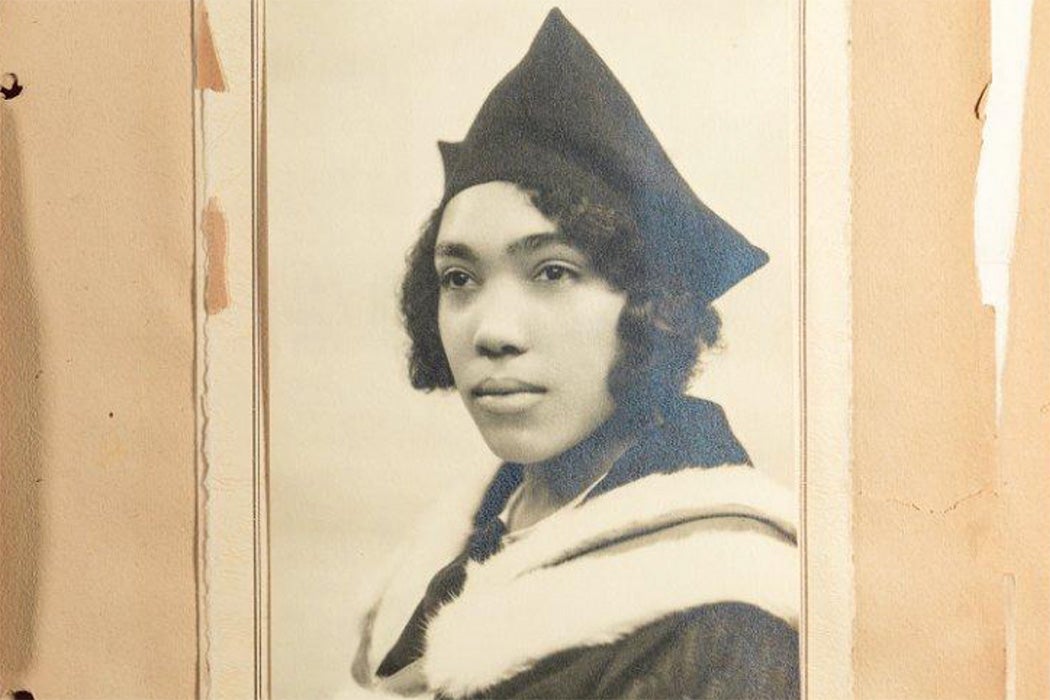
A portrait of Merze Tate from a scrapbook of photographs, letters and newspaper clippings


When it comes to celebrating Black history, certain figures shine brightly because of their ability to carve new paths where none existed before. Professor Merze Tate (b. 2/6/1905, Blanchard, Michigan – d. 6/27/1996) was one such pioneer. Scholar, teacher, and international thinker, she broke racial and gender barriers at every turn. Her life story is one of “firsts,” but it is also a testament to persistence, vision, and a lifelong dedication to education and global understanding.

Roots of Determination

Merze Tate was born on October 24, 1905, in Blanchard, Michigan, a small rural town where educational and professional opportunities for African Americans were extremely limited. She grew up in a modest household and learned early the value of hard work and perseverance. From a young age, she walked miles to attend school, often helping her family with chores before and after classes. Despite these challenges, Tate excelled academically, demonstrating a natural curiosity and determination that would define her life. Her early experiences instilled in her a belief that education could be a powerful tool for personal advancement and social change, laying the foundation for the groundbreaking career that would follow. Trailblazing Scholar at Western Michigan University.

Tate’s pursuit of education led her to Western Michigan Teachers College (today’s Western Michigan University), where she graduated in 1927. She became the first African American student to earn a degree from the college and achieved the highest GPA in her class. Her exceptional academic record reflected not only intelligence but also extraordinary discipline and resilience.

A Historic Journey to Oxford


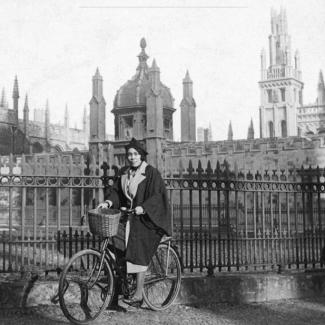
In 1932, Tate was admitted to The Society of Oxford Home-Students -- now known as St. Anne's College -- becoming the first African American woman to study at Oxford University. It was an extraordinary achievement during a time when both racial segregation and gender discrimination restricted access to higher education. 

Her dedication and scholarship culminated in 1935, when she became the first African American to be awarded a B.Litt. degree by Oxford. Her studies in international and diplomatic history showcased her academic brilliance and laid the groundwork for her future contributions to global diplomacy.

Advanced Scholarship and a Career at Howard University

After Oxford, Tate continued her education in the United States, earning a Ph.D. in government and international relations from Radcliffe College (Harvard University’s coordinate institution for women at the time). She joined the faculty at Howard University in 1942, where she would teach for 35 years.

At Howard, Tate focused on international relations, disarmament, and diplomacy, mentoring generations of students who would go on to shape law, policy, and academia. She was recognized for her rigorous scholarship and insistence that students understand global dynamics, emphasizing how international events shaped domestic realities.

Advising Eisenhower

In the late 1940s, Tate’s expertise reached the highest levels of government when she advised General Dwight D. Eisenhower on issues related to disarmament. This appointment was extraordinary at a time when women of color were largely excluded from policy-making circles, underscoring her recognition as a leading intellectual in international affairs.

Merze Tate, wearing her graduation cap and gown, shakes hands with WMU President Dr. Paula Sangren.

Beyond the classroom, Tate was a world traveler and educator. She founded a travel club at Crispus Attucks High School, taking students on cultural excursions to broaden their horizons. Her travels—from Europe to India and across the Pacific—provided both inspiration and research material for her scholarly works. Tate’s dedication to education extended beyond her own achievements, as she encouraged students to engage with the world and pursue knowledge as a means of empowerment.

Legacy and Honors

Cover for "Merze Tate: The Global Odyssey of a Black Woman Scholar"

Professor Merze Tate passed away on July 8, 1996, leaving a legacy that continues to inspire. Her life’s work opened doors for future generations of African American scholars and women in academia. Her honors include:

The Merze Tate College at Western Michigan University,

  • Recognition from the International Studies Association and the American Political Science Association,
  • The Merze Tate Explorers program inspired by her travel club,
  • Induction into the Michigan Women’s Hall of Fame, and
  • A reading room at Oxford University named in her honor.
  • Her archival collections, including photo albums, scrapbooks, and letters, document her travels, teaching, and global engagement. These materials are housed at Western Michigan University and offer an inspiring window into her life and scholarship.

Why Professor Tate Matters Today

 Merze Tate’s story reminds us that barriers—no matter how entrenched—can be broken. She was more than a “first”; she was a visionary who believed in the transformative power of education, global awareness, and mentorship. Celebrating her life honors a Black history hero whose courage, intellect, and pioneering spirit continue to inspire generations of scholars, educators, and leaders worldwide.

Ralph Bunche | Political Scientist and Diplomat

Ralph Johnson Bunche (b. 8/7/1904 - d. 12/9/1971) 

Ralph Johnson Bunche was born in Detroit, Michigan on August 7, 1904 to Olive Agnes and Fred Bunche. His family moved to Toledo, Ohio for a while before returning to Detroit in 1909. In 1914, at the age of 10 years old, Bunche’s family moved to Albuquerque, New Mexico where they hoped the dry weather would improve his parents’ health. Unfortunately, both of his parents died two years after the move to New Mexico. The young Bunche then moved to Los Angeles with his two sisters to live with his grandmother, affectionally called “Nana”, who had been born into slavery. In Los Angeles, Bunche embraced his responsibility within his household, taking on all types of odd jobs while he pursued his education. 

THE SCHOLAR 
Bunche represented Black Excellence before it became a term of art. In Los Angeles, he graduated as valedictorian of Jefferson High School. By 1927, we find Bunche again earning the distinction of valedictorian — but now as a UCLA college graduate, majoring in international relations. In 1928, he completed his master’s degree at Harvard University in political science. In 1932-33, he was awarded a Rosenwald Fellowship that afforded him the opportunity to conduct research into his dissertation topic comparing the colonial rule of France in the colonies of Dahomey and Togoland. 

Upon completing his PhD in political science from Harvard University, Bunche’s dissertation was awarded the Topaz Prize for outstanding research on comparative politics from Harvard University’s Department of Government. Bunche would go on to complete postdoctoral research in anthropology at Northwestern University, the London School of Economics, and Capetown University in South Africa. From 1928 to 1950, he chaired the Department of Political Science at Howard University. From 1950-1952, he taught at Harvard University. 

THE CIVIL AND HUMAN RIGHTS ACTIVIST
Ralph Bunche with
Dr. Martin Luther King, Jr.


In addition to his scholastic work, Bunche was active in both civil rights and human rights movements. In 1936, he published his first book “A World View of Race”, which argued that “race is a social concept which can be and is employed effectively to rouse and rationalize emotions [and] an admirable device for the cultivation of group prejudices.” 

Bunche was a member of the so-called Black Cabinet, whom then U.S. president Theododre Roosevelt consulted with on race issues. In 1963, he was present at the March on Washington for Jobs and Freedom, organized by A. Philip Randolph and Bayard Rustin. In 1965, he supported the civil rights march in Montgomery, Alabama, organized by Martin Luther King, Jr. Bunche was known to lend his influence as a speaker and writer to civil rights organizations like the National Association for the Advancement of Colored People.

Bunche was a leading actor in ending colonialism. He helped facilitate the global struggle of colonized nations seeking decolonization from European nations using international institutions like the United Nations. In 1945, Bunche served on the delegations charged with drafting the United Nation’s charter. Much of this work was completed through the United Nation’s Trusteeship Department, which was charged with troubleshooting the decolonization process for many countries in the mid-20th century. He often urged African-Americans to take on positions within the United Nations. 

THE NOBEL PEACE PRIZE WINNER 
Ralph Bunche at the United Nations


From June 1947 to August 1949, the Arab-Israeli conflict had escalated into fighting in Palestine. Bunche is known for his significant service in brokering an armistice agreement between Egypt and what would become the State of Israel. He was initially appointed assistant to the United Nations Special Committee on Palestine, and later as principal secretary of the United Nations Palestine Commission. The commission was charged with carrying out a proposed partition approved by the United Nations General Assembly. The commission worked from the island of Rhodes as their headquarters. The proposed partition fell through, however, and fighting intensified between the Arabs and Jews. 

Count Folke Bernadotte was appointed by the United Nations as a mediator in the escalated conflict. Ralph Bunche was appointed to assist Folke. On September 17, 1948, four months after his appointment, Folke was assassinated in Jerusalem by members of the underground Jewish Lehi group. This was a Zionist paramilitary militant organization that was led by Yitzhak Shamir, whom would become Prime Minister of Israel in 1983. Bunche was named acting United Nations mediator on Palestine, but conducted all of the commission’s affairs from the island of Rhodes. 

In 1949, an armistice agreement between Palestine and Israel was brokered after eleven months, which effectively halted the violent Middle East crisis. Bunche returned back to the United States as a hero. On December 10, 1950, he became the first person of African descent to receive a Nobel Peace Prize for his role in brokering the armistice agreement. 

THE MEDIATOR
Ralph Bunche with Patrice Lumumba,
former Prime Minister of the
Democratic Republic of the Congo


Bunche served as a mediator in many global conflicts areas. This includes the Sinai (1956), the Congo (1960), Yemen (1963), Cyprus (1964), India-Pakistan war (1965) and Bahrain (1970). In 1971, he retired from the United Nations. Bunche died six months after his retirement. In 2003, UCLA’s Center for African American Studies was renamed after Bunche to commemorate a hundred years since his birth. 

“Peace is no mere matter of men fighting or not fighting,” said Bunche. “Peace, to have meaning for many who have known only suffering in both peace and war, must be translated into bread or rice, shelter, health, and education, as well as freedom and human dignity — a steadily better life. If peace is to be secure, long-suffering and long-starved, forgotten peoples of the world, the underprivileged and the undernourished, must begin to realize without delay the promise of a new day and a new life.”

Mary Elizabeth Bowser: A Union Military Spy in the Southern Confederate White House


Mary Elizabeth Bowser
The story of Mary Elizabeth Bowser is one of intrigue and espionage during the U.S. Civil War. She is among a number of Black women who served as spies for the Union. The most well-known Union spy is Harriet Tubman, who worked in South Carolina and Florida.

Like much about Mary, her exact birth and date of death are shrouded in mystery. Many commentaries report that she was likely born in 1839 as Mary Elizabeth Richards into slavery on the plantation of John and Elizabeth Van Lew near Richmond, Virginia. John Van Lew was a wealthy hardware merchant. In 1851, when John Van Lew died, his widow Elizabeth freed Mary and all of the other enslaved Africans on the Van Lew plantation. A staunch abolitionist and Quaker, Elizabeth also purchased many of her former slave's family members owned by others. She would also free them in an effort to bring the families back together.

Recognizing Mary's keen intelligence, Elizabeth sent her north to attend the Quaker School for Negroes in Philadelphia. After Mary graduated she returned to Richmond and married Wilson Bowser, a free Black man on April 16, 1861. This was only a few days before the U.S. Civil War began. The couple settled near Richmond and Mary maintained a close relationship with Elizabeth.

A southern lady, Elizabeth had earned quite a reputation for her sympathies. Dubbed "Crazy Bet", she encouraged this personae to cover the very serious espionage work for the Union when the Civil War began. She organized an intricate spy operation in support of the Union by using her resources and connections in the Confederate capital. It is said that her mansion was outfitted with many secret doors that led to secret rooms that became a safe haven for African fugitives who also supplied Elizabeth with information that she transcribed into cipher codes sent to Union officers, which included General Ulysses S. Grant.

Elizabeth's operation became so sophisticated that she planned to send a spy to the white house of Jefferson Davis, the president of the Confederacy. Mary Elizabeth Bowser, an able actress like Elizabeth herself, would become "Ellen Bond", a dull-witted, but able servant for the White House of the Confederacy. 

Once settled in Davis's home, Mary played her role well. She pretended to be slow-thinking. No one suspected that she could read, for this would have been illegal within the Confederate states. Mary read warfare dispatches as she cleaned the house. She listened keenly to the conversations of the Confederate men as she served them meals. These military communications would be relayed back to the Van Lew mansion. Elizabeth coded information, which was placed inside of false eggs or printed on dress patterns -- to be passed to her network of Union agents.

Jefferson Davis eventually began to suspect that there was a leak. The Union was learning entirely too much, as the most secret communications of the cabinet were divulged. In the last days of the war, suspicion fell on Mary and she fled from the Davis's house in January 1865. Her last act for the Union was an attempt to burn down the Confederate White House, but this was unsuccessful.

Even after the war, Elizabeth never revealed Mary's espionage work. We know about this information today from others, such as Thomas McNiven, another Union spy in Richmond who was a baker. The Thomas McNiven Papers report that Mary "was working right in the Davis home and had a photographic mind. Everything she saw on the Rebel president's desk, she could repeat word for word. Unlike most colored, she could read and write. She made a point of always coming out to my wagon when I made deliveries at the Davis' home to drop information."

After the Civil War ended, the U.S. federal government destroyed its records related to Southern spies during Reconstruction to protect their lives. There was, however, a journal known to have been written by Bowser herself. It is said to have chronicled her wartime work, but the journal was lost by the Bowser family around 1952. There is no record of Bowser's life after the war. There is no exact date known regarding her death. In 1995, the U.S. government honored the service of Mary Elizabeth Bowser by inducting her in the Military Intelligence Corp Hall of Fame.

Support Our Work by Buying a T-Shirt