Showing posts with label African Americans. Show all posts

Florence Price: Arkansas-born Pioneer in American Classical Music

Florence Price biography succeeds in giving the composer her due | Chicago Symphony Orchestra

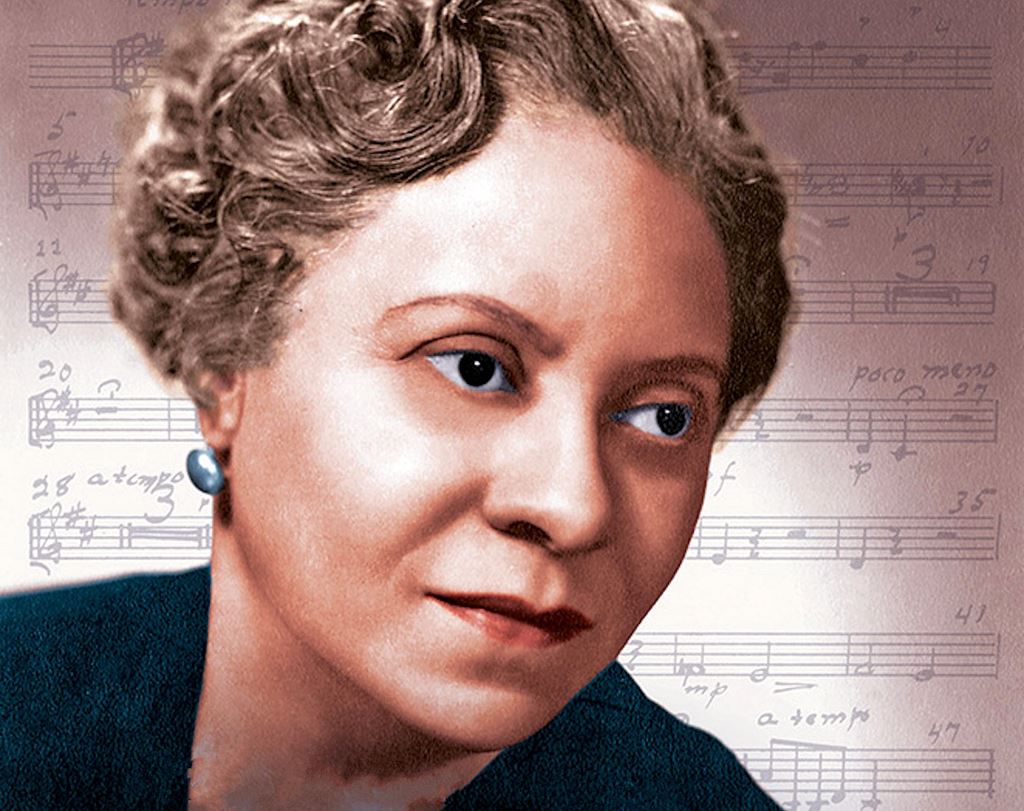
Florence Beatrice Price stands as one of the most inspiring figures in American music history—a Black woman whose talent and perseverance helped redefine what was possible in a world that too often excluded voices like hers. Born in Little Rock, Arkansas, on April 9, 1887, Price’s life was shaped by early musical promise, academic excellence, and a determination to be heard on the nation’s grandest stages. 

Early Life and Musical Roots

Florence Price (née Smith) grew up in a mixed-race, middle-class family in Little Rock. Her mother, a skilled music teacher, introduced her daughter to the piano at a very young age, and Price gave her first public performance at just four years old. By age eleven, she had already published her first musical composition, a remarkable achievement that hinted at the lifelong creativity to come. She graduated as valedictorian from Capitol Hill School at fourteen and soon after enrolled at the prestigious New England Conservatory of Music in Boston, where she completed degrees in both piano and organ performance. 

While at the conservatory, Price studied with accomplished composers and teachers, mastering European classical traditions while nurturing her own distinctive voice. Records show that, due to the rampant racial discrimination of the era, she initially registered as being from “Pueblo, Mexico” to avoid prejudice against Black students—a stark reminder of the societal barriers she faced even as her gifts shone brightly. 

Early Career: Teaching and Family

After graduating in 1906, Price returned to Arkansas to teach music. She held positions at the Cotton Plant-Arkadelphia Academy and Shorter College before becoming head of the music department at Atlanta’s Clark University, a historically Black institution. In 1912 she married Thomas J. Price, an attorney, and the couple had three children. During this period, she continued composing and performing, showing versatility as a pianist, organist, teacher, and composer. 

However, life in the segregated South was difficult. Widespread racism and violent oppression made it hard for Black artists to thrive. In 1927, Price and her family moved north to Chicago, seeking broader opportunities and a more vibrant artistic community. There she became part of a network of musicians—including contralto Marian Anderson and pianist Margaret Bonds—who championed Black composers and performers. 

Breaking Barriers in Symphonic Music

Price’s most historic achievement came in 1933, when her Symphony No. 1 in E Minor was performed by the Chicago Symphony Orchestra under conductor Frederick Stock. This marked the first time a major American orchestra played a symphony by an African-American woman, a watershed moment in classical music. Critics praised the work’s emotional depth and structural integrity, and the performance helped establish Price’s reputation beyond regional circles. 

Style-wise, Price’s music blended African-American spirituals, blues, and folk melodies with the formal techniques of European classical tradition. Her orchestral, chamber, and piano works—numbering over 300 compositions—often incorporated rich rhythmic variety and lyrical expression, creating music both deeply rooted in tradition and vividly personal. She wrote four symphonies, multiple concertos, art songs, choral works, and solo piano pieces throughout her career. 

Challenges and Later Life

Despite her undeniable talent, Price faced persistent obstacles. Classical music institutions of her day were dominated by white male composers and performers, and women—especially Black women—were often sidelined or ignored. Price experienced this firsthand: although she continued composing throughout the 1930s and 1940s, many of her later works went unperformed during her lifetime. She wrote candidly in a letter that the combination of gender bias and racial prejudice created barriers that were “unfortunately” difficult to overcome. 

Price continued to teach and compose in Chicago until her death from a stroke on June 3, 1953, at age 66. After her passing, much of her music faded from the public eye—a fate shared by many underrepresented artists of her era. 

Rediscovery and Legacy

Interest in Florence Price’s work surged decades later. In 2009, a cache of her unpublished manuscripts was discovered in an old house in Illinois, drawing musicologists and performers back to her remarkable oeuvre. These rediscovered scores included previously unknown works that have since been performed and recorded worldwide. 

In recent years, Price’s music has experienced a renaissance: orchestras regularly include her symphonies in their programming, and recordings of her works have won major accolades—including a Grammy Award. Her trailblazing achievements have been celebrated in festivals, scholarly research, and community commemorations, solidifying her place in the canon of American composers. 

Why Her Story Matters

Florence Price’s life exemplifies resilience, artistic brilliance, and the power of creative expression to transcend barriers. She not only broke significant racial and gender barriers in classical music, but she also expanded the expressive possibilities of the art form by honoring her cultural heritage within symphonic tradition.

Today, Price’s legacy continues to inspire musicians and listeners alike, reminding us that diversity enriches culture and that genius can flourish even in the face of adversity.

Essential Listening: Florence Price

These works are widely available on YouTube, Spotify, Apple Music, and classical streaming platforms:

Symphony No. 1 in E Minor (1932)

  • Why it matters: The first symphony by a Black woman performed by a major U.S. orchestra (Chicago Symphony, 1933).

Piano Concerto in One Movement

Songs to Marian Anderson

  • Standout pieces:
    “My Soul’s Been Anchored in the Lord”
    “Songs to a Dark Virgin”

Symphony No. 3 in C Minor

A. G. Gaston: The Black Business Titan Advancing African-American Entrepreneurship in Alabama

A. G. Gaston (b. 7/4/1892 - d. 1/19/1996)
When considering the incredible obstacles surmounted by A. G. Gaston and his outstanding business successes, one wonders why his legacy is not recounted and revered more in the books, journals and chronicles of Black history. A towering business figure in Alabama, Gaston overcame poverty and racial discrimination to build a multi-million dollar business empire in the heart of the South. You will respect his conglomerate when you learn that his enterprises included an insurance company, two cemeteries, a savings and loan bank, a business college, a couple radio stations, a motel, a construction company and multiple real estate holdings.

Arthur George Gaston was born in Demopolis, Alabama to Tom and Rosa McDonald Gaston. His father was a railroad worker who died soon after Gaston’s birth. His mother worked in Greensboro, Alabama as a family cook to the wealthy Jewish businessman A. B. Loveman, the founder of the largest department store in Alabama —Loveman’s of Alabama.  Gaston spent his early years in Demopolis with Joe and Idella Gaston, his paternal grandparents. It is reported that, while poor, his grandparent’s house was the only one with a swing — and opportunity the young, entrepreneurial Gaston used to charge the local children to ride the swing. By 1905, at the age of 13, Gaston would move back with his mother, this time to Birmingham, Alabama where she accompanied the relocated Loveman family.

Early Life in Birmingham

Gaston’s mother enrolled him in the Tuggle Institute when they arrived in Birmingham. The Tuggle Institute was a privately run charitable school for African American, the namesake of the social reformer Carrie Tuggle. The school was modeled after the Booker T. Washington industrial educational schools, which emphasized developing trade skills and small businesses. In fact, Booker T. Washington visited the Tuggle Institute on numerous occasions to give inspirational speeches to the students. Gaston was naturally influenced by the philosophy of “pulling ones self up by his or her boot straps”, which was the hallmark of Washington’s message. After completing the tenth grade, Gaston left the school and started working selling the black-owned newspaper founded by Oscar W. Adams in 1907, the Birmingham Reporter. The young Gaston also started working as a bellman at the Battle House Hotel in Mobile, Alabama. 

In 1913, Gaston enlisted in the U.S. Army and was assigned to the all-Black Ninety-second Infantry Division that was deployed in World War I combat in 1917. Of his $20 monthly military pay, it is reported that Gaston sent $15 home towards his first real estate mortgage investment in Birmingham. When he returned to Birmingham after the war, Gaston drove a delivery truck for a dry-cleaning company. He also worked in Fairfield, Alabama as a Tennessee Coal and Iron Company miner. While there, Gaston sold lunch sandwiches to his co-workers and eventually became a lending source to them.
The Booker T. Washington Burial Society & The Booker T. Washington Business College
By 1923 Gaston founded his first business, the Booker T. Washington Burial Society, the same year he married Creole Smith. While working in the coal mines, Gaston undoubtedly saw many early deaths from what we now recognize as harsh and unsafe working conditions in the mines. The need for poor Blacks to have affordable funeral burial services was not lost of Gaston, and as a result the fraternal order burial society was developed, along with the funeral services. Gaston attracted members from local church congregations, as well as his sponsorship of local radio programs aimed at African Americans. By 1932, Gaston has established the Booker T. Washington Insurance Company, which not only offered burial services, but also life insurance, health insurance and accident insurance. He would branch this business off into casket manufacturing and the operation of two cemeteries. In 1923, he entered a partnership with his father-in-law A. L. Smith and started the Smith & Gaston Funeral Home on real estate he bought and renovated near Kelly Ingram Park in downtown Birmingham. 
Booker T. Washington Business College in Alabama
By 1938, Gaston’s first wife Creole Smith Gaston died. In 1939, he married Minnie L. Gardner Gaston. Always one to recognize a market demand, he and his second wife founded the Booker T. Washington business school after noticing a shortage of skilled administrative staff in the community to operate his businesses. 
Growing His Alabama Black Businesses & Giving Back
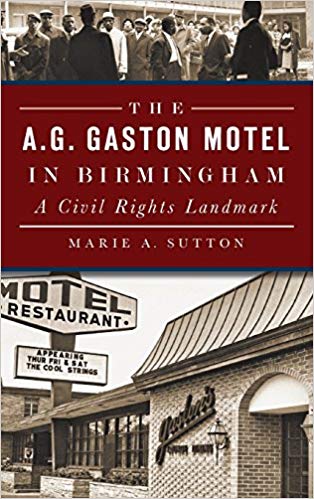
Gaston continued expanding his empire. In the early 1950s, he responded to the difficulties African-Americans faced securing home loans from White-owned banks and opened the Citizens Federal Savings and Loan Association. This became the first Black-owned financial institution in Birmingham since the Alabama Penny Savings Bank closed 40 years earlier. Gaston also developed the Vulcan Realty and Investment Company. He started manufacturing, bottling and distributing a soda called Joe Louis Punch. He started the A. G. Gaston Home for Senior Citizens and the A. G. Gaston Motel. The motel, which became a refuge, met the great demand of African Americans traveling through the South during the 1950s where few White-owned hotels and restaurants welcomed Black people. Delving into media, Gaston also owned and operated two radio stations — WAGG-AM and WENN-FM — as well as provided public relation services for other businesses through S & G Public Relations Company. It was very clear that Gaston did not come to play with us. 

Book Available on Amazon
Gaston gave back to the community. He donated $50,000 to establish the A. G. Gaston Boys Club in Birmingham. During the Birmingham civil rights movement In the 1960s, Gaston was sometimes criticized as being an accommodationist. It is not lost on history, however, that it was his wealth that was crucial to the achievement of the efforts of the civil rights movement. For example, Gaston provided civil rights activists such as Martin Luther King, Jr. with reduced costs accommodations at his motel. When King was arrested in 1963, it was Gaston who bailed him out of jail. His support of the civil rights movement lead to his motel being bombed on May 12, 1963. His home was bombed in September 1963. In 1976, Gaston was kidnapped and tortured with a hammer before he was rescued by the police. 

Gaston has been bestowed with many honors. In 1975, he received an honorary law degree from Pepperdine University. Black Enterprise magazine named him “Entrepreneur of the Century in 1992. Gaston published his autobiography, Green Power: The Successful Way of A. G. Gaston in 1968. Read more about A. G. Gaston in the biography Black Titan, A. G. Gaston and the Making of a Black American Millionaire. New York: One World, 2004. His goal was to inspire Black entrepreneurship. His powerful life and words should not be lost on the generations. 

Charlottes E. Ray: First African-American Woman Lawyer and First Woman Admitted to Practice Law Before the D.C. Supreme Court

Early Black Woman Attorney Charlotte E. Ray
On January 13, 1850, Charlotte E. Ray was born in New York City. She was one of seven children born to Charles Bennett Ray and Charlotte Augusta Ray (nia Burroughs). Her father was a minister, abolitionist and assisted Africans escaping U.S. slavery through passage on the Underground Railroad — a network of people assisting African refugees along the geographic passages that could ultimately lead to freedom.

An ardent student, Ray attended the Institution for the Education of Colored Youth in Washington D.C. In the late 1860s, Ray served as a teacher at a predatory school associated with Howard University. She would later apply for admission to Howard University law school using the name “C.E. Ray”. The school’s law program only admitted men. It is speculated that she used her initials to keep her gender a secret until acceptance.

Ultimately, Ray was admitted to law school and excelled in her studies, reportedly focusing on corporate law. One of her classmates described her as an “apt scholar,” according to the book Notable Black American Women. In 1872, Ray graduated from law school. On April 23, 1872, she was admitted to the bar of the District of Columbia. Her admission marked her as 1) the third woman in U.S. history to be admitted to practice law, 2) the first African-American female attorney in the country, and 3) the first women to be admitted to the D.C. bar and the first woman to be admitted to practice law before its Supreme Court. 
By 1873, Ray opened her own law office focusing on the area of law she excelled in, namely, commercial law. She advertised her legal services in newspapers such as the New National Era, a weekly newspaper published by Frederick Douglass — the only paper of its day published and edited by people of African descent. Douglass celebrated Ray’s graduation in his newspaper. In one published article, Douglass reports that Charlotte E. Ray is “the first colored lady in the world to graduate in law.”

While Ray served as a commercial lawyer, there is evidence that she was also active as a trial attorney. She was the first woman to practice and argue a case in the Supreme Court of the District of Columbia. On June 3, 1875, Ray submitted pleadings in the case of Gadley vs. Gadley, No. 4278, in the District of Columbia Supreme Court.  In this case, Ray represented a woman who was petitioning for a divorce against her husband for whom she charged physical domestic abuse and habitual drunkenness. 

As a solo practitioner who was both a woman and a person of African descent, it was difficult for Ray to get clients due to racism and gender discrimination. In fact, in 1875, only a couple years into Ray’s practice of law, the United States Supreme Court in Minor v. Happersett, 88 U.S. 162, made a decisive decision against women. The question before the Court was whether “since the adoption of the fourteenth amendment, a woman, who is a citizen of the United States and the State of Missouri, is a voter in that State, notwithstanding the provision of the constitution and laws of the State, which confine the right of suffrage to men alone.” The U.S. Supreme Court answered that question with a resounding no, a woman gained no rights to vote in such a situation. The respondent in that case, a female Missouri citizen, would gain no right to the franchise. The Happersett Court rejected the argument that a woman, born or naturalized in the United States and subject to its jurisdiction, is a citizen of the United States and of the State in which she resides, has the right to suffrage as one of the privileges and immunities of her citizenship, which no State constitution can abridge. 

This was the environment that Ray, a young Black woman practicing law, was face with in America. While Washington D.C. was one of the most diverse cities in the U.S., with a population of African Americans representing approximately a third of the capital city, after four years, Ray closed her law practice and moved to Brooklyn, New York. In N.Y.,  she worked as a public school teacher and became a member of the National Association of Colored Women. On January 4, 1911, at age 60, Charlotte E. Ray died in New York. On March 2006, The Northeastern University School of Law in Boston chapter of Phi Alpha Delta Law Fraternity International honored her legacy by naming their newly chartered chapter after her, in recognition of her place as the first female African American attorney in the United States. 

Isaac Burns Murphy: The Great Black Horse Jockey from Kentucky


Photo: Isaac Burns Murphy
(b. 1/2/1861 - d. 2/12/1896)
When we think of horse racing today we are hard-pressed to remember the time in the sports history when Black jockeys dominated the sport. As a matter of fact, all but one of the 15 jockeys riding in the first Kentucky Derby were African Americans. Isaac Burns Murphy was the first Black jockey to win three Kentucky Derbys and is considered one of the greatest American Thoroughbred horse racing jockeys in history.

"There is no chance that his record of winning will ever be surpassed," said Hall of Fame jockey Eddie Arcaro, referring to his 44% victory rate that has never been equaled.

Isaac was born January 2, 1861, in Lexington, Kentucky. His father was Jerry Burns (aka Jerry Skillman), a free man who was worked as a bricklayer before joining the U.S. Colored Troops in the U.S. Civil War. He died as a prisoner of war at Camp Nelson. His mother, America Burns, soon after changed Isaac's last name to Murphy as a tribute to her father Green Murphy.
Photo: Isaac Burns Murphy in action at the horse races. 
America Burns, Isaac's mother, worked as a laundress for Richard Owings of the Owings and Williams Racing Stable in prime horse territory. He quickly became acquainted with horses and launched his racing career at an early age. On September 15, 1875, at the age of 14, he won his first horse racing victory when he rode Glentina at Crab Orchard Park in Lexington, Kentucky. This was the first of 628 career victories.

Isaac holds a record number of impressive wins. In 1882, he won 49 of 51 starts at Saratoga, New York. In 1883, 1885 and 1886, he won races at the Hindoo Stakes. In 1884, 1890 and 1891, he won Kentucky Derbys. In 1884, 1885, 1886 and 1888, he won four races at the American Derby in Washington Park in Chicago. On May 23, 1887, he won the Latonia Derby in Kentucky. On June 25, 1890, he won in a neck-to-neck race against the great horse jockey Ed "Snapper" Garrison, a White jockey, in New York City.

The Life of Isaac Burns Murphy
By 1891, Isaac began to develop an off-season weight problem -- ballooning to 140 pounds. While this doesn't sound like much for a man, it is hefty for a horse jockey who aims to be light on his horse. Unfortunately, his constant efforts to lose weight adversely impacted his healthy. By 1895, Isaac had caught pneumonia.

On February 12, 1896, at the young age of 35, he died of heart failure leaving a widow behind, Lucy Murphy (nia Carr). For many decades his incredible sports legacy was forgotten, symbolized by an unmarked grave in Lexington's African Cemetery No. 2 , an historical cemetery purchased by The Colored People's Union Benevolent Society No. 2 in 1869.

In 1955, Isaac was the first person to be inducted into the National Museum of Racing and Hall of Fame. He was regarded by many as the greatest of all jockeys due to his record as having the highest winning average than any jockey in racing history during his lifetime. It wasn't until 1948, more than 50 years after his death, that someone broke his record of three Kentucky Derby victories. The National Turf Writers Association have given out the Isaac Murphy Award since 1995 to jockeys with the highest winning average in North American racing.

Resources: The Search for Isaac Murphy's Parents, Pamela Lions Brygar, CG (2009)

Be Free or Die: The Amazing Story of Robert Smalls, Escaped Slave Turned Union Hero (A Book Review)

Photograph: Robert Smalls, U.S. Civil War Hero 
I wish to make a public confession about reading the book Be Free or Die: The Amazing Story of Robert Smalls' Escape from Slavery to Union Hero by Cate Lineberry. I approached it with great skepticism. I had read U.S. Civil War books before and none of them really impressed me. In fact, I found many of them down-right boring, mired in the details of military actions – a very "White" and "male" genre.

The story of Robert Smalls in Be Free or Die, which will be published by St. Martin's Press on June 20, 2017, has changed my view. I had certainly read nothing like this before. The spectacular tale of Robert Smalls was not simply that he escaped slavery in South Carolina with his family and a band of other enslaved African Americans, but that he did so by stealing and navigating a Confederate ship into the hands of the Union navy across an armed-military fortified Charleston Harbor.

I'm not being flippant when I reveal that my first thought after reading the book was, why had I never read about Smalls in my history books. Not only was his journey unbelievably courageous, but he was a central character in the Civil War action who would go on to become a U.S. Congressman. An American hero of the U.S. Civil War, Robert Smalls story should not be lost on this generation.

The Great Escape from Slavery

The Amazing Story of Robert Smalls
In 1862, it was a mild May morning in Charleston, South Carolina. The young nation was in its second year of civil war. Robert Smalls was born into slavery among the Gullah, a distinctive community of Africans who had inhabited the coastal regions of the U.S.'s Carolinas since the beginning of slavery in the states -- which is to say from the beginning, In 1862, Smalls was 23 years old and working on a Confederate steamer. He and a crew of fellow Africans had devised a plan to steal a Confederate steamer and arrange to escape with their families across the Charleston Harbor to nearby Union forces.

In Be Free or Die, Lineberry does a crafting an exciting historical tale and chronicling Smalls'  great escape from slavery. She includes highlights of Smalls' remarkable career with the Union forces, such as his becoming the nation's first Black captain of an Army vessel and serving as a five-term member of the U.S. House of Representatives from South Carolina.

As a storyteller, Lineberry does a great job of bringing the reader along for the journey. The reader joins Smalls on each encounter with a Confederate combat ship and is able to take a glimpse into the life of someone who is a wanted by the Confederates, constantly living under the threat of retaliation --  even after the war ended!

The journeys away from South Carolina to the North provides readers insight into the activism of civil society groups boldly assisting the efforts against slavery, such as the work of the well-known Frederick Douglass, but also less well known members of the Black clergy whose church memberships became sanctuaries for Africans escaping slave states. Also a treat are the book's lesser  known historical facts, like Abraham Lincoln's plan to colonize Panama as a resettlement of the newly freed enslaved Africans.

Be Free or Die is an excellent summer read that retells the U.S. Civil War story, but also introduces many to Robert Smalls -- one of the great Civil War heroes.

Edward Wilmot Blyden on Liberia


Edward Wilmot Blyden (b. 8/3/1832 - d. 2/7/1912)

On August 3,1832, Edward Wilmot Blyden was born in Saint Thomas, U.S. Virgin Island, West Indies. He is considered by many historians as the father of Pan-Africanism. His writings and speeches are amongst the earliest works on the subject of Africans returning to the continent after the impact of the European Trans-Atlantic slave trade, even predating the influence of the late Marcus Mosiah Garvey, Jr..

Blyden was an educator, writer and diplomat who became very active in the United States and in West Africa. He is noted to be among the first three Africans admitted to Harvard Medical School. He would later become an active political figure in Liberia, the West African nation settled by free and freed Africans primarily from the Americas and West Indies.

When he married Sarah Yates, of the prominent Yates family of Liberia, he would be joining the prominent family of Beverly Page Yates, the Liberian vice-president from 1856-1860. The Blydens had three children. 

While in West Africa, Blyden also taught in Sierra Leone where he became an influential intellectual force. A frequent commentator on the political and historical actions of African nations to their global diaspora, Blyden spoke publicly on Ethiopia's win on November 16, 1875 at the Battle of Gundet against an Egypt led by colonial Arabs. Both Blyden and his contemporary, Martin Robinson Delany, praised the Gundet win as an African victory.

A Pan-African Perspective of the Battle of Gundet, Ethiopia
Below is one of the many public speeches by Edward Wilmot Blyden. Published July 27, 1857, this speech addresses some of the pressing issues facing the new settlers at Liberia -- many of whom were newly freed from the Americas. Blyden addressed the problem that arises when a populace is driven by a desire to be "rich", as seen by the conspicuous consumption patterns Blyden notes in the new inhabitants to Liberia. In this speech, Blyden also brings to the forefront of his listeners the economic perils ofdependence on the foreign aid of the United States.
* * * *
 Liberia as She is; and the Present Duty of her Citizens  

[An Independence Day address given at Monrovia, July 27, 1857     
African Repository, November 1857, pp. 328-32.] 

 What then…are the moral causes of the present evils in Liberia? …    … as a people we have been in too much haste to be rich. Relinquishing the pursuit of those attributes that would fit us for the faithful discharge of our peculiar duties as men, as Liberians, as an infant nation, we have used every possible measure to enhance our pecuniary importance; and in the precipitate efforts at wealth, we have not been careful as to what means we have employed. The desire to be rich, or to appear to be rich, pervades all classes. The love of money…has grown upon us to such a degree that all other avenues of distinction seem but trifling in comparison of those which lead to the acquisition of money.    To be rich seems with many “the chief end of man”.  Hence, no talents, no endowment of the mind, no skill or knowledge, no amount of education, is appreciated only so far as it will pay…. This fact has operated greatly in retarding the literary progress of our youth….  

CONSPICUOUS CONSUMPTION   

Another cause of our adversity may be seen in the unjustifiable extravagance in which we indulge; in that luxury of expenditure for houses, for dress, for furniture, for food, constantly made the reprehensible remark by thinking foreigners.  We are in dreadful error in regard to our country, if we suppose we are truly prosperous. Our prosperity is not real; it is false; it is fictitious.  The prosperity of a nation is real when the springs of the prosperity are contained within itself, in the hands of its citizens; when it depends for its existence upon its own resources; when it is independent.  But this is not the case in Liberia.  We are, as a nation, upheld by foreigners. We are entirely dependent upon foreigners for our schools, for churches, for preachers, for teachers.  Most of the talent of the country is in the employ and at the control of foreigners.  Those thus employed must ever hold their talents and their efforts subservient, not to what they conceive to be the interests of their country, but to the desires and direction of foreign employers…. What we wish to bring before our minds today is the humiliating fact, that nearly all the talent of Liberia—talent not in ordinary men, but in our principal men—is supported by foreign means and controlled by foreign influence.  And yet, in the face of these humbling realities, we boast of our civilization, of our prosperity, of our independence, and indulge in unjustifiable extravagance…    *     *     *    … the money lavished upon houses, which add nothing to  health and comfort; upon dress, which does not increase the dignity and beauty of personal appearance; the large sums laid out in expensive furniture, … the great amount consumed in the luxuries of the table would go a great way in keeping our streets clear of weeds, in felling the dense forests around us, in reclaiming the wilderness, in cultivating the soil, in civilizing our … brethren.    … Look at the numbers who … in order to advance to, or maintain this [extravagant] style of living, flock to the fostering arms and sheltering wings of these [foreign] societies.  Thus dis- honesty stalks abroad under the semblance of piety; and impiety assumes the appearance of religion for the sake of gain.  And … this extravagant manner of living…are made in the minds of many the standard of respectability…we attach more importance to display than to reality.  There is very little that is substantial about us…    *     *     *    …It is our duty to learn that there are other objects of infinitely greater importance than wealth in our rising country…A higher destiny is ours: our duty and privilege is the laying of the foundation of future empires in Africa…    … It is our duty to curtail our superfluous expenditures.  There should be retrenchment of our expenditures for splendid edifices….Let our surplus means be beneficially expended; let it be vested in the improvement of our country, in placing our prosperity upon a safer and more permanent foundation—in rendering ourselves independent…    … It is our duty to labor.  We dwell in a country rich in resources, which with little exertion can be called forth in sufficient variety and abundance to render us comfortable and independent. But there is a fatal lack of productive industry among us…. The commerce of the country has always been in such articles as our citizens have had no part in producing; hence we acquire wealth from this source without helping to create it.  We purchase the palm oil and camwood and ivory from the natives giving them in exchange articles of foreign production …. The prosperity arising from our commerce is almost as evanescent as that based on missionary appropriations.  Foreigners on the one hand, and the natives on the other, are our supporters.    *     *     *    … we must either abandon our state of utter dependency upon foreigners, by creating the means of supplying our own wants, or relinquish our profession of liberty as a nation.  A state of dependency is entirely incongruous with a state of liberty….    …The…rich and fertile soil…invites us to its cultivation. Nothing should be allowed to interfere between us and the soil…

Before Rosa Parks there was Charlotte L. Brown in 1863 San Francisco

A youthful Charlotte Brown was from a prominent African American family in San Francisco, California when she refused a conductor's demand that she remove herself from a streetcar because "colored persons were not allowed to ride." This was on April 17, 1863, nearly a hundred years before Rosa Parks challenged public streetcar segregation in Montgomery, Alabama in 1954.

In 1863, San Francisco had the largest Black population in the state of California. It was the era of the California Gold Rush that drew many entrepreneurs to its western shore. African Americans migrants to the region were faced with a social climate that included a prohibition against the public vote. They could not ride public transportation, nor could they use the public library. Like other African Americans across the nation, they could only attend segregated public schools.

On April 17, 1863, Brown had a doctor's appointment that was the reason for her boarding the Omnibus Railroad streetcar. She walked onto the horse-drawn streetcar and took a seat midway in the car. The conductor walked down the aisle to collect passenger tickets. Brown wrote that she "handed him my ticket and he refused to take it. He said that colored persons were not allowed to ride." Instead of accepting the ticket, the conductor demanded that Brown remove herself from the streetcar. When Brown refused, she was forcibly removed by the streetcar attendant.

Charlotte Brown's father, owner of a livery service, helped protect fugitive slaves seeking freedom in California. He encouraged her to fight this treatment in court. That same year, a law had been passed in the California legislature that allowed African Americans to testify in cases involving whites.  Brown's father would bring a lawsuit on her behalf in a California court.

The Omnibus Railroad argued that its streetcar conductor was justified in his action because racial segregation was necessary to protect European American women and children who might be "fearful or repulsed" by sitting alongside an African American. This argument was unsuccessful. The judge sided with Brown, but the damage award was only 5 cent -- reimbursement of the cost of the streetcar fare.

Only days after this court judgment, another Omnibus streetcar conductor forced Charlotte Brown and her father from a streetcar. Another lawsuit ensued. In 1864, Judge C. C. Pratt of the 12th District Court ruled that San Francisco streetcar segregation was illegal, stating in his opinion: "It has been already quite too long tolerated by the dominant race to see with indifference the Negro or mulatto treated as a brute, insulted, wronged, enslaved, made to wear a yoke, to tremble before white men, to serve him as a tool, to hold property and life at his will, to surrender to him his intellect and conscience, and to seal his lips and belie his thought through dread of the white man's power."

Brown was awarded $500 from the jury in this second civil rights case. Without the support of the 14th Amendment -- which was not in existence at the time -- Charlotte Brown challenged racial discrimination. She took a stand against racial justice on the streets of San Francisco, fueling a long tradition of civil rights activism among African American women.  

Maggie L. Walker: First African American Woman to Found a Bank in the United States

Photo of Maggie Lena Mitchell Walker (b. 7/15/1864 - d. 12/15/1934)

Maggie Lena Mitchell was born on July 15, 1864, the daughter of Elizabeth Draper and William Mitchell. Both of her parents were born into slavery in Virginia. Her mother worked as a servant at the Van Lew estate in Richmond, Virginia.

Tragedy struck the Mitchell family early in post-Civil War Richmond when her father was found floating in a river, robbed and murdered. Despite these early challenges, Maggie graduated from the Colored High and Normal School at the top of her class and would achieve national prominence as a community leader and business woman -- becoming the first African American woman in the United States to found a bank.

Born into a South changed by the Civil War, Maggie's graduating class was quite active in pressing forward the cause of equal treatment under the law. In fact, her class is known to have held the first school strike by African Americans in the United States. The topic of the strike was that graduates of European descent were given a city facility for their commencement exercises, something the students of African descent were deprived. Maggie's class was successful in its protest, resulting in succeeding graduates having equal access to tax-supported facilities.

On September 14, 1886, Maggie married Armistead Walker, Jr. Her husband was a successful brick mason and building contractor, providing her with a comfortable life to raise their two sons and care for the family.

1901 Executive Board of the Order of St Luke

The young Mrs. Walker soon became active with the Order of St. Luke organization, a fraternal burial society originally established in Baltimore in 1867 to help the aged, sick and to bury the dead. She held many positions in the fraternal order. By 1899, she was the organization's Right Worthy Grand Secretary. She soon took over the financially ailing organization when it had no money, no property and only 300 members. Bring the organization back to solvency, Maggie increased its membership to 100,000 and expanded the reach of the association to 24 states. 

Headquarters of the St. Luke Penny Savings Bank

By 1902, Mrs. Walker had developed a plan for a banking institution to be called the St. Luke Penny Savings Bank. In one of her speeches she stated,  "Let us put our money together; let us use our money; Let us put our money out at usury among ourselves, and reap the benefit ourselves." On November 2, 1903, the St. Luke Penny Savings Bank opened for business at the St. Luke Headquarters Building at 900 St. James Street in Richmond, Virginia. Mrs. Walker became its first president and the first African American woman to charter a U.S. bank.

The St. Luke Penny Savings Bank would later become the St. Luke Bank and Trust Company, a depository for city taxes and gas and water accounts. It eventually merged with two other local banks and became The Consolidated Bank and Trust Company. Until 2009, the bank was the oldest continually running African American operated bank in the United States.

Black Chicago Commemorates the 85th Annual Bud Billiken Parade and Picnic


Everyone who is anyone is said to have participated in the Bud Billiken parade -- from Joe Louis, Muhammad Ali, Duke Ellington, Billie Holiday, Oprah Winfrey, Michael Jordan, Barack Obama. Photo: Joe Lewis in Bud Billiken Parade.
August 9, 2014 marks the 85th annual Bud Billiken Parade and Picnic celebration -- commencing from 35th to 55th & Martin Luther King, Jr. Drive. Held in Chicago, Illinois annually, the parade is the oldest running African American parade in the United States of America. It is also the second largest parade in the country. Effectively, the parade, kicks off the traditional start of the school year. It marks the end of summer vacation for the young people in the Chicago, which hosts among the largest communities of people of African descent in the USA.


Portion of the Bud Billiken Day Parade, August 1948.

Portion of the Bud Billiken Day Parade, August 1973.


South Shore Drill Team performs at the 2011 Bud Billiken parade in Chicago's Bronzeville. (Photo: Kalle Eko)

The fictional character Bud Billiken was created in 1923 by Robert Sengstacke Abbott, the founder of the Chicago Defender newspaper. Before the parade began in 1929, there was a long-running Billiken newspaper column written by the famed African-American novelist Willard Motley. Embodying the hope of the African American community, for a time the Bud Billiken character also emerged into a popular comic strip in the Chicago Defender newspaper. Abbott also founded a Bud Billiken Club which continues to provide youth scholarships and training opportunities.

Chicago Defender's Bud Billiken Parade float hosts the annual King, Queen and Royal Court winners from its annual Bud Billiken youth contest. Contest winners are based on a results of a subscription drive and oral and written essay contest.


Dancers Perform at the 2012 Bud Billiken Parade (Photo: Kalle Eko)
The Bud Billiken parade was developed in 1929 and is always held the second Saturday in August to kick off the back-to-school year. It draws numerous community booths and parade floats hosted by community organizations, local businesses and government agencies -- using the gathering to distribute information and donate school supplies and other goodies to young people.

The parade occurs in the Bronzeville neighborhood on Chicago's south side, the traditional settlement of African Americans to the region during the Great Migration from southern states. The parade is now the largest parade celebration in the city of Chicago, drawing an annual local production of costumes and parade floats. It features youth marching bands, drummers, step shows, acrobats, youth dancers and more.


Photographs of Children Along Bud Billiken's Parade Route (Photo: Kalle Eko)

At the end of the parade, families and friends gather in the city's Washington Park to end the festivities with a community-wide picnic. The collective coordination of the community to bring wide youth participation in the parade is displayed by the proud shouts of encouragement supporting the creative showcase of Black Chicago from family and friends lining the miles of covered terrain. 

Support Our Work by Buying a T-Shirt