Showing posts with label African American history. Show all posts

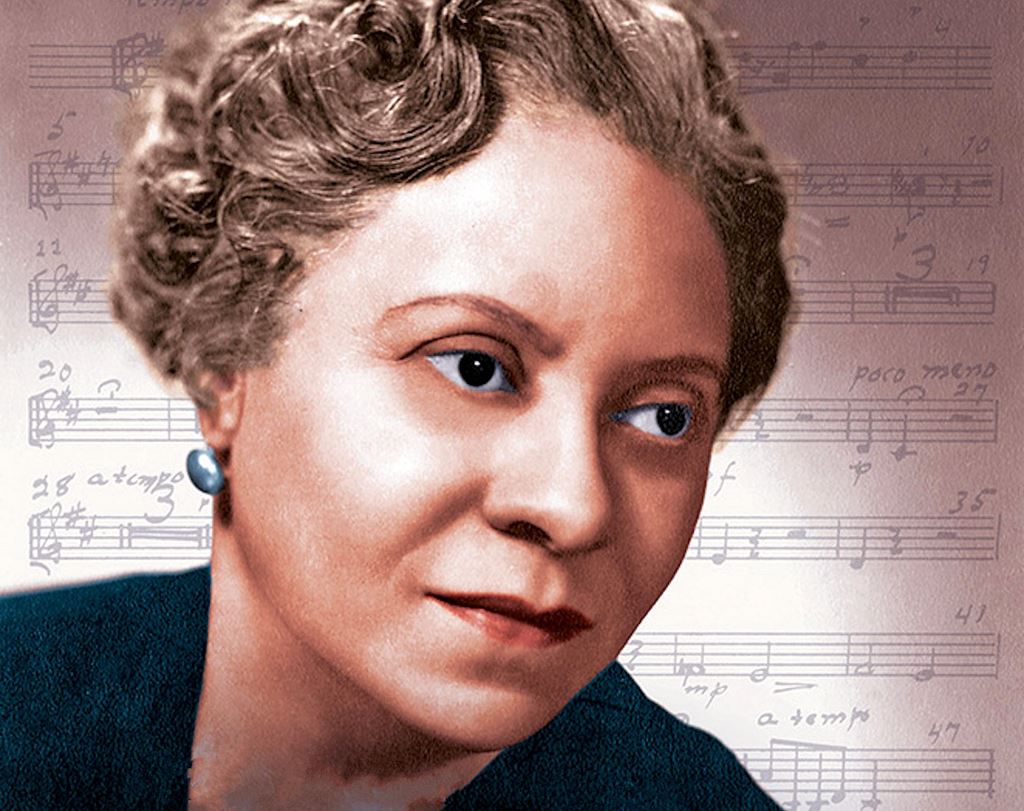
Florence Price: Arkansas-born Pioneer in American Classical Music

Florence Price biography succeeds in giving the composer her due | Chicago Symphony Orchestra

Florence Beatrice Price stands as one of the most inspiring figures in American music history—a Black woman whose talent and perseverance helped redefine what was possible in a world that too often excluded voices like hers. Born in Little Rock, Arkansas, on April 9, 1887, Price’s life was shaped by early musical promise, academic excellence, and a determination to be heard on the nation’s grandest stages. 

Early Life and Musical Roots

Florence Price (née Smith) grew up in a mixed-race, middle-class family in Little Rock. Her mother, a skilled music teacher, introduced her daughter to the piano at a very young age, and Price gave her first public performance at just four years old. By age eleven, she had already published her first musical composition, a remarkable achievement that hinted at the lifelong creativity to come. She graduated as valedictorian from Capitol Hill School at fourteen and soon after enrolled at the prestigious New England Conservatory of Music in Boston, where she completed degrees in both piano and organ performance. 

While at the conservatory, Price studied with accomplished composers and teachers, mastering European classical traditions while nurturing her own distinctive voice. Records show that, due to the rampant racial discrimination of the era, she initially registered as being from “Pueblo, Mexico” to avoid prejudice against Black students—a stark reminder of the societal barriers she faced even as her gifts shone brightly. 

Early Career: Teaching and Family

After graduating in 1906, Price returned to Arkansas to teach music. She held positions at the Cotton Plant-Arkadelphia Academy and Shorter College before becoming head of the music department at Atlanta’s Clark University, a historically Black institution. In 1912 she married Thomas J. Price, an attorney, and the couple had three children. During this period, she continued composing and performing, showing versatility as a pianist, organist, teacher, and composer. 

However, life in the segregated South was difficult. Widespread racism and violent oppression made it hard for Black artists to thrive. In 1927, Price and her family moved north to Chicago, seeking broader opportunities and a more vibrant artistic community. There she became part of a network of musicians—including contralto Marian Anderson and pianist Margaret Bonds—who championed Black composers and performers. 

Breaking Barriers in Symphonic Music

Price’s most historic achievement came in 1933, when her Symphony No. 1 in E Minor was performed by the Chicago Symphony Orchestra under conductor Frederick Stock. This marked the first time a major American orchestra played a symphony by an African-American woman, a watershed moment in classical music. Critics praised the work’s emotional depth and structural integrity, and the performance helped establish Price’s reputation beyond regional circles. 

Style-wise, Price’s music blended African-American spirituals, blues, and folk melodies with the formal techniques of European classical tradition. Her orchestral, chamber, and piano works—numbering over 300 compositions—often incorporated rich rhythmic variety and lyrical expression, creating music both deeply rooted in tradition and vividly personal. She wrote four symphonies, multiple concertos, art songs, choral works, and solo piano pieces throughout her career. 

Challenges and Later Life

Despite her undeniable talent, Price faced persistent obstacles. Classical music institutions of her day were dominated by white male composers and performers, and women—especially Black women—were often sidelined or ignored. Price experienced this firsthand: although she continued composing throughout the 1930s and 1940s, many of her later works went unperformed during her lifetime. She wrote candidly in a letter that the combination of gender bias and racial prejudice created barriers that were “unfortunately” difficult to overcome. 

Price continued to teach and compose in Chicago until her death from a stroke on June 3, 1953, at age 66. After her passing, much of her music faded from the public eye—a fate shared by many underrepresented artists of her era. 

Rediscovery and Legacy

Interest in Florence Price’s work surged decades later. In 2009, a cache of her unpublished manuscripts was discovered in an old house in Illinois, drawing musicologists and performers back to her remarkable oeuvre. These rediscovered scores included previously unknown works that have since been performed and recorded worldwide. 

In recent years, Price’s music has experienced a renaissance: orchestras regularly include her symphonies in their programming, and recordings of her works have won major accolades—including a Grammy Award. Her trailblazing achievements have been celebrated in festivals, scholarly research, and community commemorations, solidifying her place in the canon of American composers. 

Why Her Story Matters

Florence Price’s life exemplifies resilience, artistic brilliance, and the power of creative expression to transcend barriers. She not only broke significant racial and gender barriers in classical music, but she also expanded the expressive possibilities of the art form by honoring her cultural heritage within symphonic tradition.

Today, Price’s legacy continues to inspire musicians and listeners alike, reminding us that diversity enriches culture and that genius can flourish even in the face of adversity.

Essential Listening: Florence Price

These works are widely available on YouTube, Spotify, Apple Music, and classical streaming platforms:

Symphony No. 1 in E Minor (1932)

  • Why it matters: The first symphony by a Black woman performed by a major U.S. orchestra (Chicago Symphony, 1933).

Piano Concerto in One Movement

Songs to Marian Anderson

  • Standout pieces:
    “My Soul’s Been Anchored in the Lord”
    “Songs to a Dark Virgin”

Symphony No. 3 in C Minor

Anna Julia Cooper: Educator, Scholar & Black Womanist Pioneer


Anna Julia Cooper stands among the most remarkable figures in American history — a thinker, educator, writer, and activist whose life spanned from slavery to the modern Civil Rights era. Born in Raleigh, North Carolina, on August 10, 1858, Cooper’s journey from bondage to academe reshaped the landscape of African American education and feminist thought.

A Life Begun in Slavery, Transformed by Education


Anna Julia Haywood Cooper was born into slavery, the daughter of an enslaved woman, Hannah Stanley Haywood, and likely the white man who enslaved her family. After emancipation, she began her formal education in 1868 at St. Augustine’s Normal School and Collegiate Institute in Raleigh — a school founded to educate formerly enslaved people. Even as a young student, Cooper demonstrated exceptional commitment to learning and justice. She successfully petitioned for access to the same courses as male classmates and began teaching mathematics at the age of ten.


Cooper graduated in 1877 and, after the tragic death of her husband George Cooper two years later, pursued higher education at Oberlin College in Ohio. There she earned a bachelor’s degree in mathematics in 1884 and a master’s degree in 1888, making her one of the first African American women in the United States to achieve these academic honors.


From the Classroom to the World Stage


In 1887, Cooper moved to Washington, D.C., to teach at the prestigious M Street High School (later Dunbar High School) — the first public high school for Black students in the nation’s capital. She taught mathematics, science, Latin, and literature and became principal in 1902. Under her leadership, M Street earned a reputation for academic excellence, and many of its graduates went on to attend Ivy League and other top colleges. 


However, Cooper’s insistence on a rigorous, college-preparatory curriculum drew resistance from the all-white school board, which wanted vocational training instead. In 1906, she was controversially removed as principal. Yet Cooper continued teaching at the school until her retirement in 1930. 


A Voice for Black Women and Human Rights


While Cooper’s work as an educator was transformative, her influence extended far beyond the classroom. In 1892 she published A Voice from the South: By a Black Woman of the South, one of the earliest and most powerful texts in Black feminist thought. In it, she argued that Black women occupy a unique position at the intersection of race and gender oppression — and that their full liberation was essential to the advancement of American democracy. This work remains foundational in studies of race, gender, and social justice.


Cooper’s activism was also practical and organizational. She helped found the Colored Women’s League of Washington, D.C., co-organized national gatherings of Black women activists, and participated in the Pan-African Conference in London in 1900. She created “colored” branches of the YMCA and YWCA to support young Black migrants and worked throughout her life to advance educational and social opportunities for African Americans. 


Scholar, Leader, and Legacy


Never one to slow down, Cooper returned to graduate study in her later years. After studying at Columbia University, she enrolled at the University of Paris (Sorbonne) and in 1925, at age 66, became the fourth African American woman in the U.S. to earn a Ph.D. Her doctoral dissertation examined the French Revolution and slavery — a scholarly achievement that added yet another dimension to her remarkable intellectual life. 


After retiring from teaching, Cooper served as president and registrar of Frelinghuysen University, a community institution for working adults in Washington, D.C., even offering her own home as a classroom space. 


Anna Julia Cooper died on February 27, 1964, at the age of 105 — having lived through the Civil War, Reconstruction, the World Wars, and the beginnings of the Civil Rights Movement. Her legacy endures in educational institutions, feminist scholarship, and the continuing fight for racial and gender justice. 

A. G. Gaston: The Black Business Titan Advancing African-American Entrepreneurship in Alabama

A. G. Gaston (b. 7/4/1892 - d. 1/19/1996)
When considering the incredible obstacles surmounted by A. G. Gaston and his outstanding business successes, one wonders why his legacy is not recounted and revered more in the books, journals and chronicles of Black history. A towering business figure in Alabama, Gaston overcame poverty and racial discrimination to build a multi-million dollar business empire in the heart of the South. You will respect his conglomerate when you learn that his enterprises included an insurance company, two cemeteries, a savings and loan bank, a business college, a couple radio stations, a motel, a construction company and multiple real estate holdings.

Arthur George Gaston was born in Demopolis, Alabama to Tom and Rosa McDonald Gaston. His father was a railroad worker who died soon after Gaston’s birth. His mother worked in Greensboro, Alabama as a family cook to the wealthy Jewish businessman A. B. Loveman, the founder of the largest department store in Alabama —Loveman’s of Alabama.  Gaston spent his early years in Demopolis with Joe and Idella Gaston, his paternal grandparents. It is reported that, while poor, his grandparent’s house was the only one with a swing — and opportunity the young, entrepreneurial Gaston used to charge the local children to ride the swing. By 1905, at the age of 13, Gaston would move back with his mother, this time to Birmingham, Alabama where she accompanied the relocated Loveman family.

Early Life in Birmingham

Gaston’s mother enrolled him in the Tuggle Institute when they arrived in Birmingham. The Tuggle Institute was a privately run charitable school for African American, the namesake of the social reformer Carrie Tuggle. The school was modeled after the Booker T. Washington industrial educational schools, which emphasized developing trade skills and small businesses. In fact, Booker T. Washington visited the Tuggle Institute on numerous occasions to give inspirational speeches to the students. Gaston was naturally influenced by the philosophy of “pulling ones self up by his or her boot straps”, which was the hallmark of Washington’s message. After completing the tenth grade, Gaston left the school and started working selling the black-owned newspaper founded by Oscar W. Adams in 1907, the Birmingham Reporter. The young Gaston also started working as a bellman at the Battle House Hotel in Mobile, Alabama. 

In 1913, Gaston enlisted in the U.S. Army and was assigned to the all-Black Ninety-second Infantry Division that was deployed in World War I combat in 1917. Of his $20 monthly military pay, it is reported that Gaston sent $15 home towards his first real estate mortgage investment in Birmingham. When he returned to Birmingham after the war, Gaston drove a delivery truck for a dry-cleaning company. He also worked in Fairfield, Alabama as a Tennessee Coal and Iron Company miner. While there, Gaston sold lunch sandwiches to his co-workers and eventually became a lending source to them.
The Booker T. Washington Burial Society & The Booker T. Washington Business College
By 1923 Gaston founded his first business, the Booker T. Washington Burial Society, the same year he married Creole Smith. While working in the coal mines, Gaston undoubtedly saw many early deaths from what we now recognize as harsh and unsafe working conditions in the mines. The need for poor Blacks to have affordable funeral burial services was not lost of Gaston, and as a result the fraternal order burial society was developed, along with the funeral services. Gaston attracted members from local church congregations, as well as his sponsorship of local radio programs aimed at African Americans. By 1932, Gaston has established the Booker T. Washington Insurance Company, which not only offered burial services, but also life insurance, health insurance and accident insurance. He would branch this business off into casket manufacturing and the operation of two cemeteries. In 1923, he entered a partnership with his father-in-law A. L. Smith and started the Smith & Gaston Funeral Home on real estate he bought and renovated near Kelly Ingram Park in downtown Birmingham. 
Booker T. Washington Business College in Alabama
By 1938, Gaston’s first wife Creole Smith Gaston died. In 1939, he married Minnie L. Gardner Gaston. Always one to recognize a market demand, he and his second wife founded the Booker T. Washington business school after noticing a shortage of skilled administrative staff in the community to operate his businesses. 
Growing His Alabama Black Businesses & Giving Back
Gaston continued expanding his empire. In the early 1950s, he responded to the difficulties African-Americans faced securing home loans from White-owned banks and opened the Citizens Federal Savings and Loan Association. This became the first Black-owned financial institution in Birmingham since the Alabama Penny Savings Bank closed 40 years earlier. Gaston also developed the Vulcan Realty and Investment Company. He started manufacturing, bottling and distributing a soda called Joe Louis Punch. He started the A. G. Gaston Home for Senior Citizens and the A. G. Gaston Motel. The motel, which became a refuge, met the great demand of African Americans traveling through the South during the 1950s where few White-owned hotels and restaurants welcomed Black people. Delving into media, Gaston also owned and operated two radio stations — WAGG-AM and WENN-FM — as well as provided public relation services for other businesses through S & G Public Relations Company. It was very clear that Gaston did not come to play with us. 

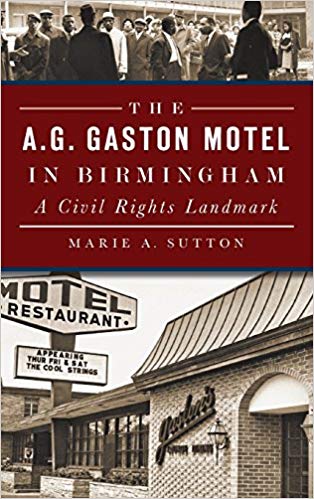
Book Available on Amazon
Gaston gave back to the community. He donated $50,000 to establish the A. G. Gaston Boys Club in Birmingham. During the Birmingham civil rights movement In the 1960s, Gaston was sometimes criticized as being an accommodationist. It is not lost on history, however, that it was his wealth that was crucial to the achievement of the efforts of the civil rights movement. For example, Gaston provided civil rights activists such as Martin Luther King, Jr. with reduced costs accommodations at his motel. When King was arrested in 1963, it was Gaston who bailed him out of jail. His support of the civil rights movement lead to his motel being bombed on May 12, 1963. His home was bombed in September 1963. In 1976, Gaston was kidnapped and tortured with a hammer before he was rescued by the police. 

Gaston has been bestowed with many honors. In 1975, he received an honorary law degree from Pepperdine University. Black Enterprise magazine named him “Entrepreneur of the Century in 1992. Gaston published his autobiography, Green Power: The Successful Way of A. G. Gaston in 1968. Read more about A. G. Gaston in the biography Black Titan, A. G. Gaston and the Making of a Black American Millionaire. New York: One World, 2004. His goal was to inspire Black entrepreneurship. His powerful life and words should not be lost on the generations. 

Charlottes E. Ray: First African-American Woman Lawyer and First Woman Admitted to Practice Law Before the D.C. Supreme Court

Early Black Woman Attorney Charlotte E. Ray
On January 13, 1850, Charlotte E. Ray was born in New York City. She was one of seven children born to Charles Bennett Ray and Charlotte Augusta Ray (nia Burroughs). Her father was a minister, abolitionist and assisted Africans escaping U.S. slavery through passage on the Underground Railroad — a network of people assisting African refugees along the geographic passages that could ultimately lead to freedom.

An ardent student, Ray attended the Institution for the Education of Colored Youth in Washington D.C. In the late 1860s, Ray served as a teacher at a predatory school associated with Howard University. She would later apply for admission to Howard University law school using the name “C.E. Ray”. The school’s law program only admitted men. It is speculated that she used her initials to keep her gender a secret until acceptance.

Ultimately, Ray was admitted to law school and excelled in her studies, reportedly focusing on corporate law. One of her classmates described her as an “apt scholar,” according to the book Notable Black American Women. In 1872, Ray graduated from law school. On April 23, 1872, she was admitted to the bar of the District of Columbia. Her admission marked her as 1) the third woman in U.S. history to be admitted to practice law, 2) the first African-American female attorney in the country, and 3) the first women to be admitted to the D.C. bar and the first woman to be admitted to practice law before its Supreme Court. 
By 1873, Ray opened her own law office focusing on the area of law she excelled in, namely, commercial law. She advertised her legal services in newspapers such as the New National Era, a weekly newspaper published by Frederick Douglass — the only paper of its day published and edited by people of African descent. Douglass celebrated Ray’s graduation in his newspaper. In one published article, Douglass reports that Charlotte E. Ray is “the first colored lady in the world to graduate in law.”

While Ray served as a commercial lawyer, there is evidence that she was also active as a trial attorney. She was the first woman to practice and argue a case in the Supreme Court of the District of Columbia. On June 3, 1875, Ray submitted pleadings in the case of Gadley vs. Gadley, No. 4278, in the District of Columbia Supreme Court.  In this case, Ray represented a woman who was petitioning for a divorce against her husband for whom she charged physical domestic abuse and habitual drunkenness. 

As a solo practitioner who was both a woman and a person of African descent, it was difficult for Ray to get clients due to racism and gender discrimination. In fact, in 1875, only a couple years into Ray’s practice of law, the United States Supreme Court in Minor v. Happersett, 88 U.S. 162, made a decisive decision against women. The question before the Court was whether “since the adoption of the fourteenth amendment, a woman, who is a citizen of the United States and the State of Missouri, is a voter in that State, notwithstanding the provision of the constitution and laws of the State, which confine the right of suffrage to men alone.” The U.S. Supreme Court answered that question with a resounding no, a woman gained no rights to vote in such a situation. The respondent in that case, a female Missouri citizen, would gain no right to the franchise. The Happersett Court rejected the argument that a woman, born or naturalized in the United States and subject to its jurisdiction, is a citizen of the United States and of the State in which she resides, has the right to suffrage as one of the privileges and immunities of her citizenship, which no State constitution can abridge. 

This was the environment that Ray, a young Black woman practicing law, was face with in America. While Washington D.C. was one of the most diverse cities in the U.S., with a population of African Americans representing approximately a third of the capital city, after four years, Ray closed her law practice and moved to Brooklyn, New York. In N.Y.,  she worked as a public school teacher and became a member of the National Association of Colored Women. On January 4, 1911, at age 60, Charlotte E. Ray died in New York. On March 2006, The Northeastern University School of Law in Boston chapter of Phi Alpha Delta Law Fraternity International honored her legacy by naming their newly chartered chapter after her, in recognition of her place as the first female African American attorney in the United States. 

When Black Folks Owned Baseball Stadiums in Memphis: Dr. John B. Martin, The Martin Brothers & The Negro League


Memphis Red Sox players in front of dugout.

Dr. John B. Martin (1885-1973), often referred to as J. B. Martin, was president of Negro League associations and owned the Memphis Red Sox (1923-1950) and the Chicago American Giants (1937-1950) baseball teams. While many people often refer to the "Negro League", this is a general term used to refer to a number of associations that included the Negro National League, the Negro American League, the Negro Southern League, as well as smaller leagues such as the Negro Dixie League. J. B. Martin served as president of the National Southern League, the National American League and the Negro Dixie League was one of the several Negro leagues created during the time organized during the time organized American baseball was segregated.

A Black-owned Sports Stadium: An Enterprising Black Family

The Memphis Red Sox was a Negro League baseball team founded in 1923 by J. B. Martin and Dr. B. B. Martin, brothers in a prominent African-American family in Memphis. The Martin brothers were both dentists with prominent dental practices. J. B. Martin was a dentist, pharmacist, operated a funeral parlor, invested in real estate and Republican political leader. He built the Martin baseball park where he owned and operated the concession stands. He also owned a hotel nearby the baseball field in Memphis, as well as enterprises on Beale Street.

J.B. Martin's family members were also quite enterprising. In addition to a dental practice, his brother Dr. B. B. Martin acted as the Red Sox business manager and served as an officer in the National Southern League. Dr. A. T. Martin worked as a general practitioner for fifty years and worked with the Red Sox for 25 years. Dr. William S. Martin, was superintendent of the Collins Chapel Hospital for 35 years, in addition to serving as an officer for the Red Sox and the Negro American League, as well as serving as president of the Negro Southern League. The four Martins, all Black doctors, were prominent in the Memphis community and within the Negro League franchises.

Negro League's Black-owned Martin Stadium in Memphis.
  In 1920, the Martin brothers built Martin Stadium on what is now Crump Boulevard and Danny Thomas, making the Red Sox one of the few baseball clubs in the Negro League with their own ballpark. Most Negro League teams played in white team parks when the white teams were on the road. Not only did the Memphis Red Sox have a stadium, J. B. Martin also owned a hotel near the park. The baseball park was built from scratch, but not without resistance from the White supremacy establishment in Memphis under what was called the "Crump Machine." Edward Hull Crump governed Memphis for decades through manipulation of both the Black and White vote into a political machine that enabled him to control Memphis politics. When J. B. Martin, a Black Republican, denounced Crump in 1939, Crump responded with mounting pressure on Martin using the Memphis police, such as targeting Martin's Beale Street businesses with raids. The Martin Stadium originally had a capacity of 3,000, but grew to nearly 7,000 seat capacity. It was demolished in 1961.

The Memphis Red Sox


The Memphis Red Sox were initially organized by Robert S. Lewis, a Memphis funeral director, in the early 1920s. When the Martin's purchased the independent team in 1924, the team joined the Negro National League and B. B. Martin acted as the Red Sox business manager. In 1926, the franchise left the Negro National League and joined the newly-established Negro Southern League for its inaugural season. In 1932, it rejoined the Negro Southern League with subsequent seasons as an independent team. In 1937, the Red Sox became a charter member of the Negro American League, where they remained until their dissolution in 195X. Four players associated with the Memphis Red Sox were inducted into the Baseball Hall of Fame: Satchel Paige, James "Cool Papa" Bell, Willy Wells, and Turkey Steams.

The Chicago American Giants

 The Negro Leagues began to diminish after Brooklyn's Jackie Robinson broke the color barrier in 1947. In 1949, J. B. Martin leased the Chicago American Giants to William Little because he wanted to spend more tie managing the affairs of the Negro American League Martin appointed Ted "Double Duty" Radcliffe as manager of the Chicago American Giants in 1950. This was three years after Jackie Robinson broke the color line. Martin was concerned about Black players joining Major League teams so he instructed Radcliffe to sign White players. The team disbanded in 1952. The Negro American League disbanded after its 1962 season. 


Mary McLeod Bethune: My Last Will and Testament


Photo: A young Mary McLeod Bethune (b. July 10, 1875 - d. May 18, 1955)
Born July 10, 1875 in Mayesville, South Carolina, Mary Jane McLeod Bethune became a civil rights leader and educator known best for creating a private school for African-American students in Daytona Beach, Florida -- now known as Bethune-Cookman University. Born to enslaved African parents, Sam and Patsy McLeod, she has left her legacy upon the wall of time: serving the African-American community, advising U.S. presidents, and more. Rising from the humblest background, she became an icon of African womanhood as preserver and a woman of courage in the face of great social and economic challenges. Below is one of McLeod's writings -- more of a prayer poem -- titled My Last Will and Testament.

If I have a legacy to leave my people, it is
my philosophy of living and serving.


Here, Then, is My Legacy...
  • I leave you love.
      Love builds. It is positive and helpful.
     
  • I leave you hope.
    • Yesterday, our ancestors endured the degradation of slavery, yet they retained their dignity.
       
  • I leave you the challenge of developing
    confidence in one another.
    • This kind of confidence will aid the economic rise of the race by bringing together the pennies and dollars of our people and ploughing them into useful channels.
       
  • I leave you thirst for education.
    • Knowledge is the prime need of the hour. 
       
  • I leave you a respect for the uses of power.
    • Power, intelligently directed, can lead to more freedom.
       
  • I leave you faith.
    • Faith in God is the greatest power, but great, too, is faith in oneself.
       
  • I leave you racial dignity.
    • I want Negroes to maintain their human dignity at all costs.
       
  • I leave you a desire to live harmoniously with your fellow man.

  • I leave you, finally, a responsibility to our young people.
      The world around us really belongs to youth, for youth will take over its future management.

    Mary McLeod Bethune
Bronze memorial statue of Mary McLeod Bethune, by Robert Berks, located in Washington D.C.

J. A. Rogers: Author, Journalist and Historical Illustrator

Photo of Joel Augustus Rogers aka J.A. Rogers (b. 9/6/1880 - d. 3/26/1966)
Joel Augustus Rogers was born September 6, 1880 in Negril, Jamaica and died on March 26, 1966 in New York City.  Rogers was a historian, journalist and author whose works made great contributions to the history of Africa and its diaspora. Of mixed-race parentage and one of eleven children, J.A. Roger's father was Samuel John Rogers, a school-teacher, minister and a plantation manager in Jamaica. Information about Roger's mother has been difficult to find.
 
What is known is that in 1906, after serving in the British Army at Port Royal, Jamaica, J.A. Rogers moved from Jamaica to Harlem, New York, where he would eventually reside during the majority of his adult life, living with his wife Helga M. Rogers. Rogers did make Black Chicago his home for a time, while working as a Pullman Porter and reporter.

In 1909, Rogers enrolled in the Chicago Art Institute. According to his biographer, Thabiti Asukile, he attended art classes there while supporting himself financially as a Pullman Porter, where he would work until 1919. As a result of his being able to travel widely within the United States as a Pullman Porter, Rogers was certainly able to access a wide variety of libraries that had developed in different cities across the country. A voracious bibliophile, Rogers compiled information about African history and began to write and self-publish his research findings.

"I found in Chicago a friend who introduced me to books in which I found the names of several great men of Negro ancestry past and present," states Rogers in his book World's Great Men of Color, Vol. 1. "In my spare time, and with no thought of writing a book, I began to collect some of these names. That was about 1911."

Early photo of J. A. Rogers.
Rogers first book was Superman to Man, privately published in 1917 and printed by the M.A. Donohue Co. In Superman to Man, Rogers used the classic literary technique of developing the central theme of a written work around a debate -- a tool frequently used by ancient historians. In the book, we see a Pullman Porter debate a white supremacist from the South regarding politics and religion. The ensuing debate served as a forum for Rogers to counter many of the stereotypes that prevailed at the time about race. Rogers' Pullman Porter argued that the concept of race, in fact, lacked scientific proof.

Rogers served as a foreign correspondent for a variety of African American newspapers, especially after he moved to Harlem in 1921. In addition to his published works for the Chicago Enterprise and Chicago Defender newspapers, Rogers wrote for the Pittsburgh Courier and served as sub-editor for the Daily Negro Times -- the latter published by Marcus Garvey. The editors of the Pittsburgh Courier sent Rogers as a correspondent to cover the coronation of Emperor Haile Selassie I in Ethiopia. Additionally, Rogers was noted as the only Black U.S. war correspondent during World War II. He would publish widely in publications such as the New York Amsterdam News, the Messenger Magazine, and others -- making him one of the leading Black journalist of his times.

Book published by J.A. Rogers -- 100 Amazing Facts About the Negro with Complete Proof

Rogers made great contribution to publishing and distributing little know African history facts through books and pamphlets such as 100 Amazing Facts About the Negro with Complete Proof and The Five Negro Presidents. His greatest interest was in exploring the concept of race that was developing into a themed possession among historians of European descent. In response, Rogers published the three-volume work Sex and Race between 1941 and 1944. From 1946 to 1947, Rogers published his pioneering work The World's Great Men of Color, printed in two volumes.

Copy of an illustrated work J.A. Rogers published in newspapers and in books. Many of his amazing facts were substantiated by subsequent writings on the topic. For example, read more about Scota of Egypt and the origins of the Scottish people at "The pharaoh's daughter who was the mother of all Scots," from The Scotsman publication.

The common thread in Roger's research was his unending aim to counter white supremacist propaganda that prevailed in segregated communities across the United States against people of African descent.The works of Rogers only became assigned reading in the most independently-developed, university curriculum of African-centered history professors -- and even then, after Rogers had passed away. The noted historian Dr. John Henrik Clarke states that Rogers "looked at the history of people of African origin, and showed how their history is an inseparable part of the history of mankind." His works have enlightened many people interested in uncovering the suppressed histories of African people. His legacy continues through the great volume of works he has left behind.

J.A. Rogers Works, Chronological by Publication Date:
  •     From "Superman" to Man. Chicago: J. A. Rogers, 1917. —novel.
  •     As Nature Leads: An Informal Discussion of the Reason Why Negro and Caucasian are Mixing in Spite of Opposition. Chicago: M. A. Donahue & Co, 1919. —novel.
  •     The Approaching Storm and Bow it May be Averted: An Open Letter to Congress Chicago: National Equal Rights League, Chicago Branch: 1920.
  •     "Music and Poetry — The Noblest Arts," Music and Poetry, vol. 1, no. 1 (January 1921).
  •     "The Thrilling Story of The Maroons," serialized in The Negro World, March–April 1922.
  •     "The West Indies: Their Political, Social, and Economic Condition," serialized in The Messenger (Volume 4, Number 9, September 1922).
  •     Blood Money (Novel) serialized in New York Amsterdam News, April 1923.
  •     "The Ku Klux Klan A Menace or A Promise," serialized in The Messenger (Volume 5, Number 3, March 1923).
  •     "Jazz at Home" The Survey Graphic Harlem, vol. 6, no. 6 (March 1925).
  •     "What Are We, Negroes or Americans?" The Messenger, vol. 8, no. 8 (August 1926).
  •     Book Review, Jazz, by Paul Whiteman." Opportunity: The Journal of Negro Life (Volume 4, Number 48, December 1926).
  •     "The Negro's Experience of Christianity and Islam," Review of Nations, Geneva (January–March 1928)
  •     "The American Occupation of Haiti: Its Moral and Economic Benefit," by Dantes Bellegarde. (Translator). Opportunity: Journal of Negro Life (Volume 8, Number 1, January 1930).
  •     "The Negro in Europe," The American Mercury (May 1930).
  •     "The Negro in European History," Opportunity: Journal of Negro Life (Volume 8, Number 6, June 1930).
  •     World's Greatest Men of African Descent. New York: J. A. Rogers Publications, 1931.
  •     "The Americans in Ethiopia," under the pseudonym Jerrold Robbins, in American Mercury (May 1933).
  •     "Enrique Diaz," in Opportunity: Journal of Negro Life, vol. 11, no. 6 (June 1933).
  •     100 Amazing facts about the Negro with Complete Proof. A Short Cut to the World History of the Negro. New York: J. A. Rogers Publications, 1934.
  •     World's Greatest Men and Women of African Descent. New York: J. A. Rogers Publications, 1935.
  •     "Italy Over Abyssinia," The Crisis, Volume 42, Number 2, February 1935.
  •     The Real Facts About Ethiopia. New York: J.A Rogers, 1936.
  •     "When I Was In Europe," Interracial Review: A journal for Christian Democracy, October 1938.
  •     "Hitler and the Negro," Interracial Review: A Journal for Christian Democracy, April 1940.
  •     "The Suppression of Negro History," The Crisis, vol. 47, no. 5 (May 1940).
  •     Your History: From the Beginning of Time to the Present. Pittsburgh: Pittsburgh Courier Publishing Co, 1940.
  •     An Appeal From Pioneer Negroes of the World, Inc: An Open Letter to His Holiness Pope Pius XII. New York: J. A. Rogers, 1940.
  •     Sex and Race: Negro-Caucasian Mixing in All Ages and All Lands, Volume I: The Old World. New York: J. A. Rogers, 1941.
  •     Sex and Race: A History of White, Negro, and Indian Miscegenation in the Two Americas, Volume II: The New World. New York: J. A. Rogers, 1942.
  •     Sex and Race, Volume III: Why White and Black Mix in Spite of Opposition. New York: J. A. Rogers, 1944.
  •     World's Great Men of Color, Volume I: Asia and Africa, and Historical Figures Before Christ, Including Aesop, Hannibal, Cleopatra, Zenobia, Askia the Great, and Many Others. New York : J. A. Rogers, 1946.
  •     World's Great Men of Color, Volume II: Europe, South and Central America, the West Indies, and the United States, Including Alessandro de' Medici, Alexandre Dumas, Dom Pedro II, Marcus Garvey, and Many Others (New York: J. A. Rogers, 1947).
  •     "Jim Crow Hunt," The Crisis (November 1951).
  •     Nature Knows No Color Line: Research into the Negro Ancestry in the White Race. (New York: J. A. Rogers, 1952).
  •     Facts About the Negro. (Drawings by A. S. Milai) (booklet) (Pittsburgh: Lincoln Park Studios, 1960).
  •     Africa's Gift to America: The Afro-American in the Making and Saving of the United States. With New Supplement Africa and its Potentialities. (New York: J. A. Rogers, 1961).
  •     She Walks in Beauty. Los Angeles: Western Publishers, 1963. —novel
  •     "Civil War Centennial: Myth and Reality," Freedomways, vol. 3, no.1 (Winter 1963).
  •     The Five Negro presidents: According to What White People Said They Were. New York: J. A. Rogers, 1965.
(Publication Chronology courtesy of Wikipedia)

Carter G. Woodson: The New Type of Professional Man Required

Photo of Carter G. Woodson, who became known as 
"The Father of Black History" in the United States 

“THE NEW TYPE OF PROFESSIONAL MAN REQUIRED”

Excerpt from, "The Mis-Education of the Negro"

By Carter Godwin Woodson

Negroes should study for the professions for all sane reasons that members of another race should go into these lines of endeavor and also on account of the particular call to serve the lowly of their race. In the case of the law we should cease to make exceptions because of the possibilities for failure resulting from prejudice against the Negro lawyer and the lack of Negro business enterprises to require their serves. Negroes must become like English gentlemen who study the law of the land, not because every gentleman should know the law. In the interpretation of the law by the courts, too, all the rights of the Negroes in this country are involved; and a large number of us must qualify for this important service. WE may have too many lawyers of the wrong kind, but we have not our share of the right kind. 
The Negro lawyer has tended to follow in the footsteps of the average white practitioner and has not developed the power which he could acquire if he knew more about the people whom he should serve and the problems they have to confront. These things are not law in themselves, but they determine largely whether or not the Negro will practice law and the success he will have in the profession. The failure to give attention to these things has often means the downfall of many a Negro lawyer. 
There are, moreover, certain aspects of law which the white man would hardly address himself but to which the Negro should direct special attention. Of unusual important to the Negro is the necessity for understanding the misrepresentations in criminal records of Negroes, and race distinctions in the laws of modern nations. These matters require a systematic study of the principles of law and legal procedure and, in addition thereto, further study of legal problems as they meet the Negro lawyer in the life which he must live. This offers the Negro law school an unusual opportunity. 
Because our lawyers do not give attention to these problems they often fail in a crisis. They are interest in the race and want to defend its cause. The case, however, requires, not only the unselfish spirit they sometimes manifest but much more understanding of the legal principles involved. Nothing illustrates this better than the failure of one of our attorneys to measure up in the case brought up to the United States Supreme Court from Oklahoma to test the validity of the exclusion of Negroes from Pullman cars. The same criticism may be made of the segregation case of the District of Columbia brought before this highest tribunal by another Negro attorney. In both of these cases the lawyers started wrong and therefore ended wrong. They lacked the knowledge to present their cases properly to the court. 
Our lawyers must learn that the judges are not attorneys themselves, for they have to decide the merits of what is presented to them. It is not the business of the judges to amend their pleadings or decide their cases according to their good intentions. Certainly such generosity cannot be expected from prejudiced courts which are looking for every loophole possible to escape from frank decision on the rights of Negroes guaranteed by the constitution. These matters require advanced study and painstaking research; but our lawyers, as a rule, are not interested in this sort of mental exercise.

Video of Carter G. Woodson: African American Trailblazers


Roadside Marker for Carter Godwin Woodson,
West Virginia Division of Archives and History

David Walker's Appeal: The Historical Document of 1829

Published in September 1829, David Walker's Appeal is 

cited among Pan African scholars as the most exacting

anti-slavery document of its time.
Excerpts from David Walker's Appeal 

My dearly beloved Brethren and Fellow Citizens.

Having travelled over a considerable portion of these United States, and having, in the course of my travels, taken the most accurate observations of things as they exist -- the result of my observations has warranted the full and unshaken conviction, that we, (coloured people of these United States,) are the most degraded, wretched, and abject set of beings that ever lived since the world began; and I pray God that none like us ever may live again until time shall be no more. They tell us of the Israelites in Egypt, the Helots in Sparta, and of the Roman Slaves, which last were made up from almost every nation under heaven, whose sufferings under those ancient and heathen nations, were, in comparison with ours, under this enlightened and Christian nation, no more than a cypher -- or, in other words, those heathen nations of antiquity, had but little more among them than the name and form of slavery; while wretchedness and endless miseries were reserved, apparently in a phial, to be poured out upon, our fathers ourselves and our children, by Christian Americans! 
...
... I call upon the professing Christians, I call upon the philanthropist, I call upon the very tyrant himself, to show me a page of history, either sacred or profane, on which a verse can be found, which maintains, that the Egyptians heaped the insupportable insult upon the children of Israel, by telling them that they were not of the human family. Can the whites deny this charge? Have they not, after having reduced us to the deplorable condition of slaves under their feet, held us up as descending originally from the tribes of Monkeys or Orang-Outangs? O! my God! I appeal to every man of feeling-is not this insupportable? Is it not heaping the most gross insult upon our miseries, because they have got us under their feet and we cannot help ourselves? Oh! pity us we pray thee, Lord Jesus, Master. -- Has Mr. Jefferson declared to the world, that we are inferior to the whites, both in the endowments of our bodies and our minds? It is indeed surprising, that a man of such great learning, combined with such excellent natural parts, should speak so of a set of men in chains. I do not know what to compare it to, unless, like putting one wild deer in an iron cage, where it will be secured, and hold another by the side of the same, then let it go, and expect the one in the cage to run as fast as the one at liberty. So far, my brethren, were the Egyptians from heaping these insults upon their slaves, that Pharaoh's daughter took Moses, a son of Israel for her own, as will appear by the following. 
...
The world knows, that slavery as it existed was, mans, (which was the primary cause of their destruction) was, comparatively speaking, no more than a cypher, when compared with ours under the Americans. Indeed I should not have noticed the Roman slaves, had not the very learned and penetrating Mr. Jefferson said, "when a master was murdered, all his slaves in the same house, or within hearing, were condemned to death." -- Here let me ask Mr. Jefferson, (but he is gone to answer at the bar of God, for the deeds done in his body while living,) I therefore ask the whole American people, had I not rather die, or be put to death, than to be a slave to any tyrant, who takes not only my own, but my wife and children's lives by the inches? Yea, would I meet death with avidity far! far!! in preference to such servile submission to the murderous hands of tyrants. Mr. Jefferson's very severe remarks on us have been so extensively argued upon by men whose attainments in literature, I shall never be able to reach, that I would not have meddled with it, were it not to solicit each of my brethren, who has the spirit of a man, to buy a copy of Mr. Jefferson's "Notes on Virginia," and put it in the hand of his son. 
...
But let us review Mr. Jefferson's remarks respecting us some further. Comparing our miserable fathers, with the learned philosophers of Greece, he says: "Yet notwithstanding these and other discouraging circumstances among the Romans, their slaves were often their rarest artists. They excelled too, in science, insomuch as to be usually employed as tutors to their master's children; Epictetus, Terence and Phaedrus, were slaves, -- but they were of the race of whites. It is not their condition then, but nature, which has produced the distinction." See this, my brethren! ! Do you believe that this assertion is swallowed by millions of the whites? Do you know that Mr. Jefferson was one of as great characters as ever lived among the whites? See his writings for the world, and public labours for the United States of America. Do you believe that the assertions of such a man, will pass away into oblivion unobserved by this people and the world? If you do you are much mistaken-See how the American people treat us -- have we souls in our bodies? Are we men who have any spirits at all? I know that there are many swell-bellied fellows among us, whose greatest object is to fill their stomachs. Such I do not mean -- I am after those who know and feel, that we are MEN, as well as other people; to them, I say, that unless we try to refute Mr. Jefferson's arguments respecting us, we will only establish them. 
...
...I must observe to my brethren that at the close of the first Revolution in this country, with Great Britain, there were but thirteen States in the Union, now there are twenty-four, most of which are slave-holding States, and the whites are dragging us around in chains and in handcuffs, to their new States and Territories to work their mines and farms, to enrich them and their children-and millions of them believing firmly that we being a little darker than they, were made by our Creator to be an inheritance to them and their children for ever-the same as a parcel of brutes.

Are we MEN! ! -- I ask you, O my brethren I are we MEN? Did our Creator make us to be slaves to dust and ashes like ourselves? Are they not dying worms as well as we? Have they not to make their appearance before the tribunal of Heaven, to answer for the deeds done in the body, as well as we? Have we any other Master but Jesus Christ alone? Is he not their Master as well as ours? -- What right then, have we to obey and call any other Master, but Himself? How we could be so submissive to a gang of men, whom we cannot tell whether they are as good as ourselves or not, I never could conceive. However, this is shut up with the Lord, and we cannot precisely tell -- but I declare, we judge men by their works.

The whites have always been an unjust, jealous, unmerciful, avaricious and blood-thirsty set of beings, always seeking after power and authority. 
...

...to my no ordinary astonishment, [a] Reverend gentleman got up and told us (coloured people) that slaves must be obedient to their masters -- must do their duty to their masters or be whipped -- the whip was made for the backs of fools, &c. Here I pause for a moment, to give the world time to consider what was my surprise, to hear such preaching from a minister of my Master, whose very gospel is that of peace and not of blood and whips, as this pretended preacher tried to make us believe. What the American preachers can think of us, I aver this day before my God, I have never been able to define. They have newspapers and monthly periodicals, which they receive in continual succession, but on the pages of which, you will scarcely ever find a paragraph respecting slavery, which is ten thousand times more injurious to this country than all the other evils put together; and which will be the final overthrow of its government, unless something is very speedily done; for their cup is nearly full.-Perhaps they will laugh at or make light of this; but I tell you Americans! that unless you speedily alter your course, you and your Country are gone! ! ! ! 
...
If any of us see fit to go away, go to those who have been for many years, and are now our greatest earthly friends and benefactors -- the English. If not so, go to our brethren, the Haytians, who, according to their word, are bound to protect and comfort us. The Americans say, that we are ungrateful-but I ask them for heaven's sake, what should we be grateful to them for -- for murdering our fathers and mothers ? -- Or do they wish us to return thanks to them for chaining and handcuffing us, branding us, cramming fire down our throats, or for keeping us in slavery, and beating us nearly or quite to death to make us work in ignorance and miseries, to support them and their families. They certainly think that we are a gang of fools. Those among them, who have volunteered their services for our redemption, though we are unable to compensate them for their labours, we nevertheless thank them from the bottom of our hearts, and have our eyes steadfastly fixed upon them, and their labours of love for God and man. -- But do slave-holders think that we thank them for keeping us in miseries, and taking our lives by the inches? 
...
Let no man of us budge one step, and let slave-holders come to beat us from our country. America is more our country, than it is the whites-we have enriched it with our blood and tears. The greatest riches in all America have arisen from our blood and tears: -- and will they drive us from our property and homes, which we have earned with our blood? They must look sharp or this very thing will bring swift destruction upon them. The Americans have got so fat on our blood and groans, that they have almost forgotten the God of armies. But let the go on. 
...
Do the colonizationists think to send us off without first being reconciled to us? Do they think to bundle us up like brutes and send us off, as they did our brethren of the State of Ohio? Have they not to be reconciled to us, or reconcile us to them, for the cruelties with which they have afflicted our fathers and us? Methinks colonizationists think they have a set of brutes to deal with, sure enough. Do they think to drive us from our country and homes, after having enriched it with our blood and tears, and keep back millions of our dear brethren, sunk in the most barbarous wretchedness, to dig up gold and silver for them and their children? Surely, the Americans must think that we are brutes, as some of them have represented us to be. They think that we do not feel for our brethren, whom they are murdering by the inches, but they are dreadfully deceived. 
...

What nation under heaven, will be able to do any thing with us, unless God gives us up into its hand? But Americans. I declare to you, while you keep us and our children in bondage, and treat us like brutes, to make us support you and your families, we cannot be your friends. You do not look for it do you? Treat us then like men, and we will be your friends. And there is not a doubt in my mind, but that the whole of the past will be sunk into oblivion, and we yet, under God, will become a united and happy people. The whites may say it is impossible, but remember that nothing is impossible with God. 
...

I count my life not dear unto me, but I am ready to be offered at any moment, For what is the use of living, when in fact I am dead. But remember, Americans, that as miserable, wretched, degraded and abject as you have made us in preceding, and in this generation, to support you and your families, that some of you, (whites) on the continent of America, will yet curse the day that you ever were born. You want slaves, and want us for your slaves ! ! ! My colour will yet, root some of you out of the very face of the earth ! ! ! ! ! ! You may doubt it if you please. I know that thousands will doubt-they think they have us so well secured in wretchedness, to them and their children, that it is impossible for such things to occur. 
...

See your Declaration Americans! ! ! Do you understand your own language? Hear your languages, proclaimed to the world, July 4th, 1776 -- "We hold these truths to be self evident -- that ALL MEN ARE CREATED EQUAL! ! that they are endowed by their Creator with certain unalienable rights; that among these are life, liberty, and the pursuit of happiness! !" Compare your own language above, extracted from your Declaration of Independence, with your cruelties and murders inflicted by your cruel and unmerciful fathers and yourselves on our fathers and on us -- men who have never given your fathers or you the least provocation! ! ! ! ! ! 

Support Our Work by Buying a T-Shirt