Showing posts with label Black History Month. Show all posts

The Remarkable Journey of Matthew Henson: From Humble Beginnings to the North Pole

Matthew Henson’s life is a testament to perseverance, courage, and determination. Born on August 8, 1866, in the small town of Nanjemoy, Maryland, Henson was one of the most significant explorers in American history. His remarkable contributions, especially to the race to the North Pole, have often been overshadowed by his white counterparts, but his story deserves recognition for its trailblazing spirit. 

Early Life and African Heritage 

 Matthew Henson was born to parents who were both of African descent. His father, a free Black man, left the family when Henson was still a toddler, and his mother died when he was about 11 years old. Left orphaned, Henson moved to Washington, D.C., where he was taken in by an aunt and uncle. In his early teens, he was able to find work as a cabin boy on merchant ships. His work as a seaman would soon expose him to a world of exploration, an opportunity that would change the course of his life. 

 Henson’s African heritage was an important part of his identity, though in the segregated America of his time, it often presented challenges. Despite these barriers, Henson’s skills and determination earned him respect in the world of Arctic exploration, where his talents as a navigator and his ability to adapt to harsh conditions would be his ticket to fame. 

  A Life at Sea and Introduction to Arctic Exploration
At the age of 18, Henson set off on a new adventure when he joined a ship heading to the Caribbean, learning navigation and the skills of a seaman along the way. He would continue his seafaring work for several years, traveling to ports around the world. It was on one of these trips that he encountered Robert E. Peary, a U.S. Navy engineer and explorer. Peary, who had begun his career in Arctic exploration, saw promise in Henson and hired him as a personal assistant for a trip to Greenland in 1887. 

 This was the beginning of Henson’s long association with Peary and his eventual rise to prominence in the exploration community. Over the next two decades, Henson traveled repeatedly to the Arctic, learning the skills of survival in the frozen wilderness. Peary, impressed by his resilience, made Henson an essential member of his exploration team. Henson was not only a trusted assistant, but also took on the role of a skilled navigator, and his work was crucial to the success of Peary’s expeditions. 

  Navigating the North Pole
The quest to reach the North Pole was one of the most ambitious and dangerous challenges of the early 20th century. For years, Peary and Henson, along with a team of Inuit guides, had been pushing northward, battling harsh conditions and treacherous terrain. The race to the pole was marked by failure and frustration, but Henson’s dedication never wavered. 

 In 1909, after many years of preparation and several expeditions, Peary, Henson, and their team of Inuit guides finally reached what they believed to be the North Pole. However, the controversy over who actually made it first has clouded the achievement. Both Peary and Henson claimed to have been the first men to reach the pole, but there were disputes over the exact coordinates and the legitimacy of their claim. Despite this, historians agree that Henson played a crucial role in the expedition and was indispensable to its success. He was the one who navigated and led the way, ensuring that they moved in the right direction despite the blizzards, icy conditions, and lack of landmarks. 

Legacy and Recognition
Although Henson was not widely recognized in his lifetime for his achievements, his contributions to the polar expeditions were finally acknowledged decades later. In 1937, he became one of the first Black members of the Explorers Club in New York. In 1954, after decades of living in relative obscurity, he was awarded a gold medal by the National Geographic Society in recognition of his role in reaching the North Pole. However, it wasn’t until long after his death in 1955 that Henson received the full recognition he deserved. 

In the years following his death, Henson's story began to capture the imagination of a new generation. His pioneering spirit and perseverance were finally celebrated as a key part of America's history of exploration. In 1988, his remains were reburied next to Robert Peary at Arlington National Cemetery, where he was finally honored as a hero of Arctic exploration. 

Today, Henson is remembered as one of the most accomplished explorers of the 20th century. Despite the racial prejudices he faced, his achievements have become an enduring symbol of resilience and excellence. Henson’s journey from an orphaned child of African descent to one of the most important figures in polar exploration serves as an inspiration to all who dare to dream beyond the boundaries imposed by society.


Edmond Albius: The Black Man That Revolutionized the Global Production of Vanilla


Edmond Albius (b. 1829 - d. 8/9/1880) 
(Image: circa 1863)

Many of us know and love vanilla, which is now grown to flavor an array of the foods we have come to love. There are little known historical facts about how vanilla became a common staple in many kitchen pantries and cupboards today. First, many do not know that vanilla is produced from the vanilla orchid, which has about 110 specie variations  within the orchid family. Yes, an orchid. The second little known fact about vanilla is that a Black man, Edmond Albius, taught European planters how to hand pollinate the orchid that made way for a global production of the vanilla bean. 


Arab traders knew the island of Réunion as Dina Morgabin, translated as the “Western Island”, an island located in the Indian Ocean near Madagascar. Around 1507, the Portuguese were the first Europeans to settle in the region. The Portuguese settlement was nominal. By 1642, the French began to occupy the island to house its convicts -- French mutineers expelled from Madagascar. By 1665, the French introduced the forced labor of enslaved Africans from the region to the island.  


Edmond Albius was born in 1829 and enslaved under the French occupation of Réunion. His mother had died during his birth and he would later give himself the surname Albius, adopted from the word alba "white" in reference to the vanilla orchid's color. When Edmond was born, slavery still existed in Réunion and would not be abolished until December 20, 1848. Edmond was taught basic botany by his French enslaver, Féréol Bellier Beaumont.


Flat-leaved vanilla orchid (Vanilla planifolia)


In the 1820s, the vanilla bean was brought to Réunion by the French colonists. The problem with growing vanilla in the region was that there were no insects to pollinate the vanilla orchid. At a very young age, Edmond was known as a young horticulturalist with profound knowledge on the cultivation of plants. In 1841, by the age of 12 years old, Edmond invented a quick hand pollination technique that involved the use of a thin blade of grass or stick coupled with a thumb gesture that lifts the rostellum that separates the female stigma from the male anther. This allowed for the manual pollination technique of smearing the sticky pollen from the anther to the stigma. 


To this day, this hand-pollination technique of the vanilla orchid is used in nearly all vanilla production. After the successful introduction of the technique in Réunion, it was soon introduced to Madagascar by the French colonists. Madagascar remains one the world’s leading vanilla producers to this day, based on the hand-pollination technique of the vanilla orchid introduced by a Black man -- Edmond Albius. While it is said that there were petitions to the government of Réunion to provide Edmond some form of monetary compensation for his significant contribution to the economy, the petitions were ultimately unsuccessful. Edmond died in poverty in St. Suzanne, Réunion in1880. 


Carlos Alexander Cooks and the Development of Black Nationalism


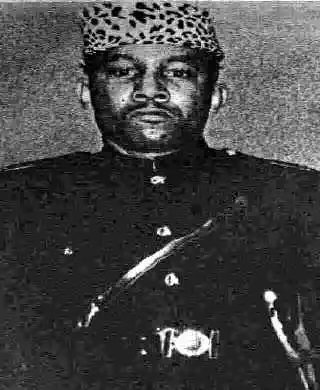
It is likely that you have never heard of Carlos Alexander Cooks, though he has profoundly shaped the development of Black Nationalism in the U.S. Cooks was born in the Dominican Republic, Caribbean on 6/23/1913 to James Henry Cooks and Alice Cooks. His parents were originally from the neighboring island of St. Martin.

Descriptzto James Henry Cooks and Alice Cooks, who were originally from the neighboring island of St. Martin. His education took place mostly in Santo Domingo until moving to New York in 1929 where he went on to higher learning.


Cooks’ intellect was recognized from an early age. He attended the leadership school in the Voodoo Sacré Society. He became involved in the Universal Negro Improvement Association (UNIA), where both his father and uncle were among the many St. Martiners who were members of the organization led by Marcus Mosiah Garvey, Jr

Cooks went on join the Garvey Union and its Universal African Legion. Marcus Garvey played a central role in shaping Cooks’ political career. At age nineteen, Cooks was knighted by Garvey, becoming an official and active member of the UNIA. In the years between Garvey's death (1940) and the appearance of Malcolm X in Harlem (1954) Cooks was one of the most important Black nationalist figures in Harlem and the United States. In fact, after Marcus Garvey was deported, Carlos Cooks led the Advance Division of the UNIA. 


Black Nationalism from Garvey to Malcolm
On 6/23/1941, on his birthday, Cooks would found the African Nationalist Pioneer Movement (ANPM). Born out of Garvey's UNIA, Cooks envisioned the ANPM as "an educational, inspirational, instructive, constructive and expansive society... composed of people desirous of bringing about a progressive, dignified, cultural, fraternal and racial confraternity among the African peoples of the world.” On the streets of Harlem in the ’40s, ’50s and ’60s, the ANPM kept the spirit of the UNIA alive, capturing the political pulse of the Black Nationalist community.

In September 1941, months after Cooks founded the ANPM,  writer Jane Cooke Wright wrote the following in the New York Age newspaper: “The Honorable Carlos Cooks, an important character in the advance division of the Universal Negro Improvement Association, exemplifies the views of Marcus Garvey. He preaches the supremacy of the Blacks. This wishful thinking, he believes will someday come true. At present the white people in Europe are killing each other off and therefore the final battle will be between the whites and the Blacks on the sands of Africa.”

Cooks was committed to Black economic achievement. It is said that it was Cooks who coined the phrase “BUY BLACK” as an economic solution in African-American communities across the U.S. On 5/5/1966, Cooks died in Harlem New York at the age of 52. 


Science and Technology: African Inventors in the Americas

We learn very little about inventors of African descent. The inventors highlighted here do not represent an exhaustive list. It includes some of the early inventors in the Americas, whether  independent, corporate or government inventors. Notably, the drive to make the food production process  more efficient after the abolition of slavery in the Americas was not lost on many of these innovators.  


Photo: Thomas L. Jennings
(1791–1856)
Thomas L. Jennings was the first African to receive a patent in the United States of America. On March 3, 1821 he secured US Patent 3306x for discovering a process called dry-scouring. Jennings lived in New York as a free man. He owned and operated tailoring and clothing cleaners business. Dry-scouring is a process he developed for cleaning clothing through a dry process instead of a wet process. Yes,  the successful dry-cleaners can thank Mr. Jennings for his early innovation published to the world in 1821. Jennings used the profits secured from his patent to free members of his family who were still under slavery systems in some of the U.S. Jennings also used his wealth as a business man and inventor to financially support the abolition movement that was growing in many areas throughout the U.S. during his time. 


Photo of inventor Jan Ernst Matzeliger
(b. 9/15/1852 – d. 8/24/1889)
Jan Ernst Matzeliger was born in Paramaribo, Suriname (then Dutch Guyana). Matzeliger's mother was an Afrian born woman  into the Dutch slave society of Dutch Guyana. His father was a wealthy Dutch engineer.  Matzeliger came to the United States and settled into the New England region where he developed the shoe-lasting machine invention that assembled the upper shoe to the sole, receiving U.S. Patent No. 459,899 on September 22, 1891 -- an innovation that greatly increased efficiency in the shoe production process. Additional U.S. patents received by Matzeliger include the following: 274,207, 3/20/1883, Automatic method for lasting shoe; 421,954, 2/25/1890, Nailing machine; 423,937, 3/25/1890, Tack separating and distributing mechanism; 415,726, 11/26/1899, Mechanism for distributing tacks, nails, etc.


Photo: Norbert Rillieux
(b. 3/17/1806 - d. 10/8/1894)
Norbert Rillieux was born into privilege in New Orleans, Louisiana, the son of a wealthy Creole mother and a white father who was an engineer. Rillieux and his brother were educated in France. By 1830, Rillieux was teaching applied mechanics at the École Centrale in Paris. When Rillieux returned to Louisiana, there was a growing demand to replace the dangerous "Jamaica Train" sugar manufacturing process. Rillieux developed a steam-driven process for making the sweet grainy substance. His U.S. patents include the following:

* 3,237, 8/26/1843, Improvement in sugar works
* 4,879, 12/10/1846, Sugar processing evaporator


Shelby J. Davidson was born in Lexington, Kentucky in 1868 and graduated from Howard University and would read law and become admitted into the DC bar and Kentucky bar. Davidson became a government inventor and worked with the United States Treasury Department where he invented adding machine automations that increased the postal division's efficiency. Davidson received U.S. Patent No. 884,721 on April 14, 1908 for what is described as a paper-rewind mechanism for adding machines. In 1912, Davidson resigned with the government amid disputes arising from Davidson's rights to the adding machine. He practiced law and entered into the real estate market.

Alexander P. Ashbourne received patent no. 170,460 for designing a unique biscuit cutter on November 30, 1875. Ashbourne's cookie cutter innovated on the variety of shapes available for biscuits, cakes or cookies. The invention involved a plate, roller and springs system whereby the cutters presses down on the dough or batter into optional shapes. Ashbourne also obtained U.S. patents for various agricultural related patents described below:
    * 163,962 (1875), Process for preparing coconut for domestic use; 194,287 (1877), Process of treating coconut; 230,518 (1880), Refining coconut oil
Drawing of Inventor Granville T. Woods
(b. 4/23/1856 - d. 1/30/1910)

Granville T. Woods focused his innovation in the area of railway electronic communication systems. On June 3, 1884, Woods received his first patent. This was for an improved steam-boiler furnace, U.S. Patent No. 299,894. Subsequently, Alexander Graham Bell's company would purchase the rights to his telegraphony patent, a device that allowed a telegraph station to send voice and telegraph messages over a single wire. The relationship with the Bell company enabled Woods to become a full-time inventor. Woods would go on to receive a patent for an automatic air brake, which is used to slow and stop trains. 

John Standard obtained U.S. Patent No. 455,891. Born July 1891, John Standard was born in New Jersey. He improved on the original icebox by putting cold air-ducts or holds in special areas to help the air circulate within the icebox in order to keep foods fresher. His invention also provided a special place to keep the drinking water and other drinks separate from the food. This avoided liquids picking up the flavors and smells of other foods. 


Photo of inventor Lewis H. Latimer
(b. 9/4/1848 - d. 12/11/1928)
As a teenager, Lewis H. Latimer received an opportunity to work for the Boston patent firm Crosby, Halstead & Gould. He worked his way up to chief patent drawing draftsman where he began drafting for Alexander Graham Bell's patent application for the telephone. In 1874, Latimer secured his first patent for an "improvement in water-closet for railroad-cars". He moved from Boston area to Connecticut where he joined the United States Electric Lighting Company, working on electric lighting innovations while he worked on his owned lamp designs. He would later join Thomas Edison's company, which would become General Electric, and become a member of the legal department.

On February 17, 1891, Albert C. Richardson received Patent 446,470 for his  innovations in the food production, particularly improved churning processes. The American churn was traditionally a wooden appliance for making butter from cream skimmed from law milk. It was shaped like a barrel with a long wooden stick coming through a hole in the center top. Richardson's improvements included installing glass panels on both sides of the churn to see the butter. This helped preps determine whether it was ready. He also included a plate inside the churn for the butter to be placed for easier removal. Richardson's U.S. patents include the following:
  • 255,022, 3/14/1882, Hame fastener
  • 446,470, 2/17/1891, Churn
  • 529,311, 11/13/1894, Casket-lowering device
  • 620,362, 2/28/1899, Insect destroyer
  • 638,811, 12/12/1899, Bottle
Judy W. Reed 1884 patent for dough kneading 
Judy W. Reed received U.S. Patent No. 305,474, received September 23, 1884, for a hand-operated dough kneader and roller that allowed for improved mixing that was more evenly distributed when processed through the rollers with corrugated slates. Little is written about Reed's life, but she has garnered the title of being the first African-American woman to receive a U.S. patent.

Joseph Lee received U.S. Patent No. 524,042 for a kneading machine invention on August 7, 1894. Lee's time saving invention mixed and kneaded the dough and also replaced the need to hand roll dough.

Robert P. Scott invented the corn silker and obtained U.S. Patent No. 524,223 on August 7, 1894. Corn silk is the silk-like thread fibers on the inside of the green husks removed from corn-on-the-cob. Removing corn silk proved both time consuming and difficult. The R.P. Scott Corn Silker helped to make this process faster and more efficient. 

Inventor Garrett A. Morgan, Sr.
Garrett A. Morgan, Sr. filed his patent application in 1922 and obtained U.S. Patent No. 1,475,024 on Nov. 20 1923 for an electrical traffic signal to be used at street intersections as a tool to control for the flow of safe traffic from automobiles, bicycles and pedestrians. In 1912, Morgan also obtained U.S. Patent No. 109,936 for a breathing device to be used to stop the flow of injurious gases to persons, later called the gas mask.

John T. White obtained U.S. Patent No. 572,849 on December 8, 1896 for the first commercial lemon squeezer.White's invention made it easier to squeeze all of the juice out of a lemon. It also separated the seeds and pulp from the juice, and prevented squirting. 


African-American inventor: Lloyd Ray dustpan 
Lloyd P. Ray received U.S. Patent No. 587,607 on August 3, 1897 for a new and useful improvement in dust pans. Ray's device included a metal collection plate that trash could be swept into, attached to a short wooden handle. 

Alfred L. Cralle received U.S. Patent No. 576,395 on February 2, 1897 for an ice cream mold and ice cream scooper (disher). This made serving ice cream in perfect round portions to fit on cones. 
 
Elbert R. Robinson received U.S. Patent Nos. 505,370, September 19, 1893, electric railway trolley and 594,286, November 23, 1897, casting composite or other car wheels.

FURTHER RESOURCES: Ohio State University's Knowledge Bank: African American Patent Holders Database

Carter G. Woodson: The New Type of Professional Man Required

Photo of Carter G. Woodson, who became known as 
"The Father of Black History" in the United States 

“THE NEW TYPE OF PROFESSIONAL MAN REQUIRED”

Excerpt from, "The Mis-Education of the Negro"

By Carter Godwin Woodson

Negroes should study for the professions for all sane reasons that members of another race should go into these lines of endeavor and also on account of the particular call to serve the lowly of their race. In the case of the law we should cease to make exceptions because of the possibilities for failure resulting from prejudice against the Negro lawyer and the lack of Negro business enterprises to require their serves. Negroes must become like English gentlemen who study the law of the land, not because every gentleman should know the law. In the interpretation of the law by the courts, too, all the rights of the Negroes in this country are involved; and a large number of us must qualify for this important service. WE may have too many lawyers of the wrong kind, but we have not our share of the right kind. 
The Negro lawyer has tended to follow in the footsteps of the average white practitioner and has not developed the power which he could acquire if he knew more about the people whom he should serve and the problems they have to confront. These things are not law in themselves, but they determine largely whether or not the Negro will practice law and the success he will have in the profession. The failure to give attention to these things has often means the downfall of many a Negro lawyer. 
There are, moreover, certain aspects of law which the white man would hardly address himself but to which the Negro should direct special attention. Of unusual important to the Negro is the necessity for understanding the misrepresentations in criminal records of Negroes, and race distinctions in the laws of modern nations. These matters require a systematic study of the principles of law and legal procedure and, in addition thereto, further study of legal problems as they meet the Negro lawyer in the life which he must live. This offers the Negro law school an unusual opportunity. 
Because our lawyers do not give attention to these problems they often fail in a crisis. They are interest in the race and want to defend its cause. The case, however, requires, not only the unselfish spirit they sometimes manifest but much more understanding of the legal principles involved. Nothing illustrates this better than the failure of one of our attorneys to measure up in the case brought up to the United States Supreme Court from Oklahoma to test the validity of the exclusion of Negroes from Pullman cars. The same criticism may be made of the segregation case of the District of Columbia brought before this highest tribunal by another Negro attorney. In both of these cases the lawyers started wrong and therefore ended wrong. They lacked the knowledge to present their cases properly to the court. 
Our lawyers must learn that the judges are not attorneys themselves, for they have to decide the merits of what is presented to them. It is not the business of the judges to amend their pleadings or decide their cases according to their good intentions. Certainly such generosity cannot be expected from prejudiced courts which are looking for every loophole possible to escape from frank decision on the rights of Negroes guaranteed by the constitution. These matters require advanced study and painstaking research; but our lawyers, as a rule, are not interested in this sort of mental exercise.

Video of Carter G. Woodson: African American Trailblazers


Roadside Marker for Carter Godwin Woodson,
West Virginia Division of Archives and History

February's Black History Month in the United States

Photo: Black History Heroes Jack Johnson T-Shirt Design

As Black History Month in the United States gets underway, expect more frequent posts during the month of February. We will highlight the life and times of some of our favorite public heroes like Toussaint L'Ouverture, Marie Da Silva, Julius Kmbarage Nyerere and Sojourner Truth. Become a subscribers to the BHH blog and receive free notices of new blog posts during February. For teachers, use theses blogs for ideas to help you develop engaging Black history school projects and programs.
 
 
The blog recently underwent some major design changes to increase its readibility and navigational ease. Hope that you find the changes refreshing. Also, we have partnered with Zazzle.com to bring you quality Black History Heroes t-shirt designs. Check out the first BHH t-shirt design which features Jack Johnson. T-shirt designs are available in both men and women styles. Order one today! 
 
Happy Black History Month 2011!
 

Kwame Nkrumah: The First President of the Independent Nation of Ghana

Photo of Osagyefo Kwame Nkrumah (born: September 21, 1909 - died: April 27, 1972).
First President of Ghana and a founding member of the Organization of African Unity.

Kwame Nkrumah was born September 21, 1909 at Nkroful, Gold Coast (now Ghana). He was originally named after Francis Nwia-Kofi, an honored family personality. Son of goldsmith Kofi Ngonloma of the Asona Clan and Elizabeth Nyanibah of the Anona Clan, Nkrumah showed an early thirst for education. In 1930, Nkrumah completed studies at the acclaimed Prince of Wales’ Achimota School in Accra. Dr. Kwegyir Aggrey, Assistant Vice Principal and the first African staff member at the college, became his mentor.

Kwame Nkrumah U.S. Studies

By 1935, Nkrumah undertook advance studies in the United States at Lincoln University, Pennsylvania. In 1939,  he earned an BA in Economics and Sociology. By 1942, he earned an BA in Theology. By 1943, Nkrumah had earned an M.Sc. (Education), an MA (Philosophy), and completed course work for a Ph. D. degree at the University of Pennsylvania.

During his U.S. undergraduate studies, Nkrumah also pledged the predominately African-American Phi Beta Sigma Fraternity, an academic honor society. He is said to have introduced African traditional steps to the fraternity's stepping tradition, including cane stepping

Kwame Nkrumah Organizes Pan-Africans in Europe

Arriving in London in May of 1945, Nkrumah organized the 5th Pan-African Congress in Manchester, England and began networking through organizations like the West African Students' Union, where he served as vice-president. This same year he officially changed his name from Francis Nwia-Kofi to Kwame Nkrumah.

Image of the West African nation of Ghana

By December 1947, Nkrumah had returned to his homeland as a teacher, scholar, and political activist. He became General Secretary of the United Gold Coast Convention (UGCC), which explored strategies for gaining independence from colonial England. Under Nkrumah's leadership, the UGCC attracted local political support from farmers and women. Women did not have the right to vote in many traditional patriarchial societies and farmers who were not land-owners also did not have the suffrage. In 1948, Accra, Kumasi, and other areas of the Gold Coast were experiencing general social unrest, which the British colonial government accredited to the UGCC. By 1949, Nkrumah had galvanized wide support and reorganized his efforts under the Convention People's Party (CPP).

Kwame Nkrumah advocated for constitutional changes. This included self-government, universal franchise without property qualifications, and a separate house of chiefs. Jailed by the colonial administration in 1950 for his political activism, the CPP's 1951 election sweep was followed by Nkrumah's release.

Photo of Kwame Nkrumah and Dr. Martin Luther King, Jr.

A devout Pan-Africanist, Nkrumah supported African federation under the auspices of the United States of African. He also had meaningful dialogue with African intellectuals from the diaspora, including W.E.B. DuBois, Martin Luther King, Jr., and Marcus Mosiah Garvey. He also corresponded with Trinidadian C.L.R. James, whom he credited with teaching him how an "underground movement worked." Nkrumah played a pivotal role in developing the Organization of African Unity (OAU) in 1963, the same year he was awarded the Lenin Peace Prize.

Langston Hughes: The Long Tradition of Black Poets


Langston Hughes (James Mercer Langston Hughes) was born February 1, 1902 in Joplin, Missouri to James Nathaniel Hughes and his wife Caroline Mercer Langston, a school teacher. Hughes became a great African American poet, short story writer, novelist, and columnist. Along with such scribes as Claude McKay and W.E.B. Du Bois, Hughes' works had a great influence on the Harlem Renaissance in the USA and the Négritude movement in France and francophone Africa and the Caribbeans. Brother Hughes died May 22, 1967.


In this picture, standing center right, is Hughes as member of the Meschrabpam's American Negro Film Group, includes writer Dorothy West (seated right), on board the Europa on June 17, 1932.
The Negro Mother, a poem by Langston Hughes
Children, I come back today
To tell you a story of the long dark way
That I had to climb, that I had to know
In order that the race might live and grow.
Look at my face -- dark as the night --
Yet shining like the sun with love's true light.
I am the dark girl who crossed the red sea
Carrying in my body the seed of the free.
I am the woman who worked in the field
Bringing the cotton and the corn to yield.
I am the one who labored as a slave,
Beaten and mistreated for the work that I gave --
Children sold away from me, I'm husband sold, too.
No safety, no love, no respect was I due.


Three hundred years in the deepest South:
But God put a song and a prayer in my mouth.
God put a dream like steel in my soul.
Now, through my children, I'm reaching the goal.


Now, through my children, young and free,
I realized the blessing deed to me.
I couldn't read then. I couldn't write.
I had nothing, back there in the night.
Sometimes, the valley was filled with tears,
But I kept trudging on through the lonely years.
Sometimes, the road was hot with the sun,
But I had to keep on till my work was done:
I had to keep on! No stopping for me --
I was the seed of the coming Free.
I nourished the dream that nothing could smother
Deep in my breast -- the Negro mother.
I had only hope then , but now through you,
Dark ones of today, my dreams must come true:
All you dark children in the world out there,
Remember my sweat, my pain, my despair.
Remember my years, heavy with sorrow --
And make of those years a torch for tomorrow.
Make of my pass a road to the light
Out of the darkness, the ignorance, the night.
Lift high my banner out of the dust.
Stand like free men supporting my trust.
Believe in the right, let none push you back.
Remember the whip and the slaver's track.
Remember how the strong in struggle and strife
Still bar you the way, and deny you life --
But march ever forward, breaking down bars.
Look ever upward at the sun and the stars.
Oh, my dark children, may my dreams and my prayers
Impel you forever up the great stairs --
For I will be with you till no white brother
Dares keep down the children of the Negro Mother.

DEMOCRACY

Democracy will not come
Today, this year
        Nor ever
Through compromise and fear.

I have as much right
As the other fellow has
       To stand
On my two feet
And own the land.

I tire so of hearing people say,
Let things take their course.
Tomorrow is another day.
I do not need my freedom
       When I'm dead.
I cannot live on tomorrow's
bread.
          Freedom
          Is a strong seed
          Planted
          In a great need.
          I live here, too.
          I want freedom
          Just as you.

- Langston Hughes


Etta Moten Barnett: African American Singer and Actress

Photo: Etta Moten Barnett (b. Nov. 5, 1901 – d. Jan. 2, 2004) 
in Gershwin's Porgy and Bess

Etta Moten Barnett has been a tireless pioneer in her career as a musical performer, actress, and community activist.

THE EARLY LIFE OF ETTA MOTEN BARNETT

Etta Moten Barnett was born in Weimer, Texas on November 5, 1901. The only child of Rev. Freeman F. Moten, an African Methodist Episcopal minister, and school teacher Ida Moten, she remembers her childhood fondly as a time of singing with the choir in her father's church. It was at Paul Quinn College in Texas that the quality of her singing voice was first rewarded with an educational scholarship.

Moten went on to attend Western University, an Historically Black University (HBU) in Kansas. Her professional singing career took off once she joined the Jackson Jubilee Singers and went on to sing with the renowned Eva Jessye Choir.

EARLY BLACK ACTRESSES

Moten was discovered as an actress by a talent scout for the 1931 Fred Astaire-Ginger Rogers classic movie Flying Down to Rio. She is best remembered, however, for her role as the incarnate heroine Bess in the original George Gershwin production of the popular musical Porgy and Bess. Gershwin chose Eva Jessye as the choral director for the 1935 opera production of Porgy and Bess.


Photo: 1935 Cast of Porgy and Bess
(photographer Richard Tucker. Oct. 10, 1935.
Courtesy of the Library of Congress)

A pioneering Black musical performer, Etta Moten Barnett broke the film industry's color barrier as the first Black performer to play in a film role that was not a domestic role, when she performed in The Gold Diggers in 1933.


As a Chicago resident, Moten was active in promoting the arts through the South Side Community Art Center and DuSable Museum of African American History. Moten was appointed by the U.S. federal government as a cultural ambassador to ten African countries. In shaped this role as an opportunity to led cultural exchange missions between African Americans and Africans. Moten was an active member of the National Council of Negro Women in Chicago.


Photo: The late Etta Moten Barnett's home in Chicago
3619 S. Martin Luther King, Jr. Drive


Robert Sengstacke Abbott and the Growth of Black News Publishing

Photo: Robert Sengstacke Abbott (b. Nov. 24, 1870 - d. Feb. 29, 1940)

Robert Sengstacke Abbott was born in Frederica, St. Simons Island, Georgia. Thomas Abbott, his father, was born into slavery in the US, but died when his son was still a baby. In 1869, Robert's mother, Flora Abbott, married John Sengstacke from a wealthy German merchant immigrant family. Robert retained his late father's name and took his step father's name as his middle name.

From 1892 to 1896, Robert studied the printing trade at Hampton Institute (now Hampton University). By 1898, Robert earned a law degree from Kent College of Law in Chicago, Illinois. He practiced law in Gary, Indiana, Topeka, Kansas, and Chicago, Illinois. Ultimately, he decided that he could better battle the system of white supremacy racial injustice through the mass media instead of the courtroom. Robert put down his law books and picked up his printing press. He would report the challenges and successes of African Americans, news that was important to their lives.

THE CHICAGO DEFENDER NEWSPAPER

With reportedly as little as 25 cents capital, Robert began the most widely-circulated Black newspaper in the United States. The Chicago Defender newspaper became the medium to voice the concerns of African Americans in Chicago. The newspaper made many outstanding contributions to journalism and ultimately to Black history. 

Image of Chicago Defender headline.
Established in November 29, 1905, the Chicago Defender would become the longest running African American newspaper publication in Chicago. The exchange of information from North to South -- through both the Chicago Defender and correspondence between relatives -- accelerated the Great Migration of African Americans to Chicago, resulting in an increase of 150% in the population of Black Chicago between 1910-1920.

City officials in Arkansas town seek ban on Chicago Defender newspaper.
The Great Migration of African Americans from U.S. southern states to Chicago was in part fueled by the Chicago Defender's voice against injustice and grand accounts of northern living at the onset of the U.S. industrial revolution. Originally housed in a converted synagogue from 1920 to 1960, the Chicago Defender rapidly developed into both the country's premier source for news of the northern migration of African Americans.

Chicago Defender typesetters prepare community news for mass distribution.
Black Pullman Porters, who were prosperous and well respected in the African American communities, became the Defender's national "delivery  men," distributing the newspapers to many southern towns. The newspaper became an important communication tool between Black Chicagoans and their relatives in the southern states. 

"My friends made fun of me," Robert is reported to have said about the tremendous opposition to his establishing the Chicago Defender. "They thought it was foolish of me to anticipate success in a field in which so many men before me had failed...but I went on fighting the opposition of my adversaries and the indifferences of my friends. I emerged victorious but battle-scarred."
The historic home of Robert S. Abbott
(4742 Martin Luther King, Jr. Drive in Chicago)

In 1929, Robert established the Bud Billiken Club and with David Kellum established Chicago's Bud Billiken Parade and Picnic. He resided in Chicago until his death from Bright's Disease in 1940. His home, established as a National Historical Landmark in 1976, was located at 4742 S. Martin Luther King, Jr. Drive in the Bronzeville community of Chicago. He left the Chicago Defender newspaper to his nephew John Henry Sengstacke. 

After more than 100 years of Black publishing history, Chicago Defender's 2007 issue headlines local politics.

Dr. Carter G. Woodson: The Father of Black History

 
Dr. Carter G. Woodson (b. 12/19/1875 - d. 4/3/1950)
 
Dr. Carter G. Woodson was one of the founders of the Association for the Study of Negro Life and History, which promoted what was commonly known as Negro history (now commonly known as Black history) through school, church, and fraternal group activities. After diligent study and writing on Black history, in 1926 Woodson inaugurated Negro History Week in Chicago at the Wabash YMCA. Negro History Week led to the celebration of Black History Month in the United States. In 1976, the month long observation was recognition by then U.S. President Gerald Ford. Woodson became known among his people as the Father of Black History. 


The History of the Negro Church, by
Carter G. Woodson (Second Edition, 1921)
The Carter G. Woodson Regional Library, named after the great historian, holds one of the nation's largest collections of Black history and literature material. More than 70,000 books (many rare), 500 periodical titles, 5,000 reels of microfilm research, original manuscripts, and newspapers make up a treasure chest of information called the Vivian G. Harsh Research Collection of Afro-American History and Literature. The Harsh Collection includes papers of the National Association for the Advancement of Colored People (NAACP), Freeman's Bureau papers, and a wide selection of art works on paper, such as posters and other literary artifacts such as period flyers.

The collection was started by Chicago librarian Vivian G. Harsh, an avid collector of historical works. She was the first African American librarian in the Chicago Public Library system. Her collection became a significant resource for the dynamic Black thinkers in Chicago in the 1930s and 1940s, such as Arna Bontemps, Richard Wright, and Langston Hughes, among others.

Photo: Librarian Vivian G. Harsh (b. May 27, 1890 - Aug. 17, 1960)

The Woodson Library is located at 9525 S. Halsted Street and is a great source for researching African American history. If you visit the Woodson Library, take pause to enjoy the large bronze sculpture entitled "Jacob's Ladder", created by the renown artist Richard Hunt, hosted  at the library's central atrium.

Support Our Work by Buying a T-Shirt