
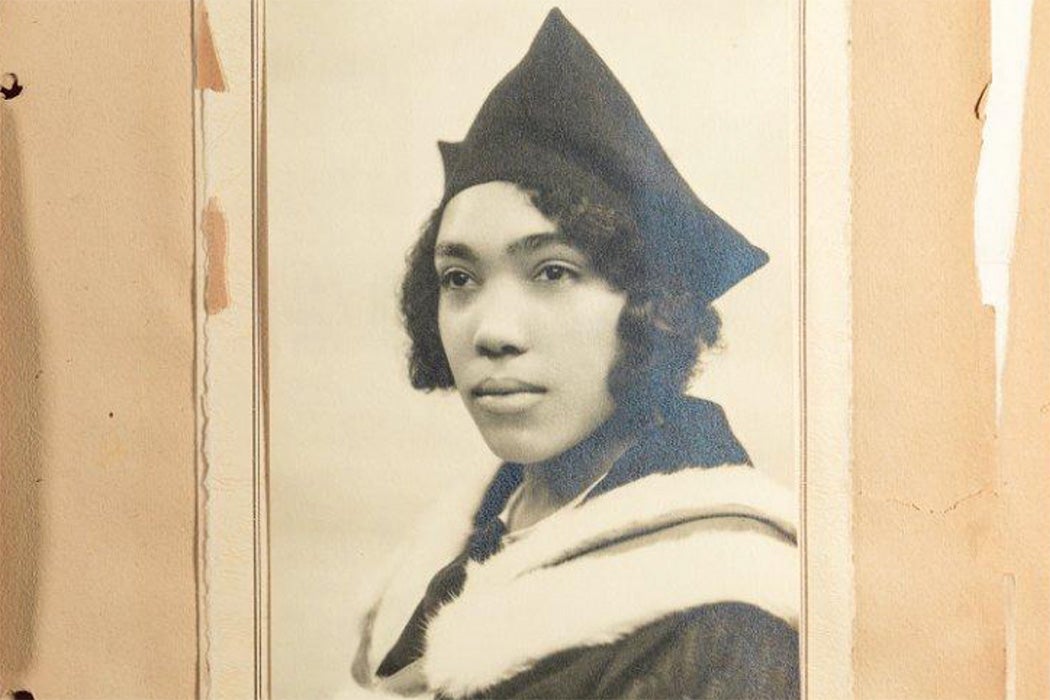
When it comes to celebrating Black history, certain figures shine brightly because of their ability to carve new paths where none existed before. Professor Merze Tate (b. 2/6/1905, Blanchard, Michigan – d. 6/27/1996) was one such pioneer. Scholar, teacher, and international thinker, she broke racial and gender barriers at every turn. Her life story is one of “firsts,” but it is also a testament to persistence, vision, and a lifelong dedication to education and global understanding.
Roots of Determination
Merze Tate was born on October 24, 1905, in Blanchard, Michigan, a small rural town where educational and professional opportunities for African Americans were extremely limited. She grew up in a modest household and learned early the value of hard work and perseverance. From a young age, she walked miles to attend school, often helping her family with chores before and after classes. Despite these challenges, Tate excelled academically, demonstrating a natural curiosity and determination that would define her life. Her early experiences instilled in her a belief that education could be a powerful tool for personal advancement and social change, laying the foundation for the groundbreaking career that would follow. Trailblazing Scholar at Western Michigan University.
Tate’s pursuit of education led her to Western Michigan Teachers College (today’s Western Michigan University), where she graduated in 1927. She became the first African American student to earn a degree from the college and achieved the highest GPA in her class. Her exceptional academic record reflected not only intelligence but also extraordinary discipline and resilience.
A Historic Journey to Oxford

In 1932, Tate was admitted to The Society of Oxford Home-Students -- now known as St. Anne's College -- becoming the first African American woman to study at Oxford University. It was an extraordinary achievement during a time when both racial segregation and gender discrimination restricted access to higher education.
Her dedication and scholarship culminated in 1935, when she became the first African American to be awarded a B.Litt. degree by Oxford. Her studies in international and diplomatic history showcased her academic brilliance and laid the groundwork for her future contributions to global diplomacy.
Advanced Scholarship and a Career at Howard University
After Oxford, Tate continued her education in the United States, earning a Ph.D. in government and international relations from Radcliffe College (Harvard University’s coordinate institution for women at the time). She joined the faculty at Howard University in 1942, where she would teach for 35 years.
At Howard, Tate focused on international relations, disarmament, and diplomacy, mentoring generations of students who would go on to shape law, policy, and academia. She was recognized for her rigorous scholarship and insistence that students understand global dynamics, emphasizing how international events shaped domestic realities.
Advising Eisenhower
In the late 1940s, Tate’s expertise reached the highest levels of government when she advised General Dwight D. Eisenhower on issues related to disarmament. This appointment was extraordinary at a time when women of color were largely excluded from policy-making circles, underscoring her recognition as a leading intellectual in international affairs.

| Beyond the classroom, Tate was a world traveler and educator. She founded a travel club at Crispus Attucks High School, taking students on cultural excursions to broaden their horizons. Her travels—from Europe to India and across the Pacific—provided both inspiration and research material for her scholarly works. Tate’s dedication to education extended beyond her own achievements, as she encouraged students to engage with the world and pursue knowledge as a means of empowerment. |
Legacy and Honors
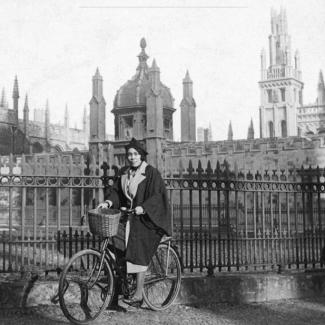
Professor Merze Tate passed away on July 8, 1996, leaving a legacy that continues to inspire. Her life’s work opened doors for future generations of African American scholars and women in academia. Her honors include:
The Merze Tate College at Western Michigan University,
- Recognition from the International Studies Association and the American Political Science Association,
- The Merze Tate Explorers program inspired by her travel club,
- Induction into the Michigan Women’s Hall of Fame, and
- A reading room at Oxford University named in her honor.
- Her archival collections, including photo albums, scrapbooks, and letters, document her travels, teaching, and global engagement. These materials are housed at Western Michigan University and offer an inspiring window into her life and scholarship.
Why Professor Tate Matters Today
Merze Tate’s story reminds us that barriers—no matter how entrenched—can be broken. She was more than a “first”; she was a visionary who believed in the transformative power of education, global awareness, and mentorship. Celebrating her life honors a Black history hero whose courage, intellect, and pioneering spirit continue to inspire generations of scholars, educators, and leaders worldwide.


No comments:
Post a Comment