Showing posts sorted by relevance for query Malcolm x. Sort by date Show all posts

From Malcolm Little to Malcolm X to El-Hajj Malik El-Shabazz

Malcolm X in 1964.
The great Black leader, debater and speaker, commonly known as Malcolm X (English: ˈmælkəm ˈɛks) was born May 19, 1925 as Malcolm Little and died February 21, 1965 as El-Hajj Malik El-Shabazz (Arabic: الحاجّ مالك الشباز‎).  His mother was Louise Little (maiden name Louise Langdon Norton), born in the Caribbean isle of Grenada, British West Indies, at the Grenadines' southern tip. His father was born in Reynolds, Georgia (Taylor County) and became a Baptist minister and Garveyism organizer under the leadership of the Jamaican-born Marcus Garvey.

"Who Taught You to Hate Yourself?" a May 5, 1962 speech
by Malcolm X in Los Angeles, California

Carlos Alexander Cooks and the Development of Black Nationalism


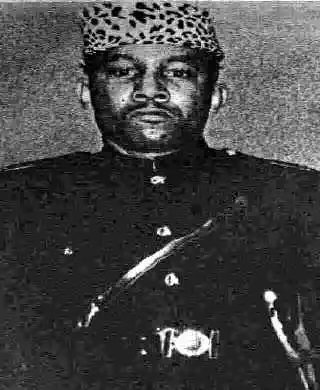
It is likely that you have never heard of Carlos Alexander Cooks, though he has profoundly shaped the development of Black Nationalism in the U.S. Cooks was born in the Dominican Republic, Caribbean on 6/23/1913 to James Henry Cooks and Alice Cooks. His parents were originally from the neighboring island of St. Martin.

Descriptzto James Henry Cooks and Alice Cooks, who were originally from the neighboring island of St. Martin. His education took place mostly in Santo Domingo until moving to New York in 1929 where he went on to higher learning.


Cooks’ intellect was recognized from an early age. He attended the leadership school in the Voodoo Sacré Society. He became involved in the Universal Negro Improvement Association (UNIA), where both his father and uncle were among the many St. Martiners who were members of the organization led by Marcus Mosiah Garvey, Jr. 

Cooks went on join the Garvey Union and its Universal African Legion. Marcus Garvey played a central role in shaping Cooks’ political career. At age nineteen, Cooks was knighted by Garvey, becoming an official and active member of the UNIA. In the years between Garvey's death (1940) and the appearance of Malcolm X in Harlem (1954) Cooks was one of the most important Black nationalist figures in Harlem and the United States. In fact, after Marcus Garvey was deported, Carlos Cooks led the Advance Division of the UNIA. 


Black Nationalism from Garvey to Malcolm
On 6/23/1941, on his birthday, Cooks would found the African Nationalist Pioneer Movement (ANPM). Born out of Garvey's UNIA, Cooks envisioned the ANPM as "an educational, inspirational, instructive, constructive and expansive society... composed of people desirous of bringing about a progressive, dignified, cultural, fraternal and racial confraternity among the African peoples of the world.” On the streets of Harlem in the ’40s, ’50s and ’60s, the ANPM kept the spirit of the UNIA alive, capturing the political pulse of the Black Nationalist community.

In September 1941, months after Cooks founded the ANPM,  writer Jane Cooke Wright wrote the following in the New York Age newspaper: “The Honorable Carlos Cooks, an important character in the advance division of the Universal Negro Improvement Association, exemplifies the views of Marcus Garvey. He preaches the supremacy of the Blacks. This wishful thinking, he believes will someday come true. At present the white people in Europe are killing each other off and therefore the final battle will be between the whites and the Blacks on the sands of Africa.”

Cooks was committed to Black economic achievement. It is said that it was Cooks who coined the phrase “BUY BLACK” as an economic solution in African-American communities across the U.S. On 5/5/1966, Cooks died in Harlem New York at the age of 52. 


What Harriet Tubman Teaches Us Today


Photo: Harriet Tubman, The Moses of Her People (born circa 1825 – died March 10, 1913)
Harriet Tubman was an African woman and anti-slavery activist in the eastern Atlantic coastal region that would become known as the New England and later the United States of America. Tubman carried out clandestine operations against slavery that could rival the most sophisticated military strategies known to Western military lore. If you are wondering why her story is not revered more in U.S. history, it is because she symbolizes the defeat of the myth of European dominion over African people.

An exact date of birth for Tubman is unknown, but commentators report that she believed she was born in 1825, accounts vary from 1820 to 1825. Her parents were Harriet Green and Benjamin Ross, a captured and enslaved African couple who named their girl child Araminta Ross. The name Araminta also arises among the children of Africa in Salvador, Bahia. There is also the city of Aramita in the Oyam District, in the Northern Region of Uganda. The accounts are not clear as to the exact origins of her parents in Africa. Her maternal grandmother, whose name was Modesty, is her earliest known ancestor born in Africa. Her grandmother would arrive into slavery among the Patterson family along the Eastern Shore of Maryland, according to the biographer Catherine Clinton's book Harriet Tubman: The Road to Freedom. Araminta Ross had brothers and sisters and would marry and have children of her own. In 1844, at the age of 25, she married John Tubman. She married Nelson Davis in 1869 and they shared 19 years in marriage. After becoming free, she changed her name to Harriet -- the name of her mother.

What have we learned from Harriet Tubman? I asked this question during times when musicians and artists of African descent feel it appropriate to fictionalize her life through imagery that would bring debauchery upon her legacy. While comments require review at this blog before posting due to efforts to crash the blog through comments, I encourage you to share your own thoughts about Tubman here. 

Where Do We Go From Here?

In 1967, when Dr. Martin Luther King, Jr. penned his Atlantic speech Where Do We Go From Here? King must have been channeling our ancestors, including Harriet Tubman. For Tubman, the answer to this age old question of a long wandering people, people of an ancient lineage - the oldest - was clearly that we must not maintain a presence among those who would enslave our very bodies. While physical slavery among Africans has been overcome, in significant part -- I will leave discussion of the prison industrial complex as physical slavery to another day -- the biggest challenge facing African families in the diaspora today is systemic racism that is fueled by the continued myth of European superiority. This translates in our daily lives into the marginalization of African family life at various levels: spiritually, psychologically, economically, etc. 

Where do we go from here? We must maintain our cultural integrity among a people who would exploit our talents to promote debase cultural arts. We must establish community institutions and family structures that promote real freedom for our children. We must honor the old civil rights. These are all fights worth undertaking.

Save Yourself - By Any Means Necessary

There has been a long running dictomy within African cultures since time immemorial. Malcolm X and King were examples of but one of those dictomies, representing the African Muslim man and the African Christian man. What the two men shared was the one great aim towards the freedom of African people. Nothing extra, just fair opportunity like everyone else on the planet.

Harriet Tubman did not wait on anyone to free her from the bondage of physical slavery. She did not wait on a leader to rise up. She became the leader. She proclaimed herself free. Equipped with a steadfast determination that freedom was her natural lot and no human had a right to take that away from her, Tubman teaches us that we must first save ourselves, by any means necessary.

The Cambridge Democrat promised a reward for the recovery of "MINTY, aged about 27 years, is of a chestnut color, fine looking, and about 5 feet high." She would fetch $50 if located in Maryland. During the 1930s, the artist Jacob Lawrence depicted the life of Harriet Tubman and included a runaway notice as text for one of the 31 images in his art panels. The caption stated "negro girl, Harriet, sometimes called Minty. Is dark chestnut color, rather stout build, but bright and handsome. Speaks rather deep and has a scar over the left temple."

Don't Look Back - No Fear

Before Harriet Tubman escaped, she spoke of a recurring dream of a "flight" to freedom:
"flying over fields and towns, and rivers and mountains, looking down upon them 'like a bird,' and reaching at last a great fence, or sometimes a river, over which she would try to fly.... It "'peared like I wouldn't have the strength, and just as I was sinkin' down, there would be ladies all drest in white over there, and they would put out their arms and pull me 'cross." -- From Harriet Tubman, the Moses of Her People, Sarah Bradford (1993).
One of Harriet Tubman's legacy stories is that when she took her freedom, she went back to free others. She became one of those ladies all dressed in white who would help pull those over who dared to fly to freedom.


Along the way, there were those who decided at some point along the journey that the cost of freedom was too high. The fear of the flight to freedom became too great. They would rather turn back to the plantation life of slavery. Well, somebody should have told them about our ancestor Tubman. As one of the original conductors of the Underground Railroad, the passage on her train was a one-way ticket. No stop overs and no return tickets.

This was reasonable. Slaveholders treated slaves as commodities, promoting childbearing to increase their property interests. These same slavers would have no remorse on a returned slave when it came to torturing the freedom route right out of him. The brutality that such a slave would undergo is beyond our modern capacity to imagine. Tubman could not take the chance of having slavers on her track. You either continue towards freedom or you die.

Don't Look Back - But Do Reach Back

A fugitive girl in her twenties ventured from the only home she knew hoping to find freedom. When Harriet Tubman left the slave state of Maryland during September 1849, she was a married woman who had to leave her own husband behind because he did not share her dream of freedom. She made a treacherous journey that required a mighty nerve and resourcefulness, especially for a woman. In the night, led by the North Star, she did not know when the sound of bloodhounds were aimed for her or others. She would have to depend on all the teachings of her people to navigate through unknown lands.

When Tubman arrived in the free North, southeastern Pennsylvania, most of Delaware and northeastern Maryland contained the largest concentration of free Africans in the nation. By 1850, more Africans resided in these three states than free Africans in all other states combined. Tubman sought refuge in Philadelphia where liberties among Black Philadephians were quite striking in terms of mobility and economic opportunity.

When compared to her former Maryland home, free Africans had their own institutions: churches and charities, building and loan collectives, insurance and burial societies, separate branches of the Masons and other learned society groups. Soon, as the number of Africans grew, along with their prosperity, Northern cities like Philadelphia began enacting an increasing number of Fugitive Slave Laws, Bloodhound Laws and Slave Codes to manage the growing anxiety that this prosperity created among the European populations.

Despite these challenges, Harriet Tubman found employment in the North and became self supporting. Why would Tubman go back into the slave territories to free others in the early 1850s? Fugitives spent major resources evading the possible sight of slavers who had also built clandestine channels aimed at recovering the bodies of Africans they believed belonged to them.

Tubman had secured work in the North. She had freedom of mobility and lived in a big city with many comforts like many of us today. There is no way to truly know what convinced Tubman, a woman with a bounty over her head, that she herself must go back into the slavers territory to help rescue others. It may have come first from her love for her family. Biographers report that her first mission was to bring her niece, Kizzy, and Kizzy's off-springs out of slavery. The word was that they were scheduled to appear before a slaver's auction block.

Looking back, how many of us would go back? Does Sankofa just symbolize looking back at history with the comfort of a perceived distance, or does it mean looking back to see better what's going on right now? In today's world, with all its ills, who would be a change agent for a more peaceful and free society? How many are willing to risk their own freedom to help another gain freedom? How many are grappling with their own personal freedom choices in today's world? The legacy of Harriet Tubman is powerful and has much to teach us today.

Patrice Émery Lumumba: First Prime Minister of the Congo

Photo of Patrice Émery Lumumba
(July 2, 1925– January 17, 1961)

Patrice Émery Lumumba (aka Patrice Hemery Lumumba) was born July 2, 1925 in Onalua, Katakokombe, Kasai Province in what is now the Democratic Republic of the Congo. One of four sons, Lumumba was a member of the Tetela tribal group. His education included missionary school training. After completing his education, he passed the postal clerk exam and began to work in Kinshasa (then Léopoldville). In 1951, Lumumba married Pauline Opangu and they would go on to have five children: François, Patrice Junior, Julienne, Roland and Guy-Patrice Lumumba.

Photo of a youthful Patrice Lumumba in the Belgian-Congo

By 1955, Lumumba began to enter political life. He became a regional leader for the Cercles of Stanleyville and joined the Liberal Party of Belgium where he served as editor and distributor of information. While traveling in Belgium that same year, Lumumba was arrested by the colonial government police and charged with embezzling post office funds. In July 1956, Lumumba was released after serving 12 months of a two-year sentence.

By 1958, Lumumba had re-entered political life and began to organize for Mouvement National Congolais (MNC). In December 1958, he represented the MNC as president at the All-African Peoples' Conference held in Accra, Ghana, hosted by Ghanaian President Kwame Nkrumah.

Prime Minister Patrice Lumumba and the Republic of the Congo


By October 1959, Lumumba was again arrested by the Belgian colonial government on charges of inciting anti-colonial riots in Stanleyville. He was sentenced to six months in prison for his anti-colonial activism. While Lumumba was in prison, the MNC participated as a political party in the Belgian-Congo elections held in December of 1959. Lumumba was released before the MNC won the May 1960 election.

Lumumba, age 34 years old, was announced as the Belgian Congo's first prime minister. Joseph Kasa-Vubu was named president. On June 30, 1960, the country’s new leadership declared independence from the Belgian colonial rule. In an Independence Day ceremony for the newly named Republic of the Congo, King Baudouin spoke first, urging the Congolese to remain under the leadership of Belgium. Lumumba responded, in part, in his speech as follows:
"For this independence of the Congo, even as it is celebrated today with Belgium, a friendly country with whom we deal as equal to equal, no Congolese worthy of the name will ever be able to forget that it was by fighting that it has been won, a day-to-day fight, an ardent and idealistic fight, a fight in which we were spared neither privation nor suffering, and for which we gave our strength and our blood. We are proud of this struggle, of tears, of fire, and of blood, to the depths of our being, for it was a noble and just struggle, and indispensable to put an end to the humiliating slavery which was imposed upon us by force." 
Unrest in the New Republic

Photo of Patrice Lumumba

Lumumba's speech became a media sensation in the West. Dissent within the army arose soon after reports arose about military unrest, looting and European flight. By July 11, 1960, Moïse Tshombe declared himself the regional premier of the Katanga province. Tshombe was supported by the Belgian government and European mining firms with interest in rubber, copper and other minerals.

UN troops arrived, but did not move to suppress the Katanga rebellion. Lumumba soon sought Soviet military aid. President Kasa-Vubu, however, wanted a more moderate political approach and sought to remove Lumumba as prime minister. Lumumba declared the presidential act illegal and sought senate and parliament action to declare President Kasa-Vubu‘s removal. The country was torn over the Kasa-Vubu and Lumumba political divide.
  
Joseph Mobutu’s Rise to Power and the Murder of Lumumba

Photo: A young Joseph Désiré Mobutu rolls up his sleeves
during a speech in December 1965 in Leopoldville, Congo

On September 14, 1960, Lieutenant General Joseph Désiré Mobutu (later known as Mobutu Sese Seko) organized a coup in the divided nation. Lumumba was placed under house arrest, but he soon stole away to Stanleyville, organizing among his Haut-Congo supporters. On December 1, 1960, Lumumba was captured in Port Francqui by Mobutu’s troops and flown to Kinshasa (then Leopoldville).


Support Our Work by Buying a T-Shirt