
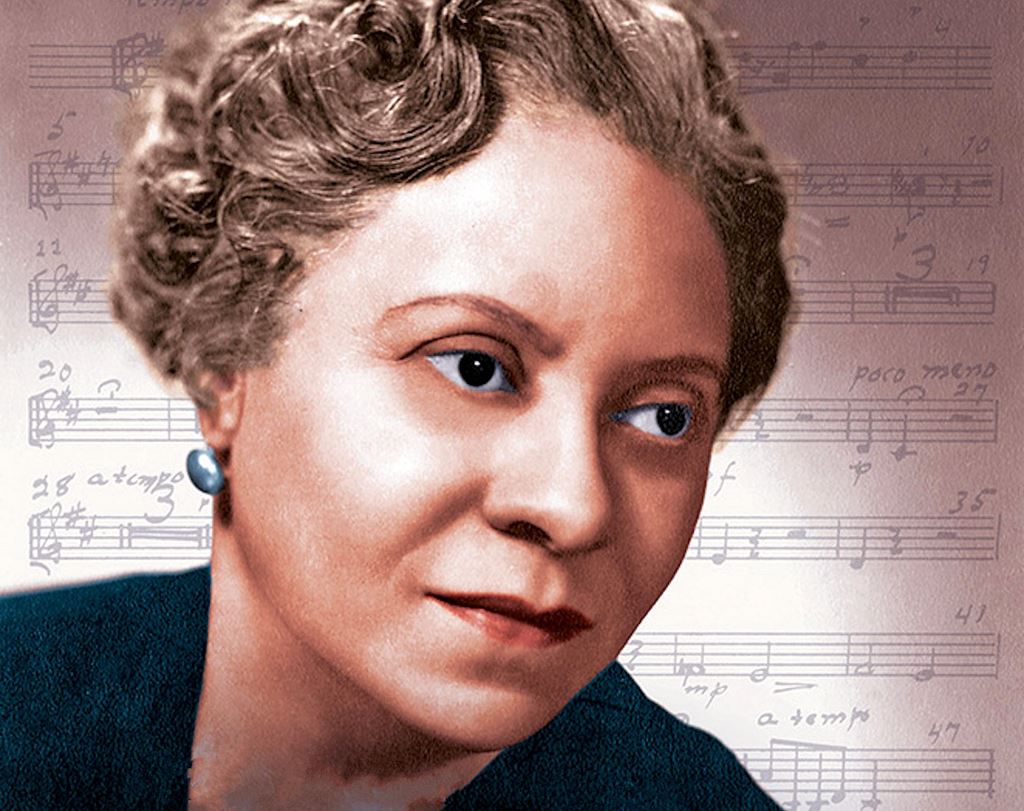
Florence Beatrice Price stands as one of the most inspiring figures in American music history—a Black woman whose talent and perseverance helped redefine what was possible in a world that too often excluded voices like hers. Born in Little Rock, Arkansas, on April 9, 1887, Price’s life was shaped by early musical promise, academic excellence, and a determination to be heard on the nation’s grandest stages.
Early Life and Musical Roots
Florence Price (née Smith) grew up in a mixed-race, middle-class family in Little Rock. Her mother, a skilled music teacher, introduced her daughter to the piano at a very young age, and Price gave her first public performance at just four years old. By age eleven, she had already published her first musical composition, a remarkable achievement that hinted at the lifelong creativity to come. She graduated as valedictorian from Capitol Hill School at fourteen and soon after enrolled at the prestigious New England Conservatory of Music in Boston, where she completed degrees in both piano and organ performance.
While at the conservatory, Price studied with accomplished composers and teachers, mastering European classical traditions while nurturing her own distinctive voice. Records show that, due to the rampant racial discrimination of the era, she initially registered as being from “Pueblo, Mexico” to avoid prejudice against Black students—a stark reminder of the societal barriers she faced even as her gifts shone brightly.
Early Career: Teaching and Family
After graduating in 1906, Price returned to Arkansas to teach music. She held positions at the Cotton Plant-Arkadelphia Academy and Shorter College before becoming head of the music department at Atlanta’s Clark University, a historically Black institution. In 1912 she married Thomas J. Price, an attorney, and the couple had three children. During this period, she continued composing and performing, showing versatility as a pianist, organist, teacher, and composer.
However, life in the segregated South was difficult. Widespread racism and violent oppression made it hard for Black artists to thrive. In 1927, Price and her family moved north to Chicago, seeking broader opportunities and a more vibrant artistic community. There she became part of a network of musicians—including contralto Marian Anderson and pianist Margaret Bonds—who championed Black composers and performers.
Breaking Barriers in Symphonic Music
Price’s most historic achievement came in 1933, when her Symphony No. 1 in E Minor was performed by the Chicago Symphony Orchestra under conductor Frederick Stock. This marked the first time a major American orchestra played a symphony by an African-American woman, a watershed moment in classical music. Critics praised the work’s emotional depth and structural integrity, and the performance helped establish Price’s reputation beyond regional circles.
Style-wise, Price’s music blended African-American spirituals, blues, and folk melodies with the formal techniques of European classical tradition. Her orchestral, chamber, and piano works—numbering over 300 compositions—often incorporated rich rhythmic variety and lyrical expression, creating music both deeply rooted in tradition and vividly personal. She wrote four symphonies, multiple concertos, art songs, choral works, and solo piano pieces throughout her career.
Challenges and Later Life
Despite her undeniable talent, Price faced persistent obstacles. Classical music institutions of her day were dominated by white male composers and performers, and women—especially Black women—were often sidelined or ignored. Price experienced this firsthand: although she continued composing throughout the 1930s and 1940s, many of her later works went unperformed during her lifetime. She wrote candidly in a letter that the combination of gender bias and racial prejudice created barriers that were “unfortunately” difficult to overcome.
Price continued to teach and compose in Chicago until her death from a stroke on June 3, 1953, at age 66. After her passing, much of her music faded from the public eye—a fate shared by many underrepresented artists of her era.
Rediscovery and Legacy
Interest in Florence Price’s work surged decades later. In 2009, a cache of her unpublished manuscripts was discovered in an old house in Illinois, drawing musicologists and performers back to her remarkable oeuvre. These rediscovered scores included previously unknown works that have since been performed and recorded worldwide.
In recent years, Price’s music has experienced a renaissance: orchestras regularly include her symphonies in their programming, and recordings of her works have won major accolades—including a Grammy Award. Her trailblazing achievements have been celebrated in festivals, scholarly research, and community commemorations, solidifying her place in the canon of American composers.
Why Her Story Matters
Florence Price’s life exemplifies resilience, artistic brilliance, and the power of creative expression to transcend barriers. She not only broke significant racial and gender barriers in classical music, but she also expanded the expressive possibilities of the art form by honoring her cultural heritage within symphonic tradition.
Today, Price’s legacy continues to inspire musicians and listeners alike, reminding us that diversity enriches culture and that genius can flourish even in the face of adversity.
Essential Listening: Florence Price
These works are widely available on YouTube, Spotify, Apple Music, and classical streaming platforms:
Symphony No. 1 in E Minor (1932)
Why it matters: The first symphony by a Black woman performed by a major U.S. orchestra (Chicago Symphony, 1933).
Piano Concerto in One Movement
Songs to Marian Anderson
Standout pieces:
“My Soul’s Been Anchored in the Lord”
“Songs to a Dark Virgin”


